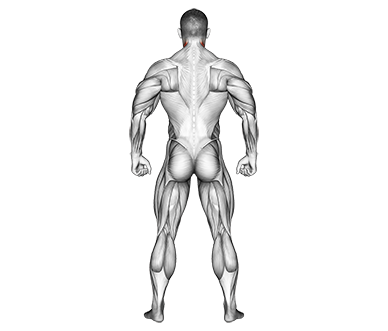
Weighted Lying Neck Flexion, also known as weighted neck curls, is a specialized strength exercise designed to target the neck muscles, particularly the sternocleidomastoid (front neck muscles). This exercise is primarily performed by intermediate to advanced fitness enthusiasts due to its focus on strengthening the often neglected neck region.
It is an isolation exercise that requires minimal equipment, typically a weight plate, and is performed lying on a flat bench. Historically, neck training has been essential for athletes in contact sports like football, wrestling, and boxing to improve neck strength and reduce the risk of injury. This exercise not only enhances neck muscle strength but also contributes to overall head stability and posture improvement.
Weighted Lying Neck Flexion Step-by-Step Instructions
- Lie down on a flat bench with your head hanging off the edge. Your back should be flat against the bench, and your feet should be firmly planted on the ground.
- Hold a weight plate against your forehead with both hands. Ensure you have a firm grip to avoid the weight slipping during the exercise.
- Start with your head in a neutral position, aligned with your spine.
- Slowly flex your neck by bringing your chin towards your chest, engaging your front neck muscles.
- Pause briefly at the bottom of the movement, ensuring full neck flexion.
- Gradually return your head to the starting position in a controlled manner, avoiding any jerky movements.
- Repeat the movement for the desired number of repetitions.
Weighted Lying Neck Flexion Tips for Proper Form
- Start with a light weight to avoid overloading the neck muscles and risking injury.
- Maintain a slow and controlled motion throughout the exercise to maximize muscle engagement.
- Ensure your shoulders remain flat against the bench to isolate the neck muscles effectively.
- Avoid using momentum to lift the weight; rely solely on neck muscle strength.
- Breathe steadily, exhaling as you flex your neck and inhaling as you return to the starting position.
- Consider using a spotter if you are new to the exercise or increasing the weight significantly.
Weighted Lying Neck Flexion Benefits
- Strengthens the sternocleidomastoid muscles, enhancing neck strength and stability.
- Improves overall head and neck posture, reducing the risk of neck pain and stiffness.
- Helps prevent injuries in contact sports by reinforcing neck muscles.
- Contributes to better alignment and support of the cervical spine.
- Enhances aesthetic appearance by developing a more muscular neck.
- Can aid in rehabilitation for certain neck injuries under professional supervision.
Weighted Lying Neck Flexion Common Mistakes to Avoid
- Using too heavy a weight initially, leading to strain or injury.
- Performing the exercise too quickly, which reduces its effectiveness and increases injury risk.
- Allowing the shoulders to lift off the bench, which decreases isolation of the neck muscles.
- Relying on momentum rather than muscle strength to complete the movement.
- Neglecting proper breathing techniques, which can affect performance and stability.
- Ignoring neck pain or discomfort during the exercise, which may indicate improper form or overexertion.
Weighted Lying Neck Flexion Summary
Weighted Lying Neck Flexion is an effective isolation exercise aimed at strengthening the front neck muscles, particularly beneficial for intermediate to advanced fitness enthusiasts. Performing this exercise with proper form and control can significantly enhance neck strength, stability, and posture, while also contributing to injury prevention in sports. Remember to start with light weights, maintain controlled movements, and follow the tips provided to avoid common mistakes and maximize the benefits of this exercise.
Weighted Lying Neck Flexion FAQs
How often should I perform Weighted Lying Neck Flexion?
It is recommended to include neck exercises like Weighted Lying Neck Flexion 2-3 times per week, ensuring adequate rest and recovery between sessions.
Can beginners perform this exercise?
While primarily suited for intermediate to advanced users, beginners can perform this exercise with very light weights and focus on mastering the form before increasing the load.
What weight should I start with?
Start with a light weight, such as a 2.5 to 5-pound plate, and gradually increase the weight as your neck strength improves.
Is this exercise suitable for rehabilitation?
Yes, under professional supervision, this exercise can aid in the rehabilitation of certain neck injuries by strengthening the neck muscles and improving stability.
Are there variations of this exercise?
Yes, variations include lying neck extensions and side neck flexions, which target different angles of the neck muscles.
What are the signs of improper form?
Signs of improper form include neck pain, excessive use of momentum, and lifting the shoulders off the bench. If any of these occur, reassess your technique and reduce the weight if necessary.