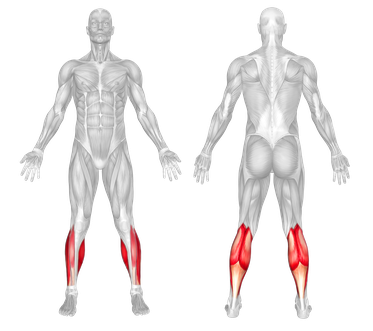
Standing Calf Raises, also known as heel raises, are a fundamental exercise aimed at strengthening the calf muscles, particularly the gastrocnemius and soleus. This exercise can be performed using various equipment such as barbells, dumbbells, or simply body weight, making it highly versatile and suitable for all fitness levels.
Standing calf raises are primarily an isolation exercise, focusing on the calves, but they also engage the stabilizing muscles of the foot and ankle. The simplicity of this exercise allows for easy incorporation into any strength training or lower body workout routine. By enhancing calf strength, standing calf raises contribute to improved balance, stability, and overall lower body strength.
Standing Calf Raises Step-by-Step Instructions
- Stand with your feet flat on the ground, about hip-width apart.
- Engage your core and maintain a straight posture with your shoulders back and down.
- Slowly raise your heels by extending your ankles and pushing through the balls of your feet. Lift as high as possible onto your tiptoes.
- Pause briefly at the top of the movement to maximize contraction in the calf muscles.
- Slowly lower your heels back to the starting position.
- Repeat for the desired number of repetitions.
Standing Calf Raises, Tips for Proper Form
- Maintain a controlled movement to avoid using momentum, which reduces the effectiveness of the exercise.
- Avoid locking your knees; keep them slightly bent to prevent strain on the joints.
- Ensure your weight is evenly distributed across the balls of your feet.
- Focus on the full range of motion, lifting as high as possible and lowering until you feel a stretch in your calves.
- Breathe naturally, exhaling as you lift and inhaling as you lower.
- Use additional weight, such as holding dumbbells or a barbell, to increase intensity as you progress.
- As a variation, you can stand on the edge of a step or platform to increase the range of motion.
Standing Calf Raises Benefits
- Increases calf muscle strength, particularly the gastrocnemius and soleus.
- Improves balance and stability, essential for various athletic activities.
- Enhances overall lower body strength and function.
- Reduces the risk of injuries related to weak calves, such as Achilles tendonitis.
- Promotes better ankle mobility and flexibility.
- Supports more powerful and explosive movements, beneficial for sports performance.
Standing Calf Raises Common Mistakes to Avoid
- Using momentum by bouncing at the bottom of the movement instead of a controlled lift and lower.
- Leaning forward or backward, which can strain your lower back.
- Allowing your ankles to roll outward or inward, leading to improper form and potential injury.
- Not achieving the full range of motion by either not lifting high enough or not lowering far enough.
- Holding your breath, which can affect your stability and performance.
- Neglecting proper warm-up and stretching, which increases the risk of muscle strain.
Standing Calf Raises Summary
Standing calf raises are an essential exercise for strengthening the calf muscles and improving lower body stability. This isolation movement can be performed using various equipment or just body weight, making it accessible for all fitness levels. Proper form and a full range of motion are crucial to maximize benefits and avoid common mistakes.
Standing Calf Raises FAQs
How often should I perform standing calf raises?
It's recommended to perform standing calf raises 2-3 times a week, allowing at least one day of rest between sessions.
Can I do standing calf raises without any equipment?
Yes, standing calf raises can be done using just your body weight, making it a convenient exercise to perform anywhere.
What are some variations of standing calf raises?
Variations include single-leg calf raises, using a Smith machine, or adding weights such as dumbbells or barbells for increased resistance.
Why do my calves cramp during standing calf raises?
Calf cramps can occur due to muscle fatigue, dehydration, or lack of proper warm-up. Ensure you are well-hydrated and warmed up before exercising.
Is it normal to feel a burn in my calves during the exercise?
Yes, feeling a burn indicates that your calf muscles are being effectively worked. Ensure you do not push through pain, which can indicate overexertion.
Can standing calf raises improve my running performance?
Yes, stronger calves contribute to better running efficiency, stability, and reduced risk of injuries.