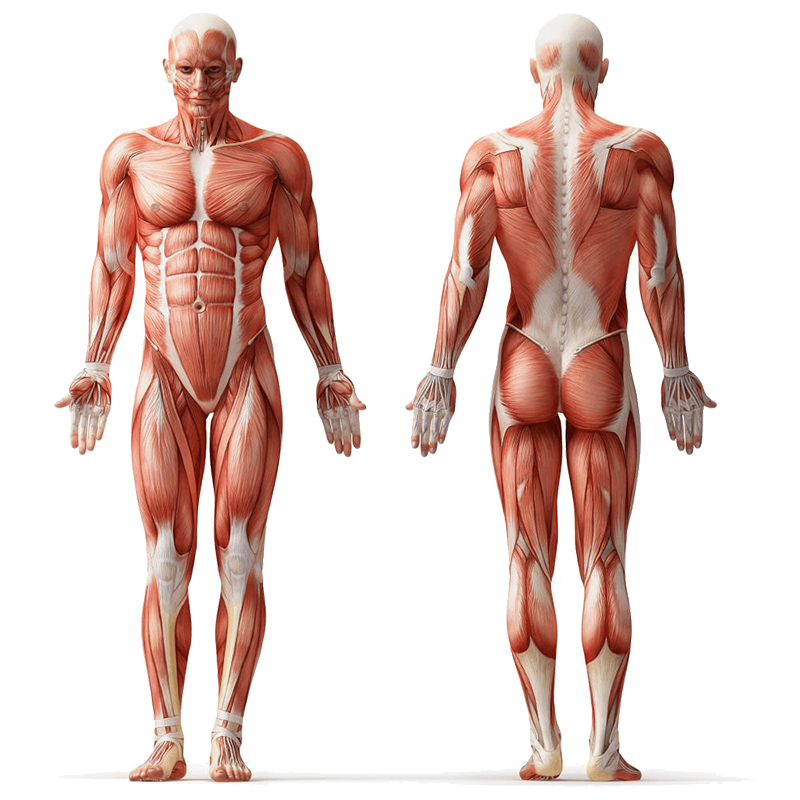
Standing Alternating Side Bend, also known as standing oblique side bend or standing lateral flexion, is a simple bodyweight movement that blends strength and mobility. Performed from an upright stance and alternating from one side to the other, it primarily targets the Core muscles of the Obliques and Abdominals, with helpful contributions from the Serratus Anterior, Back stabilizers like the Erector Spinae, and the hip stabilizers in the Glutes and Tensor Fasciae Latae.
It’s often used as a warm-up or finisher and you can do it anywhere without equipment. It is a great choice for beginners building foundational core control, and it scales well for intermediate lifters by adding a light dumbbell, kettlebell, or resistance band. The exercise is an isolation-style, standing core drill that teaches you to control lateral flexion of the spine while keeping your hips square and posture tall, which can translate to better balance, cleaner posture, and a stronger trunk for daily life.
Safety Considerations
Before you start bending side to side, take a moment to set up your environment and your body so each rep feels controlled and comfortable.
- Clear space and stable surface: Stand on a flat, non-slip surface with enough room to reach overhead if you choose to.
- Warm up the trunk: Spend 3 to 5 minutes on gentle torso rotations, cat-cow, and shoulder circles to bring blood flow to your Core and Back.
- Neutral setup: Keep feet hip to shoulder width, knees softly unlocked, ribs stacked over pelvis, and chin level. Think tall through the crown of your head.
- Range of motion: Move only as far as you can while keeping hips level and chest facing forward. Avoid collapsing the chest or twisting.
- Breathing: Inhale as you prepare, exhale as you return to center using your Obliques. Steady breathing helps protect the spine and keeps the movement slow and controlled.
- Pain signals: You should feel effort along the side body, not pinching in the low back. Reduce range or regress if you feel discomfort.
- Medical considerations: People with spine conditions, recent surgery, or osteoporosis should use gentle range, consider a supported variation, or consult a professional.
Note: Consult a fitness professional or healthcare provider if you have pre-existing conditions or experience discomfort during the exercise.
Step-by-Step Instructions
Follow these cues to lock in good alignment and make every rep count.
- Set your stance: Stand tall with feet hip to shoulder width. Unlock your knees, squeeze your Glutes lightly, and brace your Core as if you are preparing for a gentle tap to the stomach.
- Position your arms: Place fingertips lightly behind your head, extend arms overhead, or keep arms by your sides. Choose the option that lets you control your posture without shrugging the Shoulders.
- Initiate the bend: Inhale to prepare. Imagine sliding your rib cage toward your hip. Gently bend your torso to the right without twisting or leaning forward. Keep hips level and facing straight ahead.
- Feel the side body: Pause briefly at your comfortable end range. You should feel the right side shorten and the left side lengthen. Keep your Chest open and your neck neutral.
- Return to center: Exhale and drive back to tall posture by contracting your left Obliques. Finish with ribs stacked over pelvis.
- Alternate sides: Repeat to the left, using the same controlled tempo, then continue alternating reps side to side.
- Reps and tempo: Aim for 2 to 4 sets of 8 to 15 alternating reps, moving with a 2-count down, short pause, and a 2-count up.
- Optional loading: To progress, hold a light dumbbell in one hand (suitcase style) on the side you are bending toward, or hold a single light weight overhead to increase demand on the Obliques and Shoulders.
Tips for Proper Form
Small adjustments make a big difference. Use these pointers to stay aligned and get the most from each repetition.
- Stack ribs over pelvis: Picture your torso as a cylinder. Keep it stacked as you bend so you avoid flaring ribs or arching the lower Back.
- Lead with the rib cage, not the hand: Initiate from the torso so the movement truly comes from the Obliques rather than reaching with the arm.
- Keep hips square: Prevent the hips from hiking up on one side. Think of your belt line staying level.
- Short, controlled range: Quality beats depth. Only go as far as you can without twisting the Chest or losing balance.
- Neck neutral: Keep your gaze forward and avoid side bending your neck. Your head follows your torso as a unit.
- Even weight on both feet: Press both feet into the floor so you do not shift onto one leg as you bend.
- Light load if adding weight: Start with very light dumbbells or bands. The goal is controlled lateral flexion, not heavy leaning.
- Use your breath: Exhale through the effort back to center to reinforce Core bracing and control.
Common Mistakes to Avoid
These are the pitfalls that turn a great core move into a back ache. Steer clear of them with the fixes provided.
- Overbending into the low back: Going too far can cause pinching. Fix it by reducing range and focusing on slow control.
- Twisting the torso: Rotating the Chest changes the exercise. Keep shoulders square and think ear-to-hip, not nose-to-knee.
- Hip hiking: Lifting one hip to meet the ribs reduces Oblique work. Keep both hips level and grounded through your feet.
- Rushing the reps: Momentum steals tension. Use a steady tempo with a brief pause at your end range.
- Shrugging shoulders: Elevating the Shoulders creates neck tension. Soften the shoulders and lengthen through the crown of the head.
- Using a weight that is too heavy: Excess load pulls you past control. Choose conservative loading and master bodyweight first.
- Leaning forward or back: The bend is lateral. Keep your Chest stacked and avoid arching or slumping.
Primary Benefits
When performed with care, Standing Alternating Side Bend supports a resilient, well-rounded core.
- Strengthens Obliques: Builds lateral flexion strength that supports trunk control in daily tasks.
- Improves posture awareness: Teaches rib and pelvis stacking for cleaner standing alignment.
- Enhances mobility: Gently opens the side body and can reduce stiffness from long sitting or standing.
- Boosts balance and stability: Trains you to resist wobbling while you move, engaging Glutes and deep Core.
- Accessible anywhere: Bodyweight friendly, minimal space required, and easy to slot into warm-ups.
- Scalable intensity: Simple to progress with light loading, tempo changes, or overhead reach.
- Mind-muscle connection: Encourages focused control, helping you feel and engage the side torso muscles.
Regressions
Pick an easier variation if you are new to the movement, returning from a layoff, or managing discomfort.
- Hands on hips side bend: Keep arms down to lower leverage and improve control.
- Wall-supported side bend: Stand with your back or shoulder near a wall for balance as you practice small ranges.
- Seated alternating side bend: Sit tall on a bench or chair to remove balance demands and focus on torso movement.
- Short-range pulses: Perform micro-bends within a pain-free window to groove mechanics.
- Isometric side hold: Lean slightly to one side and hold for 10 to 20 seconds, then switch, keeping hips level.
- Broomstick overhead, no load: Hold a light dowel overhead to cue posture without adding weight.
Progressions
When your form is rock solid, turn up the challenge with these options.
- Suitcase loaded side bend: Hold a light dumbbell in the hand on the bending side to increase lateral flexion demand.
- Offset overhead load: Hold one light dumbbell or kettlebell overhead in one hand while alternating bends.
- Band-resisted side bend: Stand with a resistance band anchored low to the side you bend toward and control both directions.
- Tempo and pauses: Use 3 to 4 seconds down, 2-second pause at end range, and 2 to 3 seconds up.
- Unstable surface: Stand on a foam pad to increase balance demands while keeping the range modest.
- Single-leg stance: Lift the inside foot slightly as you bend to challenge hip and Core stability, keeping hips level.
Summary
Standing Alternating Side Bend is a bodyweight-friendly isolation exercise that strengthens the Obliques and improves side-to-side control of the trunk. By keeping ribs stacked, hips level, and movement slow, you build useful Core strength, enhance posture awareness, and gain gentle mobility through the side body. Start with a comfortable range, avoid twisting or overbending, and progress gradually with light loading or tempo work to keep the move safe and effective.
FAQs
Answers to the most common questions will help you tailor this exercise to your goals and body.
What muscles does Standing Alternating Side Bend work?
Primarily the Obliques and Abdominals in the Core, with assistance from the Serratus Anterior, Erector Spinae in the Back, and stabilizing input from the Glutes and Tensor Fasciae Latae.
Is this a strength or mobility exercise?
It functions as a bit of both. The movement strengthens lateral flexion while offering a gentle stretch to the opposite side body, especially when performed slowly.
How often should I include it in my routine?
Two to four times per week works well for most people. Place it in a warm-up for posture and control, or in a core circuit after your main lifts.
Should I use weights?
Begin with bodyweight to master control. If you add load, choose something light and avoid being pulled past your active range. Quality of movement comes first.
What if I feel low back discomfort?
Stop, reduce range, and try a regression such as seated side bends or isometric holds. If discomfort persists, seek guidance from a qualified professional.
Is alternating better than doing one side at a time?
Alternating sides can help you stay balanced and manage fatigue. Sets on a single side can be useful too, but switch sides frequently to keep symmetry.
Where does it fit on a training day?
Use it after your general warm-up and before heavy lifts to wake up the Core, or finish a session with 2 to 3 controlled sets to reinforce posture.