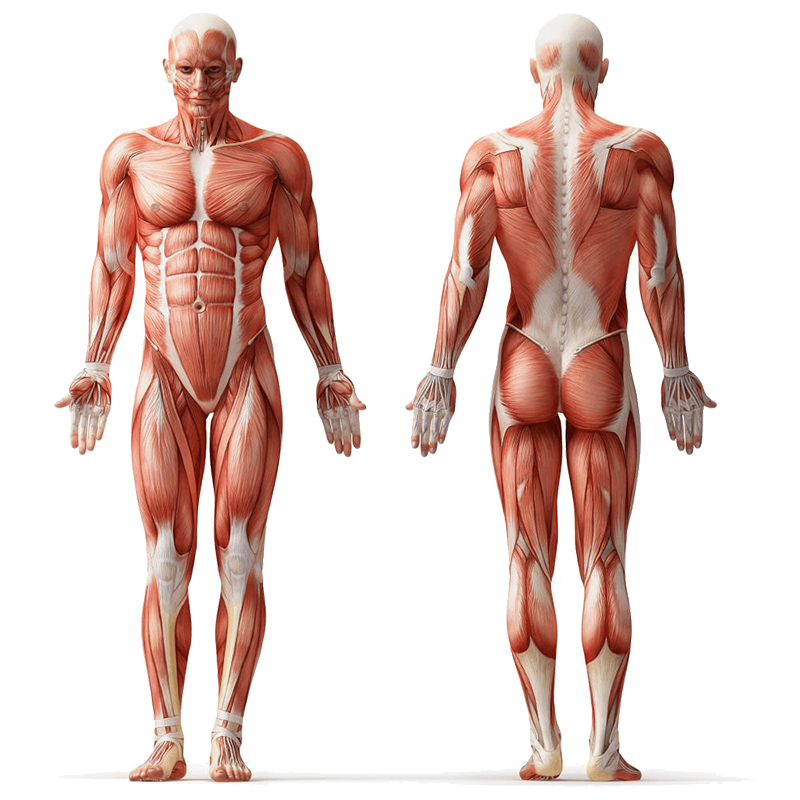
The Smith Stiff-Leg Deadlift, also known as the Smith Machine Romanian Deadlift, is a strength training exercise that primarily targets the hamstrings (rear thigh muscles) and gluteus maximus (buttocks). This movement is a variation of the traditional stiff-leg deadlift, utilizing the Smith machine to provide a fixed bar path, which can enhance stability and control during the exercise. It's particularly beneficial for individuals aiming to improve posterior chain strength and flexibility.
The exercise is suitable for those at an intermediate experience level, focusing on strength development. It primarily engages the hamstrings and gluteus maximus, with secondary activation of the lower back muscles, including the erector spinae (spinal erectors). As a compound movement, it involves multiple joints and muscle groups simultaneously. The only equipment required is a Smith machine, making it accessible in most gym settings.
Step-by-Step Instructions
- Begin by setting the Smith machine bar to a height just above your knees. Load the bar with an appropriate weight for your fitness level.
- Stand with your feet shoulder-width apart, positioning the barbell over the middle of your feet. Your toes should point straight ahead or slightly outward, depending on your comfort.
- Grasp the bar with an overhand grip (palms facing down), hands placed slightly wider than shoulder-width apart.
- Unlock the bar from the safety latches and stand upright with your arms fully extended, keeping the bar resting against your thighs.
- Maintain a slight bend in your knees and a neutral spine. Engage your core muscles to stabilize your torso.
- Initiate the movement by hinging at your hips, pushing them backward as you lower the barbell along the front of your legs. Keep the bar close to your body throughout the descent.
- Lower the bar until you feel a stretch in your hamstrings, ensuring your back remains straight and your shoulders are pulled back. Avoid rounding your lower back.
- Pause briefly at the bottom of the movement. Then, drive your hips forward, engaging your hamstrings and glutes to lift the bar back to the starting position.
- Exhale as you return to the upright position, ensuring your shoulders are back and your chest is lifted.
- Repeat for the desired number of repetitions, maintaining proper form throughout.
Tips for Proper Form
- Keep your eyes facing forward or slightly upward to maintain a neutral neck position and prevent back rounding.
- Ensure the barbell stays close to your body during the movement to reduce strain on the lower back.
- Focus on hinging at the hips rather than bending at the waist to effectively target the hamstrings and glutes.
- Maintain a slight bend in your knees throughout the exercise; avoid locking them out completely.
- Engage your core muscles to support your lower back and maintain stability.
- Use a controlled tempo, especially during the lowering phase, to maximize muscle engagement and reduce injury risk.
Smith Stiff-Leg Deadlift Benefits
- Enhances strength and development of the hamstrings and gluteus maximus.
- Improves hip mobility and flexibility, contributing to better overall movement patterns.
- Strengthens the lower back muscles, aiding in posture improvement and reducing injury risk.
- Provides a controlled environment for practicing deadlift form, beneficial for beginners.
- Engages core muscles, contributing to overall core stability and strength.
- Assists in correcting muscle imbalances between the anterior and posterior lower body.
Common Mistakes to Avoid
- Allowing the back to round during the movement, which can lead to lower back injuries.
- Bending the knees excessively, turning the movement into a regular deadlift rather than a stiff-leg variation.
- Letting the bar drift away from the body, increasing strain on the lower back.
- Using too much weight, compromising form and increasing injury risk.
- Performing the exercise too quickly, reducing muscle engagement and control.
- Neglecting to engage the core, leading to instability and potential back strain.
Summary
The Smith Stiff-Leg Deadlift is an effective exercise for targeting the hamstrings and gluteus maximus, utilizing the stability of the Smith machine to focus on proper form and muscle engagement. By adhering to correct technique and avoiding common mistakes, this exercise can significantly enhance lower body strength and flexibility. Incorporating it into your routine can lead to improved posture, reduced injury risk, and better overall functional movement.
FAQs
How often should I perform the Smith Stiff-Leg Deadlift?
Incorporate this exercise into your lower body or full-body workouts 1-2 times per week, allowing adequate recovery between sessions.
Can beginners perform this exercise?
Yes, beginners can perform this exercise, but it's crucial to start with light weights to master proper form before progressing to heavier loads.
Is the Smith Stiff-Leg Deadlift safe for individuals with lower back issues?
Individuals with lower back issues should consult a healthcare professional or physical therapist before performing this exercise. Proper form and light weights are critical to minimize strain on the lower back.
What muscles does the Smith Stiff-Leg Deadlift target?
This exercise primarily targets the hamstrings (rear thighs) and gluteus maximus (buttocks). It also engages the lower back muscles (erector spinae) as secondary stabilizers.
How does the Smith Machine improve the Stiff-Leg Deadlift?
The Smith Machine provides a fixed bar path, offering more stability and control during the movement. This can help lifters focus on proper form and muscle engagement without worrying about balancing the barbell.
Can I perform this exercise without a Smith Machine?
Yes, you can perform a standard Stiff-Leg Deadlift with a barbell or dumbbells. However, the Smith Machine version is beneficial for those who prefer additional stability.
What is the difference between a Stiff-Leg Deadlift and a Romanian Deadlift?
The Stiff-Leg Deadlift emphasizes keeping the legs almost straight, targeting the hamstrings and glutes more intensively. The Romanian Deadlift allows for a slight knee bend, focusing on similar muscles but with less hamstring isolation.