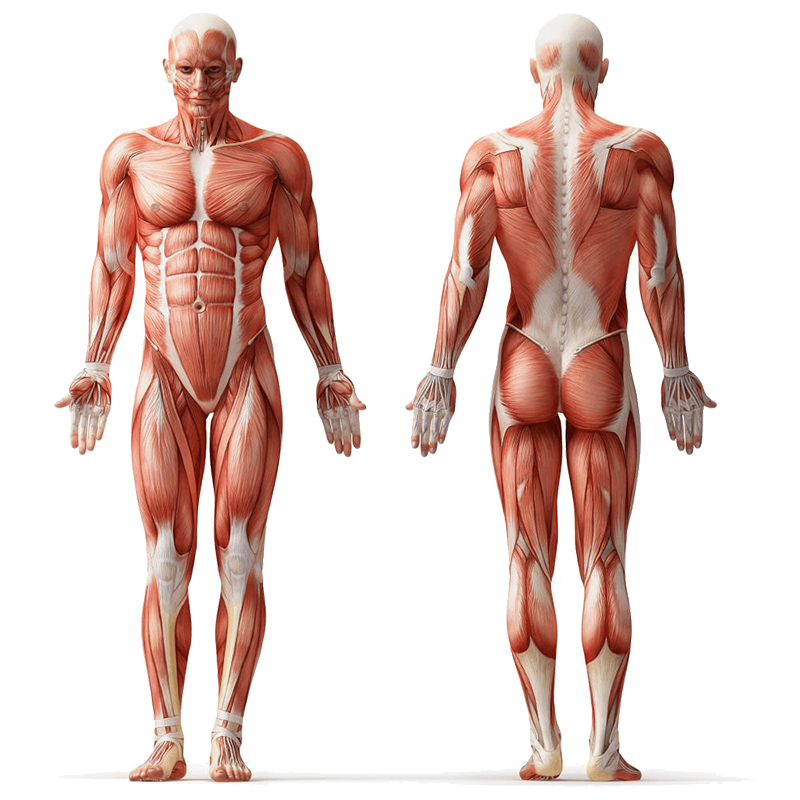
Side to Side Leg Swings, also called lateral leg swings or lateral pendulum swings, are a dynamic mobility drill that blends movement-based stretching with activation and balance training. Performed by swinging one leg across the body and then out to the side while the torso stays tall, this drill preps the hips for multidirectional work.
It especially wakes up the hip abductors and adductors, with help from the core and supporting leg to keep you steady. Because it is bodyweight only and easy to scale, it suits trainers working with beginners, general fitness enthusiasts who want smooth hips before training, and professional athletes priming for lateral cutting or single-leg demands. For most sessions, it works best early in the warm-up to boost blood flow and neuromuscular readiness without sapping strength like long static holds can do.
Primary muscles targeted: Glutes (gluteus medius and minimus), Hip Adductors. Secondary/stabilizers: Core (abdominals and obliques), Hip Flexors, Gluteus Maximus, Erector Spinae, and the muscles of the standing leg including Quads, Hamstrings, and Calves that help with balance. Keeping the pelvis level challenges the lateral stability system, which is key for clean mechanics in running, cutting, and landing.
Equipment: None required. Light support from a wall, rack, or rail is optional. Difficulty ranges from beginner to advanced depending on balance support, range of motion, tempo, and loading choices such as ankle weights or bands.
Safety Considerations
Read this quick safety checklist so every set feels smooth and controlled.
- Begin with a general warm-up first (light cardio or joint circles) to increase tissue temperature and prepare the nervous system for dynamic movement.
- Use a stable support for balance at first. Gradually reduce hand contact as control improves to avoid unnecessary wobbling that can stress the knee or ankle.
- Keep the swing controlled. Start with small arcs and expand range only if you can keep the pelvis level and torso tall.
- Maintain a slight bend in the standing knee rather than locking it out for better shock absorption and joint safety.
- Avoid cranking the leg aggressively across midline. Control the adduction phase to protect the groin and adductors.
- Stop if you feel sharp pain in the hip, groin, knee, or low back. Regress to a smaller range or a supported variant.
Note: Consult a fitness professional or healthcare provider if you have pre-existing conditions or experience discomfort during the exercise.
Step-by-Step Instructions
Follow these precise steps to coach or perform the movement with clean mechanics every time.
- Stand side-on to a wall, upright post, or rack. Lightly place one hand on the support for balance without leaning into it. Feet start hip to shoulder width.
- Shift your weight onto the leg closest to the support. Keep that knee softly bent and your foot rooted through heel, big toe, and little toe.
- Brace your core so the torso stays tall and quiet. Level your pelvis as if you were balancing a glass of water on it.
- Swing the free leg out to the side into abduction. Move with muscle, not momentum. Toes face mostly forward or slightly up depending on your hip structure.
- Let the leg travel back across the body in front of the stance leg into adduction. Decelerate smoothly as it crosses midline to avoid yanking the groin.
- Continue swinging side to side in a controlled arc for 20 to 30 seconds or about 10 to 15 reps. Keep breathing steadily and keep the trunk still.
- Switch sides and repeat.
- Optional progressions: increase arc height, remove hand support, or add a light ankle weight only after you can control the full range.
Tips for Proper Form
Use these coaching cues to lock in quality and get the most from every rep.
- Own the endpoints. Pause briefly at each side to feel the abductors and adductors doing the work rather than flinging the leg.
- Keep the chest tall and eyes forward. A fixed gaze improves balance and reduces upper-body sway.
- Square the pelvis. If one hip hikes or drops, reduce the range or slow the tempo until you can keep the pelvis level. Strong gluteus medius control supports this.
- Exhale lightly as the leg moves away from center and inhale as it returns, keeping the ribcage stacked over the pelvis.
- Let the stance knee bend slightly to absorb forces; avoid rigid, locked joints.
- If you feel pinching at the front of the hip, limit range, rotate the toes slightly, or switch to a regression to find a pain-free arc.
- Coach rhythm. Aim for a smooth, consistent tempo rather than uneven surges.
Common Mistakes to Avoid
These errors show up often in warm-ups. Here is how to spot and fix them quickly.
- Using wild momentum instead of muscular control. Solution: shorten the arc and slow down to feel the hips working.
- Leaning or rotating the torso to chase height. Fix: brace the core and keep ribs stacked over pelvis; earn more range gradually.
- Locking the standing knee. Fix: maintain a small, athletic bend to protect the joint.
- Crashing through midline. Fix: decelerate with adductors and core, then re-accelerate smoothly to the outside.
- Going too big too soon. Fix: prioritize clean pelvic control first; then expand amplitude and speed.
- Neglecting symmetry. Fix: perform equal time or reps per side and start with the less controlled side.
Primary Benefits
Here is why this drill deserves a permanent place in warm-ups, movement prep, and return-to-sport progressions.
- Improves hip mobility in the frontal plane, especially abduction and adduction, which many lifters and runners undertrain.
- Activates hip abductors and adductors while integrating core stability, crucial for pelvic control and clean lower-limb alignment.
- Prepares the nervous system and increases blood flow like other dynamic stretches, without the strength reductions sometimes seen with long static holds before lifting.
- Supports groin and hip health for athletes who cut, stride, or skate, when paired with progressive strengthening of the adductor-abductor system.
- Low equipment and easy to scale, making it ideal for team settings, semi-private training, or home sessions.
- Pairs well with lateral squats, Copenhagen adduction work, and single-leg tasks to round out the hip stability toolkit.
Regressions
If balance or hip control is limited, start here and build up steadily.
- Supported leg swings with continuous fingertip contact on a wall or rack.
- Small-range arcs only, expanding slowly as control improves.
- Slow-tempo swings with a brief stop at each side to feel the hips engage.
- Side-lying lateral leg sweeps to practice abduction and adduction without balance demands.
- Seated side-to-side lower-leg sweeps to groove the pattern with minimal hip height.
- Isometric holds at the outer position for 2 to 3 seconds before switching sides.
Progressions
Once technique is crisp, use these variations to challenge athletes and advanced clients.
- Hands-free swings with no external support.
- Greater amplitude while preserving pelvic control and quiet torso.
- Faster but still controlled tempo to elevate neural drive and heat.
- Light ankle weights or a small band above the knees to increase demand on abductors and adductors.
- Unstable surface under the stance foot, such as a foam pad, to load proprioception.
- Eyes-closed sets to amplify balance and sensory feedback for elite athletes.
Summary
Side to Side Leg Swings are a simple, scalable way to mobilize the hips, activate abductors and adductors, and sharpen balance before training. Keep the torso quiet, pelvis level, and swings controlled. Start supported and small, then build amplitude, tempo, and complexity as control improves. Use them early in warm-ups for lifters, everyday clients, and athletes who need reliable lateral hip control for performance and resilience.
FAQs
Quick answers to common programming and coaching questions.
How many reps or how long should I program?
Use 10 to 15 swings or 20 to 30 seconds per leg for 2 to 3 rounds. Advanced athletes can extend duration slightly if control remains crisp.
Where does this fit in a session?
Place early in the warm-up, before heavy lower-body work or lateral drills, to raise temperature and prime neuromuscular control without reducing strength.
Which muscles should I be cueing?
Emphasize the gluteus medius and minimus for abduction and the adductors for the cross-body phase, while the core resists trunk motion.
Are side to side leg swings good for groin injury prevention?
They are a helpful dynamic prep and can support an overall program that strengthens adductors and abductors, which is associated with fewer hip and groin problems in several sports. Pair with progressive strength work like Copenhagens and lateral squats.
Should I use a wall or go hands-free?
Start with light support to perfect alignment. As balance improves, remove support to challenge stability or add load carefully.
What if I feel pinching at the front of the hip?
Reduce range, slow down, and keep the pelvis level. If discomfort persists, switch to a regression and consider consulting a clinician.