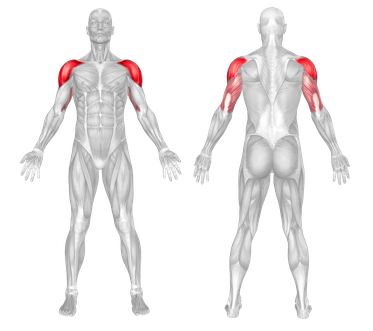
Pike Push-Ups, also known as decline push-ups, are an advanced bodyweight exercise that primarily targets the shoulders, specifically the anterior deltoids (front deltoids). This exercise also engages the triceps, trapezius (traps), and core muscles, making it an excellent movement for building upper body strength and stability.
Pike push-ups are a compound exercise, meaning they involve multiple joints and muscle groups, and can be performed with no equipment or with additional tools like parallettes or elevated platforms to increase difficulty. This exercise is well-suited for intermediate to advanced fitness levels, offering a progression towards more challenging movements like handstand push-ups.
Step-by-Step Instructions
- Start in a downward dog position with your hands and feet on the ground, forming an inverted V shape with your body.
- Walk your feet closer to your hands, keeping your legs straight until your hips are directly above your shoulders.
- Ensure your hands are shoulder-width apart and your fingers are spread out for stability.
- Bend your elbows and lower your head towards the ground, keeping your legs straight and your back flat.
- Once your head is close to the ground, push back up by straightening your arms, returning to the starting position.
- Repeat for the desired number of repetitions, maintaining control and proper form throughout.
Tips for Proper Form
- Engage your core throughout the exercise to maintain stability and prevent your back from rounding.
- Keep your elbows tucked in slightly to avoid flaring out, which can strain your shoulders.
- Ensure your hands are placed directly under your shoulders to maintain balance and control.
- Perform the movement slowly and with control to maximize muscle engagement and reduce the risk of injury.
- If the standard version is too challenging, start with your knees on the ground to reduce the intensity.
- Use parallettes or elevate your feet on a stable surface to increase the difficulty and range of motion.
Benefits
- Improves shoulder strength and definition by targeting the deltoids more than traditional push-ups.
- Enhances upper body muscular endurance, allowing you to hold or shift weight above your head for longer periods.
- Activates core muscles, improving overall core strength and stability.
- Serves as a progression towards more advanced bodyweight exercises like handstand push-ups.
- Reduces the risk of injury by promoting proper alignment and reducing stress on the wrists and lower back.
- Enhances balance and coordination, contributing to better performance in various physical activities.
Common Mistakes to Avoid
- Allowing the elbows to flare out, which can lead to shoulder strain. Keep them slightly tucked.
- Not engaging the core, resulting in a rounded back. Maintain a tight core to keep a proper V shape.
- Using too much momentum, which can reduce effectiveness and increase injury risk. Perform controlled movements.
- Incorrect hand placement, such as hands too far apart or too close together, which affects balance and stability.
- Feet placed too close together, leading to instability. Keep feet hip-width apart for better control.
- Rushing through repetitions. Focus on slow, deliberate movements to maximize benefits.
Summary
Pike push-ups are an effective bodyweight exercise that primarily targets the shoulders, with additional benefits for the triceps, traps, and core. They are ideal for intermediate to advanced fitness levels, offering a challenging progression towards handstand push-ups. Proper form and controlled movements are essential to prevent injuries and maximize muscle engagement.
Pike Push-Ups FAQs
How often should I perform pike push-ups?
Incorporate pike push-ups into your workout routine 2-3 times per week, allowing at least 48 hours of rest between sessions to ensure muscle recovery.
Can beginners do pike push-ups?
Beginners can start with kneeling push-ups or incline push-ups to build strength before progressing to full pike push-ups.
What should I do if I experience shoulder pain during pike push-ups?
Ensure proper form and avoid flaring your elbows. If pain persists, consult a healthcare professional and consider alternative exercises like shoulder presses.
Are there variations of pike push-ups to increase difficulty?
Yes, try elevated pike push-ups, one-legged pike push-ups, or using parallettes to increase the range of motion and challenge.
How do pike push-ups differ from regular push-ups?
Pike push-ups place more emphasis on the shoulders and less on the chest compared to regular push-ups, which primarily target the chest and triceps.
Can pike push-ups help improve handstand push-ups?
Yes, pike push-ups are an excellent preparatory exercise for handstand push-ups, as they build the necessary shoulder and core strength.