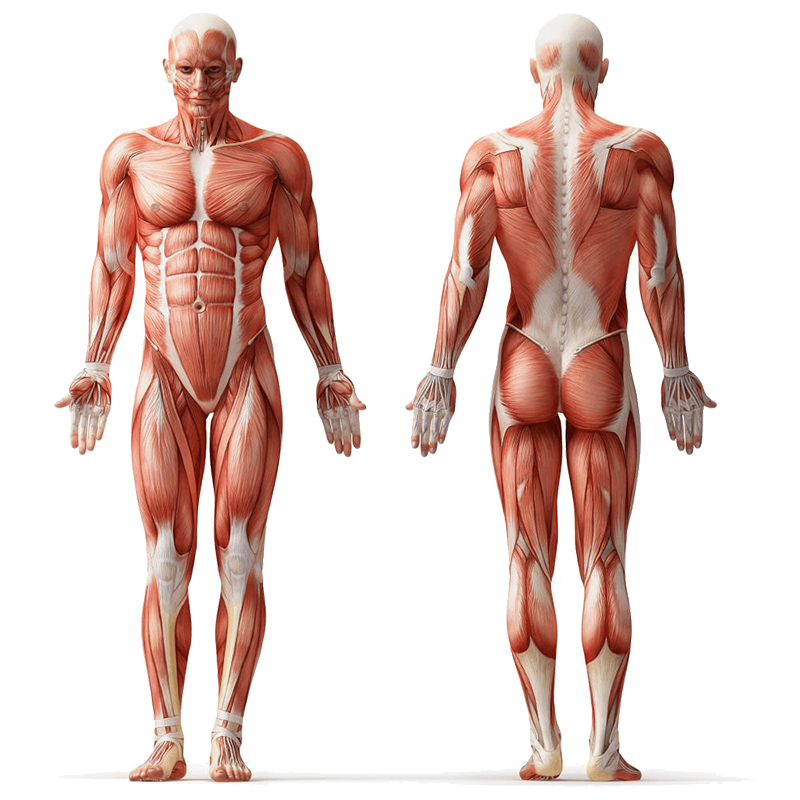
The Lunge with Twist, also known as the Rotational Lunge, is a compound exercise that combines the classic forward lunge with a twisting motion to engage your core muscles alongside your legs. This dynamic movement is popular in bodyweight fitness routines due to its emphasis on balance, coordination, and functional strength. It primarily targets the quadriceps (front thigh) and gluteus maximus (buttocks) while involving the obliques (side abs) and transverse abdominis (deep core muscles) during the twist.
Suitable for all fitness levels, this exercise requires no equipment, making it accessible and convenient for home or outdoor workouts. By integrating rotational movement, it mimics real-life functional motions, enhancing athletic performance and everyday mobility.
Step-by-Step Instructions
- Stand upright with your feet hip-width apart and your hands clasped together in front of your chest.
- Step forward with your right leg into a lunge position, lowering your body until your right thigh is parallel to the floor and your left knee hovers just above the ground.
- As you reach the bottom of the lunge, rotate your torso to the right, turning through your core while keeping your hands clasped and in line with your chest.
- Return your torso to the center and push through your right heel to return to the starting position.
- Repeat the motion on the left side, alternating legs for the desired number of repetitions.
Tips for Proper Form
- Keep your back straight and chest lifted throughout the movement to avoid rounding your shoulders.
- Engage your core muscles during the twist to prevent over-rotation and protect your spine.
- Ensure your front knee stays aligned over your ankle and does not extend past your toes.
- Take controlled, deliberate steps to maintain balance and avoid jerky movements.
- Use slow and controlled motions to ensure stability and maximize muscle engagement.
- If balance is an issue, perform the movement near a sturdy surface or wall for support.
Lunge with Twist Benefits
- Strengthens the quadriceps, hamstrings, and gluteal muscles for enhanced lower-body power.
- Engages the core muscles, particularly the obliques, improving rotational stability and strength.
- Improves balance and coordination by challenging stability during movement transitions.
- Enhances flexibility in the hip flexors and mobility in the torso.
- Mimics functional movements, making it ideal for sports and daily activities requiring rotation and stepping actions.
- Requires no equipment, making it accessible for home workouts or outdoor routines.
Common Mistakes to Avoid
- Allowing the front knee to cave inward, which can strain the joint and reduce effectiveness.
- Over-rotating the torso, risking strain on the lower back and misalignment.
- Stepping too far forward or too short, compromising balance and knee alignment.
- Rushing through the movement, leading to poor control and decreased benefit.
- Neglecting to engage the core during the twist, reducing the rotational benefit.
- Failing to maintain an upright torso, which can put strain on the lower back and reduce balance.
Summary
The Lunge with Twist is a functional, compound exercise that builds lower-body strength, core stability, and balance. Its bodyweight-only format makes it accessible to everyone, with benefits extending from athletic performance to daily mobility. Proper form is key to maximizing its impact and preventing injury.
FAQs
How often should I perform the Lunge with Twist?
Include it 2–3 times a week as part of a balanced strength or functional training routine.
Can beginners perform this exercise?
Yes, start with body weight only and practice the movement slowly before adding resistance.
What equipment can I use for this exercise?
A medicine ball, dumbbell, or a weight plate can be used to increase the challenge.
Is it safe for people with knee issues?
It can be modified by reducing the depth of the lunge or consulting a fitness professional for adaptations.
Does it help with sports performance?
Yes, it improves rotational power and lower-body strength, essential for many sports.
Can it be part of a cardio workout?
Yes, increase the pace and repetitions to elevate your heart rate for a cardio effect.