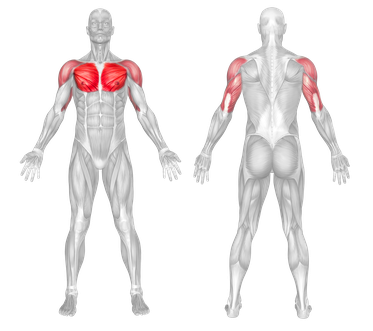
The Kettlebell Floor Fly is a dynamic exercise that targets the chest (pectoralis major), shoulders (deltoids), and core muscles. This exercise serves as an excellent alternative to traditional chest exercises like push-ups or bench presses, incorporating an element of instability that engages multiple muscle groups simultaneously. The mechanics of the exercise classify it as an isolation movement, and it primarily requires kettlebells and a flat, stable surface to perform. This exercise is suitable for individuals ranging from beginner to intermediate levels, aiming to enhance overall upper body strength, coordination, and shoulder stability.
Kettlebell Floor Fly Step-by-Step Instructions
- Lie on your back with your knees bent and feet flat on the ground.
- Hold a kettlebell in each hand, palms facing each other, and extend your arms straight above your chest.
- Slowly lower the kettlebells out to the sides in a controlled motion, keeping a slight bend in your elbows.
- Continue lowering until your arms are nearly touching the floor, or until you feel a comfortable stretch in your chest.
- Pause for a moment at the bottom, then reverse the motion and bring the kettlebells back up to the starting position.
- Repeat for the desired number of repetitions.
Kettlebell Floor Fly, Tips for Proper Form
- Start with a lighter kettlebell if you're new to the exercise and gradually increase the weight as you build strength.
- Maintain a slight bend in your elbows throughout the movement to avoid excessive strain on the joints.
- Engage your core muscles by bracing your abs to stabilize your body.
- Ensure a controlled and smooth motion, avoiding any jerking or swinging.
- Breathe steadily, exhaling on the exertion phase and inhaling during the return phase.
- Perform the exercise on a stable and level surface, such as an exercise mat or gym floor.
Kettlebell Floor Fly Benefits
- Enhances upper body strength, focusing on the chest, shoulders, and triceps.
- Improves shoulder stability and coordination due to the instability of the kettlebells.
- Engages core muscles for overall body stabilization.
- Provides a greater range of motion compared to traditional chest exercises.
- Helps in building muscle definition and hypertrophy in the chest.
- Increases functional strength, beneficial for everyday activities.
Kettlebell Floor Fly Common Mistakes to Avoid
- Using too heavy a weight, which can compromise form and increase injury risk.
- Allowing elbows to lock out fully, placing undue stress on the joints.
- Flaring elbows too wide, which can strain the shoulder joints.
- Neglecting to engage the core, leading to poor stabilization and potential lower back strain.
- Performing the exercise too quickly, reducing muscle engagement and effectiveness.
- Skipping warm-ups, which increases the risk of injury.
Kettlebell Floor Fly Summary
The Kettlebell Floor Fly is an effective isolation exercise targeting the chest, shoulders, and core muscles. It enhances upper body strength and stability, providing a greater range of motion and muscle engagement compared to traditional chest exercises. Proper form and gradual weight progression are crucial to maximize benefits and minimize injury risks.
Kettlebell Floor Fly FAQs
How often should I perform the Kettlebell Floor Fly?
It can be performed 2-3 times per week as part of an upper body or full-body workout routine.
What weight should I start with?
Begin with a lighter weight, such as 5-10 pounds, and increase as you become more comfortable with the movement.
Can I perform this exercise with dumbbells instead of kettlebells?
Yes, dumbbells can be used if kettlebells are not available, but kettlebells provide a unique challenge due to their shape.
Is this exercise suitable for beginners?
Yes, as long as beginners start with a lighter weight and focus on proper form.
What should I do if I feel pain in my shoulders?
Stop the exercise immediately and consult a fitness professional to ensure your form is correct and to prevent injury.
How can I make the exercise more challenging?
Increase the weight of the kettlebells or incorporate a slower tempo during the lowering phase.