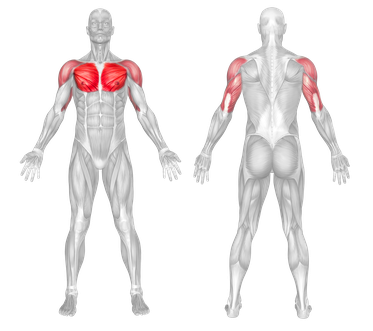
p>The kettlebell chest fly on a flat bench is a strength exercise that targets the pectoral muscles (pectoralis major and minor) and engages secondary muscle groups such as the shoulders (deltoids) and triceps. It is an isolation exercise that focuses on the chest, performed using kettlebells instead of traditional dumbbells.
This exercise is ideal for building muscle definition and strength in the chest while also promoting shoulder stability. The mechanics of the kettlebell chest fly make it a valuable addition to any upper body workout routine. Kettlebells offer a unique loading pattern, which can provide a different stimulus compared to other equipment, making it beneficial for muscle growth and strength enhancement.
Kettlebell Chest Fly Step-by-Step Instructions
- Begin by lying on a flat bench with a kettlebell in each hand, arms extended towards the ceiling.
- Maintain a slight bend in your elbows throughout the movement to protect your joints.
- Slowly lower your arms out to the sides in a controlled arc, focusing on stretching your chest muscles. Ensure your shoulders remain stable on the bench.
- Lower the kettlebells until your upper arms are just below the level of the bench, feeling a stretch across your chest.
- Pause briefly at the bottom of the movement.
- Squeeze your chest muscles to bring the kettlebells back up to the starting position in the same controlled arc.
- Repeat for the desired number of repetitions.
Kettlebell Chest Fly, Tips for Proper Form
- Keep a slight bend in your elbows to avoid unnecessary stress on your joints.
- Focus on engaging your chest muscles throughout the movement rather than letting your shoulders take over.
- Maintain a controlled motion, especially during the lowering phase (eccentric movement) to maximize muscle engagement.
- Avoid lowering the kettlebells too far, which can strain your shoulders.
- Ensure your shoulder blades are pulled down and back to provide a stable base and prevent shoulder strain.
- Start with lighter kettlebells to perfect your form before progressing to heavier weights.
Kettlebell Chest Fly Benefits
- Isolates and strengthens the pectoral muscles, enhancing chest definition.
- Engages stabilizing muscles in the shoulders and core, improving overall stability.
- Provides a unique loading pattern that can enhance muscle growth and strength.
- Improves shoulder mobility and flexibility through the range of motion involved.
- Can be performed with minimal equipment, making it accessible for home workouts.
- Supports balanced muscle development when incorporated with other chest exercises.
Kettlebell Chest Fly Common Mistakes to Avoid
- Using excessive weight, which can compromise form and increase the risk of injury.
- Allowing the shoulders to lift off the bench, which reduces the effectiveness of the exercise.
- Not maintaining a slight bend in the elbows, putting undue stress on the joints.
- Lowering the kettlebells too quickly, which can lead to poor muscle engagement and potential injury.
- Neglecting to squeeze the chest muscles during the upward phase, reducing the exercise's effectiveness.
- Failing to keep the shoulder blades pulled down and back, which can cause shoulder strain.
Kettlebell Chest Fly Summary
The kettlebell chest fly on a flat bench is a highly effective isolation exercise for the pectoral muscles, engaging secondary muscles and enhancing shoulder stability. With proper form and controlled movements, it can significantly improve chest definition and strength. Ensure to avoid common mistakes and gradually increase weight to maximize benefits.
Kettlebell Chest Fly FAQs
How often should I perform the kettlebell chest fly?
For optimal results, include kettlebell chest fly in your workout routine 1-2 times per week, allowing for sufficient recovery between sessions.
Can beginners perform the kettlebell chest fly?
Yes, beginners can perform this exercise by starting with lighter kettlebells to focus on proper form and gradually increasing weight as they become more comfortable.
What is the ideal number of sets and reps for the kettlebell chest fly?
Aim for 3-4 sets of 10-12 repetitions, ensuring controlled movements and focusing on muscle engagement.
Can I perform the kettlebell chest fly without a bench?
While it can be performed on the floor, using a flat bench allows for a greater range of motion and better stretch of the chest muscles.
What are the key benefits of using kettlebells for chest exercises?
Kettlebells provide a unique loading pattern that enhances muscle engagement and growth, improves shoulder stability, and offers versatility in workouts.
How can I integrate the kettlebell chest fly into my overall workout routine?
Include the kettlebell chest fly as part of a comprehensive chest workout, pairing it with other exercises like kettlebell presses and push-ups for balanced muscle development.