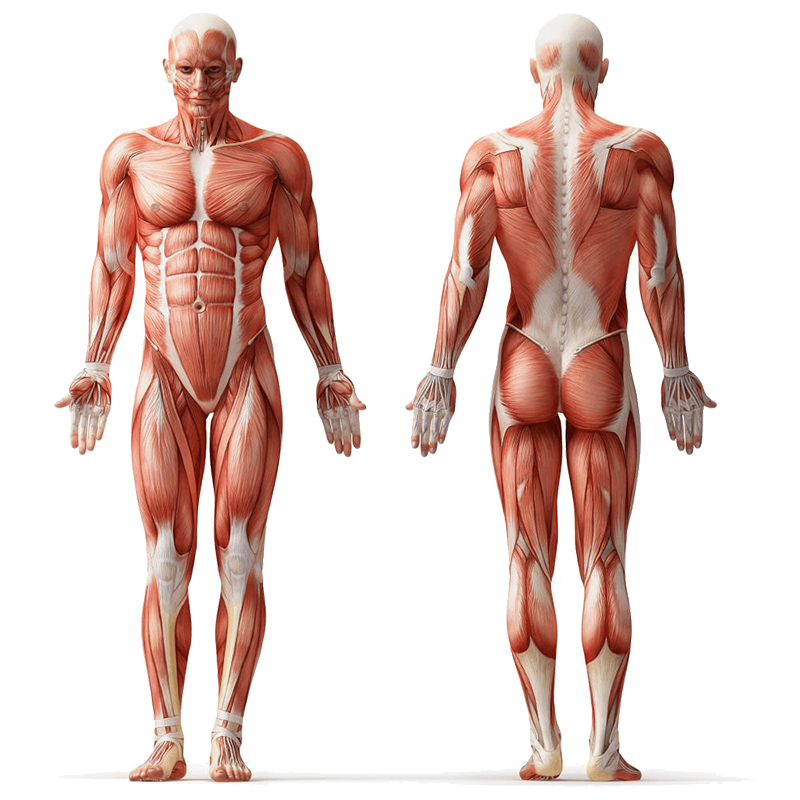
The Jump Squat, also known as the Squat Jump or Plyometric Squat, is a dynamic compound exercise that blends strength training with cardio through an explosive plyometric burst. This movement primarily targets the quadriceps (vastus lateralis, vastus medialis, rectus femoris) and gluteus maximus, while engaging the hamstrings, calves, and core for stability. Requiring no equipment beyond your bodyweight, it adds power and conditioning to the traditional squat, making it ideal for those with some squat experience looking to boost lower-body strength, athletic performance, and cardiovascular endurance. By recruiting fast-twitch muscle fibers during the jump, it improves vertical leap, overall power output, and full-body coordination.
Safety Considerations
- Perform on a non‑slippery, shock‑absorbing surface (e.g. gym mat or sport floor).
- Warm up thoroughly — include dynamic lower‑body mobility drills and light squats.
- Ensure you have baseline strength: able to perform multiple bodyweight squats with good form.
- Maintain neutral spine throughout; avoid rounding the back.
- Land softly with bent knees to absorb impact; avoid stiffening the joints.
- Listen to your joints—avoid if you have knee, hip or ankle pain or injuries.
- Allow adequate rest between plyometric workouts to avoid overuse.
Note: Consult a fitness professional or healthcare provider if you have pre‑existing conditions or experience discomfort during the exercise.
Step-by-Step Instructions
- Start with feet hip‑to‑shoulder width apart, toes pointed forward or slightly out. Arms rest at sides.
- Draw the belly button in, engage your core, and keep chest lifted.
- Lower into a squat by pushing hips back and bending knees; weight stays mid‑foot to heels.
- Once you’ve reached comfortable depth (about quarter to half squat), drive upward explosively through heels, extending hips and knees.
- Swing arms upward for momentum, reaching toward the ceiling as you jump.
- Land softly on the balls of your feet, allowing heels to touch gently while bending knees to absorb force.
- Immediately transition into next rep—descending into squat and repeating fluidly.
Tips for Proper Form
- Keep knees aligned with toes; avoid knees collapsing inward (valgus).
- Maintain a proud chest and neutral spine—no torso lean or rounding.
- Land quietly and softly, minimizing noise and impact.
- Push off through heels first, not toes, for better power drive.
- Use arm swing to enhance momentum and coordination.
- Control descent—don’t drop too fast; maintain tension through glutes and hamstrings.
- Engage core throughout to stabilize your midline and hips.
Common Mistakes to Avoid
- Landing with locked or straight knees—risk of joint strain.
- Knees caving inward during takeoff or landing.
- Pushing off only with toes, neglecting heel‑to‑mid‑foot drive.
- Leaning torso too far forward during jump or landing.
- Descend too quickly—losing control and increasing injury risk.
- Neglecting warm‑up or performing on hard, unsafe surface.
- Overdoing volume without recovery—especially for plyometrics newbies.
Primary Benefits
- Increases lower-body power and explosiveness.
- Improves core stability and coordination.
- Enhances cardiovascular fitness and muscular endurance.
- Burns significant calories in short workouts.
- Develops agility, balance, and bone density.
- Ideal bridge between strength training and plyometrics.
Regressions
If you’re building up to full Jump Squats, try these easier versions:
- Bodyweight squat: Focus on depth and form without impact.
- Half squat jump: Perform smaller jumps from a half-squat position.
- Squat to calf raise: Replace the jump with a heel raise to engage calves.
Progressions
Once comfortable with Jump Squats, advance with these challenges:
- Weighted jump squat: Hold dumbbells or a kettlebell for added resistance.
- Tuck jump squat: Pull knees toward chest at the top of the jump for more core demand.
- Single-leg squat jump: Perform explosive jumps on one leg to boost unilateral strength.
Summary
Jump Squats are dynamic, compound, bodyweight plyometric movements that effectively build power, strength, endurance, and coordination. Once you’ve mastered basic squat mechanics, this exercise enhances lower‑body explosiveness and cardiovascular conditioning—all without equipment.
FAQs
How many reps and sets should I do?
Start with 2 sets of 8–10 reps, resting 60–90 seconds between sets. Increase gradually as you improve.
How often can I include jump squats in my training?
Limit to 1–2 times per week to allow recovery, especially when just starting plyometrics.
Can I do jump squats if I have knee pain?
If you experience knee discomfort, regress to regular squats or low‑impact variations and consult a professional.
Do I need jumping shoes or special surface?
Supportive footwear and a shock‑absorbing mat or sprung floor is ideal to protect joints.
Are weighted jump squats better?
Weighted versions increase load and coordination demand—but only once form and strength are solid.
Should I do jump squats before or after strength training?
Use them as a power primer before heavy lifts, or as a finisher after strength work depending on your goals.