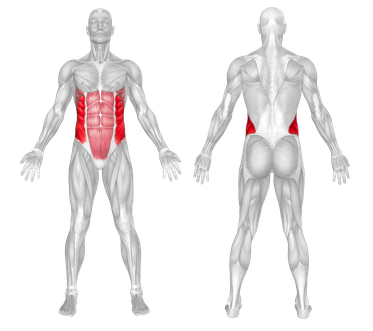
The Heel Tap Crunch, also known as Heel Touches or Alternating Heel Touches, is an effective core exercise that targets the oblique muscles and rectus abdominis (commonly known as the abs). This exercise is a variation of the traditional heel touch, incorporating a crunch motion to enhance muscle engagement. Suitable for beginners and advanced exercisers alike, it primarily focuses on the midsection, with secondary engagement of the hip flexors. The Heel Tap Crunch is an isolation exercise and can be performed without any equipment, making it a convenient addition to any workout routine.
Step-by-Step Instructions
- Lie on your back with your knees bent and feet flat on the floor, approximately hip-width apart. Extend your arms by your sides, palms facing down.
- Lift your head, shoulders, and upper back slightly off the ground, engaging your core muscles. This is your starting position.
- Exhale as you crunch to the right, reaching your right hand toward your right heel. Ensure to keep your head and upper back off the floor.
- Inhale as you return to the starting position.
- Exhale as you crunch to the left, reaching your left hand toward your left heel.
- Continue alternating sides, performing a semi-crunch between each heel touch. Repeat for the desired number of repetitions.
Tips for Proper Form
- Maintain a neutral neck position to avoid straining your neck muscles.
- Focus on engaging your core and obliques with each movement, rather than rushing through the exercise.
- Keep your movements slow and controlled to maximize muscle activation.
- Ensure your lower back remains pressed against the floor to avoid arching.
- Breathe steadily, exhaling on the crunch and inhaling as you return to the starting position.
- If you experience neck discomfort, perform the exercise with your hands supporting your head.
Benefits
- Strengthens the oblique muscles, enhancing torso stability and rotation.
- Improves core strength, supporting better posture and reducing the risk of back injuries.
- Enhances abdominal definition by targeting the rectus abdominis and obliques.
- Improves overall balance and coordination.
- Can be performed anywhere, making it a versatile exercise for home or gym workouts.
- Helps to burn calories and increase metabolic rate when incorporated into a high-intensity workout routine.
Common Mistakes to Avoid
- Not engaging the core properly, which reduces the effectiveness of the exercise.
- Rushing through repetitions without maintaining proper form.
- Allowing the lower back to arch, which can lead to back discomfort.
- Tucking the chin too far down, causing neck strain.
- Failing to breathe correctly, leading to reduced endurance and performance.
- Neglecting to progressively challenge the muscles by increasing repetitions or adding resistance.
Summary
The Heel Tap Crunch is an efficient core exercise that targets the oblique muscles and abs. It's suitable for all fitness levels and can be done without equipment. Proper form and controlled movements are essential to maximize benefits and avoid common mistakes.
FAQs
How often should I perform Heel Tap Crunches?
Incorporate Heel Tap Crunches into your routine 2-3 times per week for optimal results.
Can beginners do Heel Tap Crunches?
Yes, beginners can start with fewer repetitions and focus on maintaining proper form.
What equipment do I need?
No equipment is needed; a comfortable mat is recommended.
How many repetitions should I do?
Start with 12-15 repetitions per side and increase as you build strength.
What are some variations of Heel Tap Crunches?
Variations include adding weight, performing pause heel taps, and doing the exercise on a decline bench.
What are the main muscles worked?
The primary muscles worked are the obliques and rectus abdominis.