
Forward Lunges

Video Demo, Instructions, Proper Form Tips, Common Mistakes, Benefits and FAQs
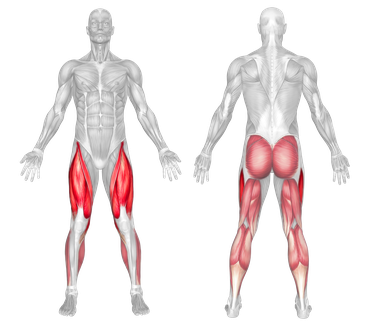
Exercise Profile

Target Muscles:

Quads

Secondary Muscles:

Glutes, Hamstrings, Calves

Exercise Type:

Strength

Equipment:

Bodyweight

Difficulty:

Beginner to Advanced

Mechanics:

Compound
Target Muscle Group

Forward lunges, also known simply as lunges, are a fundamental exercise frequently incorporated into various fitness routines. This exercise primarily targets the quadriceps (front thigh muscles) but also engages the gluteus maximus (buttocks), hamstrings (back of the thighs), and calves (gastrocnemius and soleus). As a compound movement, forward lunges involve multiple joints and muscle groups, making them highly effective for building lower body strength and improving balance and coordination.

Suitable for all fitness levels, this exercise can be performed with body weight, dumbbells, barbells, or other weights to increase resistance. Additionally, forward lunges are beneficial for enhancing functional movement patterns, which are essential for everyday activities and athletic performance.

Step-by-Step Instructions

  1. Stand upright with your feet hip-width apart, shoulders back, and core engaged. Place your hands on your hips or let them hang naturally at your sides.
  2. Take a step forward with your right foot, landing on your heel first, then flattening your foot onto the ground.
  3. Bend both knees to lower your body until your right thigh is parallel to the ground and your right knee is directly above your right ankle. Your left knee should be hovering just above the floor.
  4. Push through your right heel to extend your right leg and return to the starting position.
  5. Repeat the movement with your left leg, stepping forward to complete one repetition.
  6. Continue alternating legs for the desired number of repetitions.

Tips for Proper Form

  • Keep your torso upright throughout the movement to avoid leaning forward, which can place unnecessary strain on your lower back.
  • Ensure your front knee does not extend beyond your toes to protect your knee joint from excessive stress.
  • Maintain a steady and controlled pace to maximize muscle engagement and minimize the risk of injury.
  • Focus on pushing through the heel of your front foot to effectively engage your glutes and quadriceps.
  • Keep your core engaged to support your lower back and maintain balance.
  • Adjust the length of your step to find a comfortable range of motion that allows you to perform the exercise without discomfort.

Forward Lunges Benefits

  • Strengthens the quadriceps, hamstrings, glutes, and calves.
  • Improves balance and coordination by engaging stabilizing muscles.
  • Enhances functional movement patterns, beneficial for daily activities and sports performance.
  • Increases flexibility and mobility in the hips and legs.
  • Can be easily modified to increase intensity with weights or variations.
  • Promotes cardiovascular health when performed as part of a high-intensity interval training (HIIT) routine.

Common Mistakes to Avoid

  • Allowing the front knee to extend beyond the toes, which can cause knee strain.
  • Leaning forward excessively, leading to poor posture and lower back strain.
  • Using a step that is too short, limiting the range of motion and reducing effectiveness.
  • Failing to keep the core engaged, which can affect balance and stability.
  • Not controlling the descent, leading to a jerky or unstable movement.
  • Forgetting to breathe, which can decrease oxygen flow to muscles and lead to fatigue.

Summary

Forward lunges are a versatile and effective exercise that targets multiple lower body muscle groups, including the quadriceps, hamstrings, glutes, and calves. This compound movement enhances strength, balance, and coordination, making it a valuable addition to any fitness routine. Proper form is crucial to avoid common mistakes and maximize the benefits of this exercise. Incorporate forward lunges into your workouts to improve functional movement patterns, increase flexibility, and boost overall lower body strength.

FAQs

How often should I perform forward lunges?

It is recommended to include forward lunges in your workout routine 2-3 times per week, allowing at least one day of rest between sessions for muscle recovery.

Can beginners perform forward lunges?

Yes, forward lunges are suitable for beginners. Start with body weight and gradually add resistance as your strength and balance improve.

What variations of forward lunges can I try?

There are several variations, including reverse lunges, walking lunges, and jumping lunges. Each variation targets the muscles differently and can add variety to your workouts.

Are forward lunges safe for people with knee issues?

Individuals with knee issues should consult with a healthcare provider or physical therapist before performing forward lunges. Modifying the range of motion or using support may help reduce strain on the knees.

Can I incorporate forward lunges into a HIIT routine?

Yes, forward lunges can be included in HIIT routines to increase intensity and provide a cardiovascular challenge. Perform them at a faster pace with shorter rest intervals for best results.

How can I increase the difficulty of forward lunges?

Add weights such as dumbbells or a barbell, increase the number of repetitions, or try advanced variations like jumping lunges to increase the difficulty.

Disclaimer: It’s important to keep in mind that not all exercises are suitable for everyone. Before trying out a new exercise, it’s crucial to consider factors such as your flexibility, strength, and overall health to determine whether or not the exercise is appropriate for you. Like any exercise, there is inherent danger associated with it and it can potentially cause personal injury. It’s solely the responsibility of the exerciser to bear any injury sustained from the proper or improper use of this exercise. World Fitness.Online and its partners cannot be held liable for any injury that occurs as a result of using this exercise and it’s strongly advised that you seek guidance from a professional healthcare provider before attempting any exercise or exercise program.
Facebook
Twitter
LinkedIn
Scroll to Top