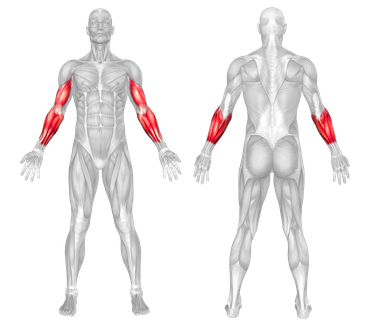
The dumbbell reverse curl, also known as the reverse grip curl, is a valuable exercise for targeting the biceps brachii, brachialis (upper arm muscle beneath the biceps), and the brachioradialis (forearm muscle). This isolation exercise primarily focuses on the forearms and provides a unique grip challenge, promoting grip strength and overall arm development. Suitable for all fitness levels, this exercise requires dumbbells and can be performed in various forms, such as standing or seated. Incorporating the dumbbell reverse curl into your routine can help correct muscle imbalances and enhance your arm's aesthetic appeal by improving muscle definition and size.
Dumbbell Reverse Curl Step-by-Step Instructions
- Stand with your feet shoulder-width apart, holding a dumbbell in each hand with an overhand grip (palms facing down).
- Keep your arms fully extended at your sides, ensuring your back is straight and your core engaged.
- While keeping your upper arms stationary, curl the dumbbells towards your shoulders by bending your elbows. Exhale as you lift the weights.
- Continue curling the dumbbells until they reach shoulder level and your biceps are fully contracted. Squeeze your biceps at the top of the movement.
- Pause briefly at the top, then slowly lower the dumbbells back to the starting position while inhaling.
- Repeat for the desired number of repetitions.
Dumbbell Reverse Curl, Tips for Proper Form
- Keep your elbows close to your sides throughout the movement to isolate the target muscles effectively.
- Avoid using your back or shoulders to lift the weights; focus on using only your forearms.
- Maintain a controlled motion without swinging the weights to prevent momentum from assisting in the lift.
- Use a weight that allows you to perform the exercise with proper form and without straining your wrists.
- Ensure your wrists remain straight and do not bend during the curl to avoid unnecessary strain.
- Breathe consistently, exhaling during the curl and inhaling as you lower the weights.
Dumbbell Reverse Curl Benefits
- Enhances forearm strength and size, particularly targeting the brachioradialis.
- Improves grip strength, which is beneficial for various lifting and daily activities.
- Supports balanced muscle development by emphasizing often neglected forearm muscles.
- Helps prevent muscle imbalances between the flexor and extensor muscles of the arm.
- Can aid in the rehabilitation of biceps injuries by promoting overall arm strength and stability.
- Provides variation in biceps workouts, reducing the risk of overuse injuries and enhancing overall arm aesthetics.
Dumbbell Reverse Curl, Common Mistakes to Avoid
- Using excessive weight: This can lead to improper form and increase the risk of injury.
- Engaging the shoulders or back: Focus on using your forearms and keep your upper arms stationary.
- Allowing wrists to bend: Keep your wrists straight to avoid strain and ensure proper muscle engagement.
- Using momentum: Perform the exercise in a controlled manner to prevent swinging and maintain muscle tension.
- Locking out the elbows: Maintain a slight bend in your elbows at the bottom to keep tension on the muscles.
- Neglecting breathing: Consistent breathing helps maintain form and performance, so exhale during the lift and inhale while lowering the weights.
Dumbbell Reverse Curl Summary
The dumbbell reverse curl is an effective isolation exercise that targets the biceps, brachialis, and brachioradialis muscles. It enhances forearm strength, improves grip, and contributes to balanced muscle development. Proper form is crucial to maximize benefits and prevent injuries, making it a valuable addition to any arm workout routine.
Dumbbell Reverse Curl FAQs
How often should I perform dumbbell reverse curls?
Incorporate dumbbell reverse curls into your arm routine 2-3 times per week, ensuring adequate rest between sessions.
Can I perform dumbbell reverse curls seated?
Yes, performing the exercise seated can help isolate the arm muscles further and reduce the involvement of other body parts.
What weight should I start with?
Begin with a light to moderate weight that allows you to maintain proper form for 8-12 repetitions.
Are there variations to this exercise?
Yes, you can perform reverse curls with a barbell, EZ bar, or cables, and use different grips to target muscles from various angles.
Is this exercise suitable for beginners?
Yes, the dumbbell reverse curl is suitable for all fitness levels, including beginners, due to its simplicity and effectiveness.
What should I do if I experience wrist pain during the exercise?
Ensure your wrists are straight and consider using a lighter weight or an EZ bar, which can reduce wrist strain.