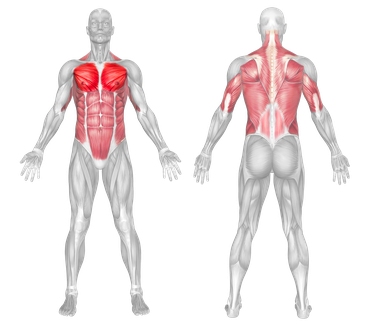
The dumbbell pullover is a versatile exercise often included in strength training routines for its unique ability to engage both the upper body and core. Known for its effectiveness in building the chest and back muscles, it is also referred to as the "dumbbell straight-arm pullover" or "DB pullover". This exercise can be performed on a bench or stability ball and is categorized as an intermediate-level exercise, primarily targeting the pectoralis major (chest muscles) and latissimus dorsi (broadest muscle of the back). It also engages secondary muscles including the triceps brachii (triceps), serratus anterior (serrated muscles of the ribs), and the core stabilizers.
The dumbbell pullover is considered a compound exercise due to its involvement of multiple joints and muscle groups, and requires a dumbbell and a bench for execution. Historically, this exercise has been favored for its dual benefits in chest and back development, often utilized in bodybuilding for creating a fuller and more defined upper body.
Dumbbell Pullover Step-by-Step Instructions
- Begin by lying perpendicular on a bench with only your upper back and shoulders supported, your feet flat on the floor, and your knees bent at a 90-degree angle. Hold a dumbbell with both hands, extending your arms straight up above your chest.
- Grip the dumbbell by placing both palms under the upper weight plate, with your thumbs wrapped around the handle. Your hands should form a diamond shape under the weight.
- With a slight bend in your elbows, slowly lower the dumbbell in an arc behind your head, inhaling deeply as you do so. Keep your core engaged and your back flat throughout the movement.
- Lower the dumbbell until you feel a stretch in your chest and lat muscles. Avoid letting the dumbbell drop too low or your elbows flaring out excessively.
- Pause briefly at the bottom of the movement, ensuring your arms are parallel to the floor.
- Exhale and reverse the motion, bringing the dumbbell back to the starting position above your chest, maintaining the same arc. Focus on using your chest and lat muscles to control the movement.
- Repeat for the desired number of repetitions.
Tips for Proper Form
- Maintain a slight bend in your elbows throughout the exercise to reduce stress on the elbow joints.
- Engage your core to keep your lower back flat against the bench and prevent excessive arching.
- Focus on a controlled movement, avoiding any jerking or swinging of the dumbbell.
- Breathe deeply and consistently, inhaling as you lower the dumbbell and exhaling as you lift it back up.
- Avoid lowering the dumbbell too far behind your head, as this can place undue stress on your shoulders.
- Ensure your grip is secure and the dumbbell is balanced to prevent it from shifting during the exercise.
Benefits
- Enhances upper body strength, particularly in the chest and back muscles.
- Improves core stability and strength due to the need to maintain a stable torso throughout the exercise.
- Increases shoulder flexibility and range of motion.
- Promotes better posture by strengthening the back muscles and improving scapular mobility.
- Engages multiple muscle groups, making it an efficient compound exercise for overall upper body development.
- Can help in creating a more defined and fuller chest when incorporated regularly into strength training routines.
Common Mistakes to Avoid
- Allowing the elbows to flare out excessively, which can reduce the effectiveness of the exercise and increase the risk of shoulder injury.
- Arching the lower back, which can place unnecessary strain on the lumbar spine.
- Lowering the dumbbell too far behind the head, potentially causing shoulder impingement or strain.
- Using too heavy a weight, leading to poor form and increased risk of injury.
- Rushing through the movement, which can compromise muscle engagement and control.
- Neglecting to engage the core, which is crucial for maintaining stability and proper form.
Summary
The dumbbell pullover is a valuable compound exercise that targets both the chest and back muscles, with additional benefits for core stability and shoulder flexibility. By maintaining proper form and incorporating this exercise into your routine, you can enhance upper body strength and achieve a more defined physique. Remember to avoid common mistakes such as excessive elbow flare and lower back arching to maximize effectiveness and minimize the risk of injury.
FAQs
How often should I perform the dumbbell pullover?
It is recommended to perform the dumbbell pullover 1-2 times per week as part of your upper body or full-body strength training routine.
Can beginners perform the dumbbell pullover?
Yes, beginners can perform the dumbbell pullover, but they should start with a lighter weight to master proper form before progressing to heavier weights.
What muscles does the dumbbell pullover target?
The dumbbell pullover primarily targets the pectoralis major (chest muscles) and latissimus dorsi (back muscles), with secondary engagement of the triceps, serratus anterior, and core stabilizers.
Is the dumbbell pullover a chest or back exercise?
The dumbbell pullover is unique in that it effectively targets both the chest and back muscles, making it a valuable addition to both chest and back workout routines.
Can the dumbbell pullover help improve posture?
Yes, the dumbbell pullover can help improve posture by strengthening the back muscles and enhancing scapular mobility.
What equipment is needed for the dumbbell pullover?
You will need a dumbbell and a bench to perform the dumbbell pullover.