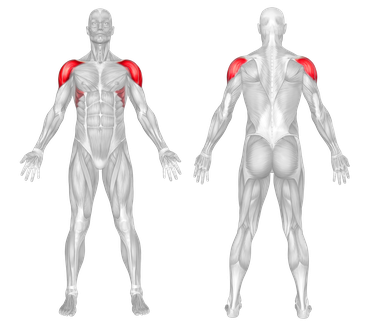
The Dumbbell Lateral Raise, also known as the Side Lateral Raise or Lateral Dumbbell Raise, is a classic strength isolation movement designed to sculpt the shoulders and create that coveted “cap” over your arms. By lifting light-to-moderate dumbbells out to your sides, you target the deltoideus medius (middle deltoid) while also recruiting the deltoideus anterior (front deltoid) and the trapezius (upper traps) to stabilize the load.
This workout shines for its ability to build shoulder width—perfect for anyone looking to improve posture, enhance functional strength for everyday tasks like lifting groceries overhead, or simply craft a balanced, athletic silhouette. All you need is a pair of dumbbells, and whether you’re warming up at home or dialing in your shoulder day at the gym, it suits lifters from beginners finding their groove to intermediate trainees chasing new growth. What sets the Dumbbell Lateral Raise apart is its pinpoint focus on shoulder abduction—raising your arms in just the right plane to light up those side delts—without asking your body to juggle too many joints or muscle groups at once.
Safety Considerations
Before diving into lateral raises, ensure you have a clear, level space around you—no tripping hazards or furniture clutter. Warm up your shoulders with gentle arm circles and band pull-aparts to boost blood flow and joint mobility. Check that your dumbbells are an appropriate weight: too heavy and you’ll force momentum; too light and you won’t stimulate the muscle. Stand with feet shoulder-width apart, keep a slight bend in your knees, and brace your core to protect your lower back. Avoid shrugging your shoulders toward your ears—focus instead on moving just the arms. If you ever feel a sharp pinch in your shoulder joint, stop immediately and reassess your grip, range of motion, or weight selection.
Note: Consult a fitness professional or healthcare provider if you have pre-existing conditions or experience discomfort during the exercise.
Step-by-Step Instructions
Follow these steps to execute the Dumbbell Lateral Raise with precision:
- Stand tall with feet about hip-width apart, knees slightly bent, holding a dumbbell in each hand at your sides with palms facing your thighs.
- Engage your core by pulling your belly button toward your spine and keep your chest lifted and shoulders down and back.
- Maintain a very slight bend in your elbows—this protects the joints and keeps tension on the deltoids.
- Exhale as you lift both arms out to the sides in a smooth arc, leading with your elbows until they reach shoulder height; imagine pouring water out of a glass held in each hand to keep wrists neutral.
- Pause briefly at the top for maximum muscle engagement, keeping your shoulder blades stable and avoiding any shrugging motion.
- Inhale as you slowly lower the dumbbells back to the starting position, controlling the descent to maintain continuous tension.
- Repeat for the desired number of repetitions, typically 10–15 per set, focusing on smooth, controlled motion rather than speed.
- When fatigue sets in, resist the urge to swing—drop the weight if needed or switch to single-arm reps to finish strong with proper form.
Tips for Proper Form
Here are some key pointers to keep your lateral raises effective and safe:
- Lead with your elbows, not your hands, to maximize activation of the lateral deltoid head.
- Raise in the “scapular plane” (about 30° forward of the body) to protect the shoulder joint and hit the muscle better.
- Keep a neutral spine—avoid leaning back or tipping forward as the weights rise.
- Use a light-to-moderate weight that lets you focus on quality reps, not momentum.
- Maintain constant tension by controlling both the lifting and lowering phases, avoiding any free-fall of the dumbbells.
- Exhale on the lift and inhale on the return to support stability and oxygen flow.
- Keep your wrists aligned with your forearms—no bending up or down.
- Engage your glutes and quads slightly to form a solid base and protect your lower back.
Common Mistakes to Avoid
Avoid these slip-ups to get the most out of your lateral raises:
- Using too heavy a weight, leading to swinging or body momentum rather than true shoulder work.
- Shrugging the shoulders toward the ears, which shifts tension to the traps and neck.
- Locking the elbows straight—keep that slight bend to reduce joint strain.
- Raising the arms above shoulder height, which can impinge the rotator cuff tendons.
- Leaning backward or forward to cheat the lift, risking lower-back strain.
- Dropping the weights quickly on the descent, losing muscle tension and control.
- Allowing wrists to bend, which can lead to discomfort or injury.
- Not warming up adequately, increasing the risk of a shoulder roll-back or strain.
Primary Benefits
Integrating Dumbbell Lateral Raises into your routine delivers multiple advantages:
- Builds width in the shoulders by isolating and strengthening the lateral deltoid head.
- Enhances shoulder stability and joint integrity for everyday tasks and other lifts.
- Improves posture by balancing anterior and lateral shoulder strength.
- Supports better performance in pressing movements like overhead press or bench press.
- Helps prevent imbalances by targeting a muscle group often underworked in compound lifts.
- Contributes to overall upper-body aesthetics, creating a broader, more athletic look.
- Engages core muscles isometrically, giving your midsection an added stability challenge.
- Offers flexibility in programming—can be done seated, standing, or with cables for variety.
Regressions
If you need a simpler version, try these easier options:
- Perform the raise seated on a bench to remove any lower-body sway.
- Use lighter dumbbells or even water bottles to practice form before adding weight.
- Raise arms only halfway—stop at a 45° lift until you build strength.
- Switch to single-arm lateral raises to focus on one side at a time and control balance.
- Use resistance bands instead of dumbbells to allow smoother tension curves.
- Perform “isolation holds”—lift and hold at mid-height for time to build endurance.
Progressions
Once you’ve mastered the basics, challenge yourself with these tougher variations:
- Add a 1–2 second pause at the top of each rep to intensify muscle activation.
- Perform the exercise standing on one leg for an added core and balance test.
- Switch to heavy dumbbells for low-rep sets (6–8 reps) to build strength.
- Incorporate cables or a pulley system for constant tension throughout the range.
- Try “lean-away” lateral raises by leaning your torso away from a support to extend range of motion.
- Combine with a front raise for a lateral-to-front raise combo, hitting both deltoid heads.
Summary
The Dumbbell Lateral Raise is a straightforward yet powerful isolation exercise that zeroes in on the lateral deltoid to build shoulder width, strength, and stability. By mastering the proper form—maintaining a slight elbow bend, lifting in the scapular plane, and controlling the weight through each rep—you’ll sculpt well-rounded shoulders, protect your joints, and enhance overall upper-body performance.
FAQs
Here are answers to common questions about the Dumbbell Lateral Raise:
How often should I do Dumbbell Lateral Raises?
Aim for 2–3 sessions per week, allowing at least 48 hours of rest between shoulder-focused workouts.
Can beginners perform this exercise safely?
Yes—start with very light dumbbells and focus on flawless form before increasing weight.
What weight should I start with?
Choose a weight that lets you complete 12–15 controlled reps without swinging; often 2–5 kg (5–10 lbs) is enough for beginners.
Should I lift both arms at once or alternate?
Either works; lifting both at once challenges stability more, while alternating can help maintain form when fatigue sets in.
Is there a recommended rep and set scheme?
For muscle growth, 3–4 sets of 10–15 reps is ideal; for strength, 4–5 sets of 6–8 reps with heavier weight works well.
What if I feel pinch in my shoulder?
That could signal impingement—reduce range of motion, lighten the weight, and ensure you’re lifting in the scapular plane rather than straight out to the side.
Can I replace this with a machine version?
Yes—most gyms have a lateral raise machine that offers guided motion and constant tension, making it a solid alternative.