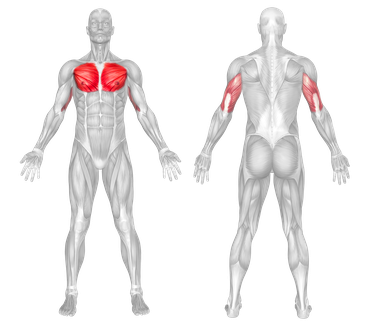
The Decline Smith Bench Press is an effective strength exercise primarily targeting the lower part of the chest (pectoralis major) and is often included in routines aimed at building chest muscle and definition. This exercise is a variation of the traditional bench press, performed on a Smith machine with the bench set to a decline angle. Known for its stability and control, the Smith machine helps guide the barbell along a fixed path, making it a safer option for beginners or those lifting heavy weights without a spotter.
The exercise also engages secondary muscle groups, including the anterior deltoids (front shoulders) and triceps brachii (triceps). Being a compound movement, it requires the coordinated effort of multiple joints and muscle groups, thus providing a comprehensive workout for the upper body. Required equipment includes a Smith machine and a decline bench.
Decline Smith Bench Press Step-by-Step Instructions
- Set up the Smith machine by placing a decline bench in the middle of the rack and adjust the bar height to a comfortable reach.
- Load the desired weight onto the Smith machine bar.
- Lie back on the decline bench with your feet securely hooked under the bench pads for stability.
- Grasp the barbell with an overhand grip, hands placed slightly wider than shoulder-width apart.
- Unrack the bar by rotating your wrists forward, lifting it off the hooks.
- Lower the barbell slowly and with control towards your lower chest, keeping your elbows at about a 45-degree angle from your torso.
- Pause briefly when the bar is about one inch above your chest.
- Press the bar back up to the starting position by extending your elbows, avoiding locking them out completely at the top.
- Repeat for the desired number of repetitions.
- After completing the set, carefully rerack the bar by rotating your wrists backward to hook the bar onto the safety catches.
Tips for Proper Form
- Ensure your feet are firmly hooked under the pads to prevent sliding during the exercise.
- Maintain a controlled movement throughout the exercise, avoiding bouncing the bar off your chest.
- Keep your lower back slightly arched and your shoulder blades retracted to protect your shoulders and maintain proper form.
- Focus on using your chest muscles to lift the weight, not your arms or shoulders.
- Breathe in as you lower the bar and exhale as you press it back up.
- Adjust the decline angle if needed to ensure comfort and effectiveness.
Decline Smith Bench Press Benefits
- Isolates and targets the lower chest muscles more effectively than flat or incline bench presses.
- Provides stability and control due to the guided motion of the Smith machine, reducing the risk of injury.
- Engages secondary muscle groups such as the shoulders and triceps, contributing to overall upper body strength.
- Allows for heavier lifting without a spotter, enhancing muscle growth potential.
- Helps improve the aesthetics of the chest by focusing on the often underdeveloped lower pecs.
- Can be a safer alternative for those with shoulder issues due to the controlled range of motion.
Common Mistakes to Avoid
- Using too much weight, which can compromise form and increase injury risk.
- Bouncing the bar off the chest, reducing the effectiveness of the exercise and potentially causing injury.
- Allowing the elbows to flare out excessively, which can strain the shoulders.
- Not maintaining a steady and controlled tempo, which can reduce muscle engagement.
- Arching the back excessively, leading to poor form and potential lower back strain.
- Neglecting to warm up properly, increasing the risk of muscle strain or injury.
Summary
The Decline Smith Machine Bench Press is a valuable exercise for targeting the lower chest muscles. It offers stability and safety due to the Smith machine's guided path, making it suitable for lifters of all levels. Proper form and controlled movements are essential to maximize the benefits and minimize the risk of injury. Incorporate this exercise into your chest routine to enhance muscle growth and definition.
FAQs
How often should I perform the Decline Smith Bench Press?
It is recommended to include this exercise in your chest routine 1-2 times per week, allowing adequate rest between sessions.
Can beginners perform the Decline Smith Bench Press?
Yes, beginners can perform this exercise, especially with the added safety and stability of the Smith machine. Start with lighter weights to learn proper form.
Is the Decline Smith Bench Press better than the flat bench press?
Both exercises have their benefits. The decline press targets the lower chest more effectively, while the flat bench press provides a more balanced chest workout.
Can I perform the Decline Smith Machine Bench Press without a spotter?
Yes, one of the advantages of the Smith machine is that it provides a safer environment for lifting heavy weights without needing a spotter.
What angle should the decline bench be set at?
A decline angle of 15 to 30 degrees is generally recommended for this exercise.
Should I lock my elbows at the top of the movement?
No, avoid locking your elbows to maintain tension on the chest muscles and reduce the risk of joint strain.