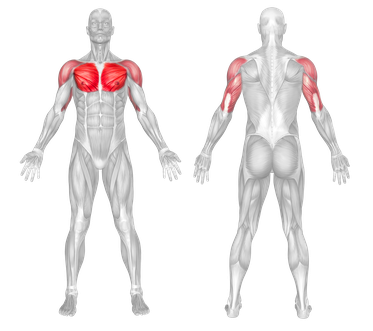
The Decline Dumbbell Bench Press is a strength exercise that emphasizes the lower part of the pectoral muscles, offering a nuanced approach to chest development. This exercise is particularly effective in targeting the lower chest, providing a complementary angle to the traditional flat and incline bench presses. Utilizing dumbbells allows for a greater range of motion and individual muscle focus on each side of the body, enhancing muscle balance and coordination. Suitable for intermediate to advanced exercisers, the Decline Dumbbell Bench Press engages secondary muscle groups such as the triceps and anterior deltoids, making it a compound movement. The required equipment for this exercise includes a decline bench and a set of dumbbells.
Decline Dumbbell Bench Press Step-by-Step Instructions
- Secure your legs at the end of the decline bench and lie down with a dumbbell in each hand, resting them on your thighs.
- Press the dumbbells up, moving them over your chest with your palms facing forward. Ensure your arms are fully extended.
- Slowly lower the dumbbells to the sides of your chest by bending your elbows, keeping the movement controlled.
- Pause when the dumbbells reach chest level, then press them back up to the starting position by extending your arms.
- Focus on squeezing your chest muscles at the top of the movement before starting the next repetition.
- Repeat for the desired number of repetitions, maintaining a smooth and controlled tempo throughout.
Decline Dumbbell Bench Press Tips for Proper Form
- Keep your feet securely locked in place and your lower back slightly arched to maintain stability and proper alignment.
- Control the descent of the dumbbells to maximize muscle engagement and prevent injury.
- Ensure the dumbbells move in a smooth arc, rather than straight up and down, to better target the chest muscles.
- Avoid locking your elbows at the top of the press to maintain tension on the chest muscles.
- Keep your movements controlled and deliberate, focusing on the contraction of the chest muscles rather than the weight used.
Decline Dumbbell Bench Press Benefits
- Targets the lower chest muscles for improved definition and strength.
- Utilizes dumbbells for a greater range of motion, enhancing muscle activation and balance.
- Engages secondary muscle groups like the triceps and shoulders, offering a comprehensive upper body workout.
- Reduces stress on the shoulder joints compared to other bench press variations.
- Improves muscular coordination and control through unilateral movement, reducing the risk of muscle imbalances.
Decline Dumbbell Bench Press Common Mistakes to Avoid
- Not securing the legs properly, leading to instability during the exercise.
- Lowering the dumbbells too far, which can put excessive strain on the shoulders.
- Pressing the dumbbells too quickly, which reduces muscle engagement and increases the risk of injury.
- Failing to maintain a consistent arc in the movement, which can decrease the effectiveness of the exercise.
- Using weights that are too heavy, compromising form and increasing the likelihood of injury.
Decline Dumbbell Bench Press Summary
The Decline Dumbbell Bench Press is an effective exercise for targeting the lower chest, enhancing muscular definition and strength in this area. By focusing on controlled movements and proper form, exercisers can maximize the benefits of this exercise while minimizing the risk of injury. Suitable for intermediate to advanced levels, this variation offers the advantages of improved muscle balance and a greater range of motion, making it a valuable addition to any chest-focused workout regimen.
Decline Dumbbell Bench Press FAQs
How often should I perform the Decline Dumbbell Bench Press?
It is recommended to perform the Decline Dumbbell Bench Press 1-3 times per week, depending on your overall training program and recovery capacity.
Can beginners perform the Decline Dumbbell Bench Press?
Yes, beginners can perform the Decline Dumbbell Bench Press with lighter weights and proper guidance to ensure correct form and technique.
What is the best way to incorporate the Decline Dumbbell Bench Press into a workout routine?
Incorporate the Decline Dumbbell Bench Press into your routine as a primary chest exercise, typically after a warm-up and before other chest or upper body exercises.
Is the Decline Dumbbell Bench Press better than the Flat Bench Press?
Both exercises have their advantages. The Decline Dumbbell Bench Press targets the lower chest more effectively, while the Flat Bench Press provides a more balanced overall chest workout.
Can I perform the Decline Dumbbell Bench Press with other angles?
Yes, performing the Decline Dumbbell Bench Press with different angles can target different areas of the chest and provide variation to your workout.
What should I do if I experience shoulder pain during the Decline Dumbbell Bench Press?
If you experience shoulder pain, check your form, reduce the weight, or consult with a fitness professional to ensure you're performing the exercise correctly.