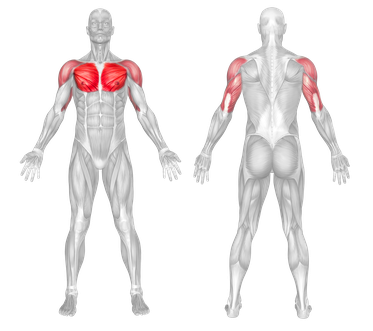
The chest dips, also known as the triceps dip, is a compound exercise primarily targeting the pectoralis major (chest muscles) and triceps brachii (triceps). It also engages the deltoids (shoulder muscles) and the latissimus dorsi (back muscles). This body-weight exercise requires parallel bars or dip bars. Dips are a fundamental movement in bodyweight training and have been popular for decades due to their effectiveness in building upper body strength and muscle mass. Historically, dips have been a staple in gymnastic training and calisthenics routines due to their simplicity and efficiency. They can be adapted for various fitness levels, making them a versatile exercise in any strength training program.
Chest Dips Step-by-Step Instructions
- Begin by gripping the parallel bars firmly with your palms facing inward. Extend your arms fully and lift your body, keeping your legs straight or slightly bent at the knees.
- Lean forward slightly to emphasize the chest muscles more than the triceps. Keep your head neutral and your eyes forward.
- Inhale as you slowly lower your body by bending your elbows. Keep your elbows close to your body to avoid unnecessary strain on your shoulders.
- Lower yourself until your upper arms are parallel to the ground or slightly below, depending on your shoulder flexibility.
- Pause briefly at the bottom of the movement to eliminate momentum and engage the muscles fully.
- Exhale as you push your body back up to the starting position, extending your elbows without locking them out.
- Repeat for the desired number of repetitions, maintaining control and proper form throughout.
Chest Dips, Tips for Proper Form
- Warm up your shoulders and chest with light cardio and dynamic stretches before performing dips to prevent injury.
- Keep a slight forward lean throughout the exercise to target the chest muscles more effectively.
- Engage your core muscles to stabilize your body and maintain proper alignment.
- Avoid flaring your elbows out to the sides, which can place undue stress on your shoulder joints.
- Control the descent and avoid dropping too quickly, which can increase the risk of injury and reduce the exercise’s effectiveness.
- Use assistance bands or a dip machine if you're a beginner or if you struggle with the full body-weight dip.
Chest Dips Benefits
- Builds significant upper body strength, particularly in the chest, triceps, and shoulders.
- Enhances muscle endurance and stamina due to the body-weight nature of the exercise.
- Improves shoulder joint stability and strength, benefiting overall shoulder health.
- Promotes muscle hypertrophy, leading to increased muscle size and definition.
- Can be performed with minimal equipment, making it a versatile addition to any workout routine.
- Encourages better posture by strengthening the upper back and shoulder muscles.
Chest Dips Common Mistakes to Avoid
- Not warming up properly, leading to potential injuries in the shoulders and elbows.
- Leaning too far forward or keeping an upright position, which can shift the focus away from the chest.
- Allowing the elbows to flare out, increasing the risk of shoulder strain and reducing exercise efficiency.
- Using momentum to lift the body instead of controlled muscle contractions, which can decrease effectiveness.
- Not lowering the body enough, which reduces the range of motion and the exercise’s benefits.
- Locking the elbows at the top of the movement, placing unnecessary stress on the joints.
Chest Dips Summary
The chest dip is a compound body-weight exercise that effectively targets the chest, triceps, and shoulders. It requires minimal equipment and can be modified for various fitness levels. By focusing on proper form and technique, you can maximize the benefits of this powerful upper body movement. Remember to warm up, maintain a slight forward lean, and control your movements to prevent common mistakes and enhance your workout.
Chest Dipss FAQs
How often should I perform chest dips?
For optimal results, include chest dips in your workout routine 2-3 times per week, allowing for adequate recovery between sessions.
Can beginners perform chest dips?
Yes, beginners can start with assisted dips using resistance bands or a dip machine to build strength before progressing to full body-weight dips.
What are the alternatives to chest dips?
Alternatives include push-ups, bench presses, and chest flyes, which target similar muscle groups with different mechanics.
How can I increase the difficulty of chest dips?
Increase difficulty by adding weight with a dip belt or by slowing down the tempo of your repetitions.
Are chest dips safe for shoulder health?
Yes, when performed with proper form and without excessive weight, chest dips can strengthen the shoulders and improve joint stability.
What is the recommended number of repetitions for chest dips?
Aim for 8-12 repetitions per set if focusing on muscle growth, or higher reps (15-20) for endurance.