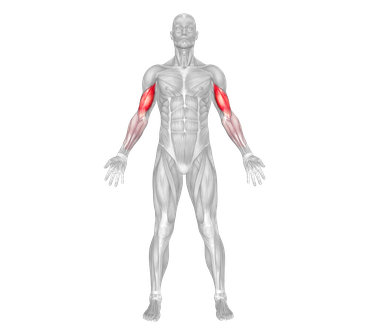
The Cable Hammer Curl is a highly effective exercise designed to target the muscles of the upper and lower arms, particularly the brachialis, biceps brachii, and brachioradialis. Also known as the Rope Hammer Curl, this variation of the traditional hammer curl uses a cable machine with a rope attachment to provide constant tension throughout the movement, enhancing muscle engagement and promoting strength and hypertrophy.
This exercise is categorized as an isolation movement due to its focus on a single joint and specific muscle group. It's suitable for all fitness levels, from beginners to advanced athletes, and falls under the strength training category. The primary muscle group targeted is the biceps brachii (biceps), with secondary engagement of the brachialis and brachioradialis (forearm muscles). The cable hammer curl requires a cable machine with a rope attachment.
Cable Hammer Curl Step-by-Step Instructions
- Attach a rope handle to a low pulley on a cable machine and set the desired weight.
- Stand facing the machine with your feet shoulder-width apart and grasp the rope handles with a neutral grip (palms facing each other).
- Keep your elbows close to your sides and your torso upright, ensuring a strong and stable core.
- Curl the rope handles upward towards your shoulders by bending your elbows, keeping your upper arms stationary.
- Squeeze your biceps at the top of the movement, ensuring maximum contraction.
- Slowly lower the handles back to the starting position, maintaining control and tension in the muscles.
- Repeat for the desired number of repetitions.
Cable Hammer Curl, Tips for Proper Form
- Maintain a neutral grip throughout the movement to emphasize the brachialis and brachioradialis.
- Keep your elbows tucked to your sides to prevent using momentum or engaging the front deltoids.
- Avoid swinging your body; keep your torso stable to isolate the arm muscles effectively.
- Use a weight that allows for full range of motion without compromising form.
- Breathe out as you curl the rope upwards and inhale as you lower it back down.
- Consider using a thumbless grip to better engage the forearm muscles.
Cable Hammer Curl Benefits
- Increases overall arm size and strength by targeting the brachialis muscle, which lies beneath the biceps.
- Enhances grip strength and wrist stability through the engagement of forearm muscles.
- Provides constant tension on the muscles throughout the range of motion, leading to greater muscle activation.
- Allows for a greater range of motion compared to traditional dumbbell hammer curls.
- Helps in developing a fuller appearance of the arms by working the brachioradialis.
- Offers versatility in training, as it can be easily adjusted to target different areas of the biceps and forearms.
Cable Hammer Curl Common Mistakes to Avoid
- Not performing the full range of motion, which can limit muscle engagement and growth.
- Using momentum by swinging the body to lift the weight, reducing the effectiveness of the exercise.
- Allowing the elbows to drift away from the sides, which can engage unintended muscle groups.
- Lifting too heavy weights, which can compromise form and increase the risk of injury.
- Failing to squeeze the biceps at the top of the movement, missing out on maximum muscle contraction.
- Neglecting to control the lowering phase of the exercise, which is crucial for muscle development.
Cable Hammer Curl Summary
The Cable Hammer Curl is an excellent isolation exercise for building arm strength and size, particularly targeting the brachialis and forearm muscles. Utilizing a cable machine with a rope attachment, this exercise ensures constant tension and greater muscle activation. Proper form and controlled movements are essential to maximize benefits and avoid common mistakes.
Cable Hammer Curl FAQs
How often should I perform Cable Hammer Curls?
Incorporate Cable Hammer Curls into your arm workout routine 2-3 times per week, allowing for adequate rest and recovery between sessions.
Can beginners do Cable Hammer Curls?
Yes, this exercise is suitable for beginners as long as they start with a manageable weight and focus on proper form.
What are some variations of Cable Hammer Curls?
Variations include single-arm Cable Hammer Curls, standing or seated Cable Hammer Curls, and cross-body Cable Rope Curls.
Why should I use a cable machine instead of dumbbells?
A cable machine provides constant tension throughout the movement, which can enhance muscle activation and growth compared to free weights.
What muscles do Cable Hammer Curls primarily target?
This exercise primarily targets the brachialis, biceps brachii, and brachioradialis muscles.
How can I avoid using momentum during the exercise?
Keep your torso stable, elbows tucked to your sides, and choose a weight that you can lift without swinging your body.