
Cable Crossover

Video Demo, Instructions, Proper Form Tips, Common Mistakes, Benefits and FAQs
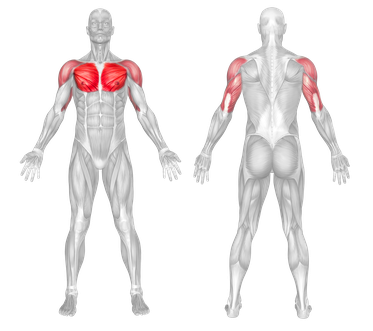
Exercise Profile

Target Muscles:

Chest

Secondary Muscles:

Shoulders, Triceps

Exercise Type:

Strength

Equipment:

Cable Machine

Difficulty:

Intermediate

Mechanics:

Isolation
Chest Target Muscle Group

The Cable Crossover is a popular isolation exercise primarily targeting the pectoralis major (chest) muscles. It's often included in upper-body and chest-focused workouts to enhance muscle definition and strength. Also known as Cable Flyes, this exercise allows for a wide range of motion and provides continuous tension on the chest muscles, making it highly effective for muscle hypertrophy. Secondary muscles engaged include the anterior deltoids (front shoulders) and biceps.

This compound movement can be performed at different angles (high, mid, and low) to target various parts of the chest. The mechanics of the exercise involve using a cable machine with adjustable pulleys, and it requires a basic understanding of form and technique to avoid injury. It is suitable for all experience levels, though beginners should start with light weights to master the form before progressing.

Cable Crossover Step-by-Step Instructions

  1. Set the pulleys to your desired height (high, mid, or low).
  2. Grab one handle in each hand with a slight forward lean and staggered stance for stability.
  3. Keep a slight bend in your elbows and arms extended to the sides, parallel to the floor.
  4. Pull the handles together in front of your chest in a wide arc, crossing your hands over at the end of the movement.
  5. Hold the contraction for a moment, then slowly return to the starting position.
  6. Repeat for the desired number of repetitions, maintaining control throughout the movement.

Tips for Proper Form

  • Warm up your shoulder joints thoroughly before starting.
  • Keep your core engaged and back straight throughout the exercise.
  • Avoid using excessive weight that compromises your form.
  • Ensure a slight bend in the elbows to protect your joints.
  • Control the movement, especially on the way back to the starting position.
  • Focus on squeezing your chest muscles at the peak of the movement.
  • Do not lean too far forward or back; maintain a neutral spine.

Cable Crossover Benefits

  • Targets the chest muscles effectively for hypertrophy and strength.
  • Allows for a full range of motion, enhancing muscle activation.
  • Can be adjusted to focus on different parts of the chest.
  • Improves muscle symmetry and balance.
  • Provides continuous tension, beneficial for muscle growth.
  • Helps in isolating the chest muscles, reducing reliance on other muscle groups.

Common Mistakes to Avoid

  • Not crossing the hands at the end of each rep, limiting range of motion.
  • Using momentum to move the weights, which reduces muscle activation.
  • Bending the elbows too much, turning the exercise into a press.
  • Leaning forward excessively, which can strain the lower back.
  • Failing to maintain a neutral spine and stable core.
  • Using weights that are too heavy, leading to poor form and potential injury.

Summary

The Cable Crossover is a versatile and effective isolation exercise targeting the chest muscles. By adjusting the height of the pulleys, you can emphasize different parts of the chest, making it a valuable addition to any chest workout routine. Proper form and controlled movement are crucial to maximize benefits and avoid injury. Whether you are a beginner or an advanced lifter, the Cable Crossover can help you achieve greater chest muscle definition and strength.

FAQs

How often should I perform Cable Crossovers?

Include Cable Crossovers in your chest workout routine 2-3 times per week, allowing at least 48 hours of rest between sessions to allow muscle recovery.

Can beginners perform Cable Crossovers?

Yes, beginners can perform Cable Crossovers. It's recommended to start with lighter weights and focus on mastering the form before progressing to heavier weights.

What are the variations of Cable Crossovers?

Variations include high, mid, and low Cable Crossovers, each targeting different parts of the chest. Single-arm Cable Crossovers and Reverse Cable Crossovers are also effective variations.

What equipment do I need for Cable Crossovers?

You need a cable machine with adjustable pulleys and handles. Resistance bands can be used as an alternative if a cable machine is not available.

What are the primary and secondary muscles worked in Cable Crossovers?

The primary muscle worked is the pectoralis major (chest). Secondary muscles include the anterior deltoids (shoulders) and biceps.

How can I avoid injuries while doing Cable Crossovers?

Warm up properly, use appropriate weights, maintain good form, and avoid using momentum. If you experience any discomfort or pain, stop the exercise immediately.

Disclaimer: It’s important to keep in mind that not all exercises are suitable for everyone. Before trying out a new exercise, it’s crucial to consider factors such as your flexibility, strength, and overall health to determine whether or not the exercise is appropriate for you. Like any exercise, there is inherent danger associated with it and it can potentially cause personal injury. It’s solely the responsibility of the exerciser to bear any injury sustained from the proper or improper use of this exercise. World Fitness.Online and its partners cannot be held liable for any injury that occurs as a result of using this exercise and it’s strongly advised that you seek guidance from a professional healthcare provider before attempting any exercise or exercise program.
Facebook
Twitter
LinkedIn
Scroll to Top