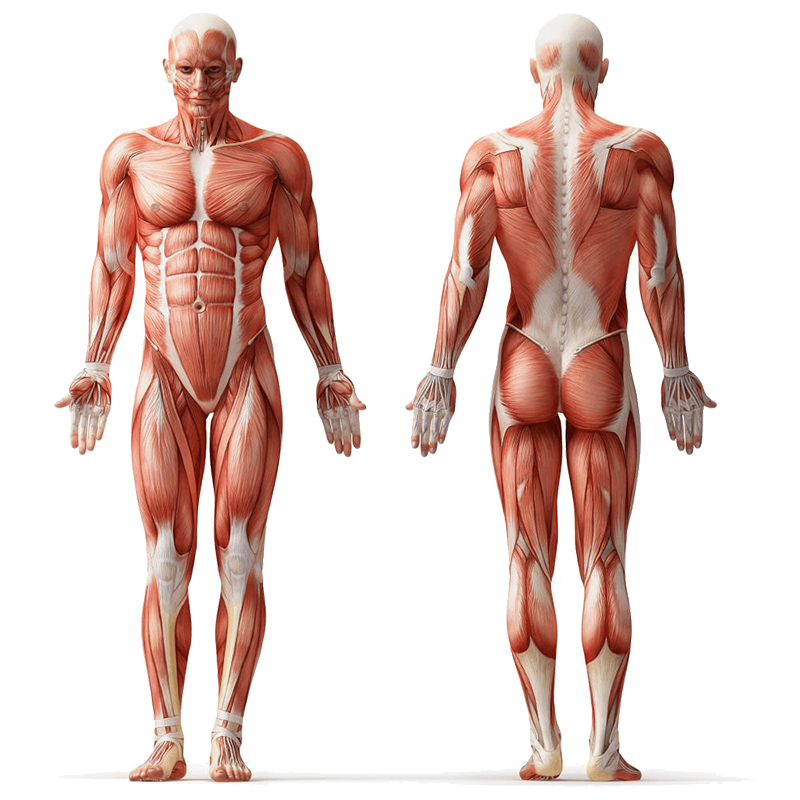
The Barbell Split Jerk (also known simply as the split jerk) is a dynamic power/strength movement where you explosively drive a barbell overhead from the front rack position, catching it in a staggered orbit using a split stance. This compound exercise engages your deltoids (shoulders), triceps, quads, glutes, hamstrings, calves, core and lower back in a coordinated burst of force. Performed with a barbell, it's best suited for lifters at the intermediate to advanced level who have good mobility, basic clean and press proficiency, and a desire to build powerful overhead strength with precision timing.
Safety Considerations
Make sure you have a clear platform and enough space behind and in front to recover safely. Warm up your shoulders, wrists, hips, and ankles thoroughly. Use a weight you can control to master form before adding load. Keep the torso upright throughout and don’t hyperextend the back. Maintain a strong brace through the core to support the spine. Land softly into the split to reduce impact on joints. Note: Consult a fitness professional or healthcare provider if you have pre‑existing conditions or experience discomfort during the exercise.
Step-by-Step Instructions
Follow these ordered steps to perform the barbell split jerk correctly:
- Stand with the barbell racked on your front shoulders, grip slightly wider than shoulder‑width, elbows in front.
- Dip by bending hips and knees a few inches, keeping chest upright and weight over mid‑foot.
- Drive vigorously upward by extending hips, knees and ankles (triple extension) to launch the bar.
- As the bar moves, split your legs quickly—front foot forward, back foot back—landing in a lunge with a vertical front shin and the back leg slightly bent.
- Catch the bar overhead with full arm lockout, head slightly forward so the bar is aligned over base and centerline.
- Recover the split by stepping front foot back, then the rear foot forward to stand tall with the bar overhead.
- Lower the bar safely under control or drop if heavy.
Tips for Proper Form
Here are key form pointers to help you perform the split jerk safely and efficiently:
- Keep elbows up and forward in the front rack to support stability.
- Maintain a vertical torso during the dip—don’t let your chest lean forward.
- Drive straight upward; don’t press forward with the arms until the bar has momentum.
- Land feet wide enough side‑to‑side (think railroad tracks, not tight rope).
- Aim for a vertical front shin with knee behind the toe; rear heel off the ground.
- Balance weight evenly between front and back leg in the split.
- Brace your core hard as you dip and drive to protect your spine.
- Keep bar path vertical and close to the body for efficiency and control.
- Recover feet back to center under the bar—not drifting off to one side.
Common Mistakes to Avoid
Avoid these pitfalls to get the most out of the movement safely:
- Dipping too shallow or collapsing your core which weakens the drive.
- Leaning torso forward during the dip, causing bar path inefficiencies.
- Using arms to press instead of leg drive during the jerk.
- Stepping too narrow in the split, making it hard to balance.
- Landing with uneven foot placement—short front step or straightened rear leg.
- Shifting too much weight on the front leg instead of split evenly.
- Recovering incorrectly by stepping the wrong foot first.
- Letting the bar drift away from body instead of vertical travel.
- Using too heavy weight before mastering technique.
Primary Benefits
The split jerk offers these powerful rewards:
- Develops explosive, overhead pressing power and coordination.
- Builds full‑body strength through compound triple extension.
- Enhances core stability and midline control under load.
- Improves shoulder, wrist and hip mobility and stability.
- Teaches balance and precision in footwork and body positioning.
- Allows lifting heavier weights overhead due to stable split base.
- Translates to improved athleticism—jumping, sprinting and coordination.
Regressions
These simpler versions help you build foundations before moving to the full lift:
- Strict overhead barbell press or shoulder press to build lock‑out strength.
- Pause push press (dip with pause then drive) to train proper dip and drive control.
- Split jerk footwork drill without bar to engrain the foot pattern and timing.
- Double‑pause split jerk with light barbell to work on dip and split separately.
Progressions
Once form is solid, advance these ways:
- Tempo split jerk—slow dip then drive for control and awareness.
- Heavy singles with low reps to develop maximal strength and confidence.
- Behind‑the‑neck split jerk to challenge mobility and position variations.
- Add jerk drives (dip‑drive without split) to reinforce leg power.
Summary
The Barbell Split Jerk is a technical, explosive compound exercise that demands coordination, mobility and control. When executed with proper form—upright dip, powerful leg drive, stable split landing, and precise catch—it builds exceptional overhead strength, full‑body power, and core stability. Regress using drills and paused variations, then progress through tempo, load and mobility variations. Prioritize technique to unlock its full benefits while staying safe.
FAQs
Do I need to clean the bar before performing the jerk?
You can perform the split jerk either as part of a clean & jerk or starting from the front rack position — practice both to build clean and rack strength if needed.
How wide should my split stance be?
Wider than hip width but still under alignment: think like railroad tracks—not tightrope—side‑to‑side; front shin vertical.
Should I dip slowly or quickly?
The dip should be controlled—smooth descent—then reversed explosively. Tempo variations can help train awareness.
What if my wrist or shoulder mobility limits the front rack position?
Start with behind‑neck jerks or push presses, then gradually improve wrist and shoulder flexibility over time.
How often should I include split jerks in my training?
Intermediate to advanced lifters often train the jerk 1–3 times per week—depending on focus—typically 1–5 reps per set.
Is split jerk better than push jerk?
For most lifters, the split jerk provides a larger margin for error and helps lift heavier overhead loads due to its stable base ([reddit.com](https://www.reddit.com/r/weightlifting/comments/193cm6r/should_i_switch_from_split_jerk_to_push_jerk/?utm_source=chatgpt.com)).
Can beginners learn the split jerk?
Yes, with proper progressions like footwork drills, pause push press, and light technique practice before loading heavily.