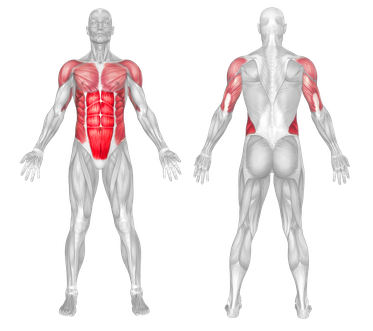
The Barbell Rollout, also known as the Barbell Ab Rollout or simply the Ab Rollout, is a compound strength exercise that primarily targets the rectus abdominis (abs) while engaging the external and internal obliques (side abs), erector spinae (lower back), and deltoids (shoulders) for stability. Performed with a barbell loaded with weight plates, this movement involves rolling the barbell forward from a kneeling position and then pulling it back in a controlled fashion, creating a powerful anti-extension challenge for your core.
Perfect for intermediate to advanced fitness enthusiasts seeking to elevate core strength and stability, the Barbell Rollout requires minimal equipment—just a barbell and weight plates—making it a versatile choice for both gym and home setups. Unlike static planks or simple crunches, this exercise introduces dynamic movement over a full range of motion, heightening core activation and building the “anti-arch” strength necessary to protect the spine under load. Before tackling full rollouts, ensure you have a solid foundation of core control and can maintain a neutral spine under tension.
Safety Considerations
To perform barbell rollouts safely, you need the right environment, preparation, and attention to form.
Note: Consult a fitness professional or healthcare provider if you have pre-existing conditions or experience discomfort during the exercise.
Step-by-Step Instructions
Follow these precise steps to execute the Barbell Rollout with control and stability:
- Load a barbell with an appropriate weight and secure plates with collars, then kneel on a cushioned mat facing the bar.
- Grip the barbell with both hands shoulder-width apart, ensuring wrists are stacked under shoulders, and sit back on your heels slightly to brace your core.
- Engage your core by drawing your belly button toward your spine, tucking your pelvis to maintain a neutral lumbar position.
- Inhale and slowly roll the barbell forward, extending through your shoulders and allowing your hips to move forward—but keep them aligned with your spine.
- Continue rolling out until your torso is just above parallel to the floor or until you feel the onset of lower back strain—avoid going beyond your range.
- Pause briefly at the furthest point, maintaining tension in your abs and keeping your back flat.
- Exhale and use your core muscles to pull the barbell back toward your knees, leading with your elbows and keeping the movement smooth.
- Return to the starting kneeling position with control, ensuring your shoulders don’t collapse and your lower back remains neutral.
- Repeat for the desired number of repetitions, focusing on slow, deliberate movement rather than speed.
Tips for Proper Form
Keep these pointers in mind to get the most out of every rollout and protect your spine:
- Begin with light weight or even just the bar to hone your form before adding plates.
- Squeeze your glutes and quads to stabilize your hips and prevent sagging during the rollout.
- Maintain a braced core by imagining pulling your ribs toward your pelvis throughout the movement.
- Keep arms straight and avoid bending at the elbows to ensure the abs do the work.
- Breathe rhythmically—inhale as you roll out, exhale as you pull back—to maintain intra-abdominal pressure.
- Use a slower tempo (3–5 seconds out and back) to maximize time under tension and control.
- Place a small towel or mat under your knees for comfort, allowing better focus on core engagement.
- Limit your range of motion to where you can keep a neutral spine—overextending can risk lumbar hyperlordosis.
Common Mistakes to Avoid
Watch out for these frequent errors that can undermine the exercise’s effectiveness and safety:
- Allowing hips to sag, which shifts stress to the lower back instead of the abs.
- Arching the lower back at full extension, increasing injury risk.
- Using momentum by quickly rolling out and back, rather than controlled muscle engagement.
- Bending the elbows, turning the movement into more of an arm exercise than a core challenge.
- Lifting the shoulders toward the ears, creating neck and upper trap tension.
- Gripping the bar too wide or narrow, which can misalign shoulders and wrists.
- Rolling out beyond your strength level, leading to form breakdown and lower back strain.
- Holding your breath, reducing stability—maintain consistent breathing throughout.
Primary Benefits
The Barbell Rollout delivers a host of performance and health advantages:
- Builds tremendous anti-extension strength in the rectus abdominis (abs) for a flatter, stronger midsection.
- Engages deep core stabilizers (transverse abdominis) to protect the spine under heavy loads.
- Strengthens shoulder girdle muscles (deltoids, serratus anterior) through dynamic support demands.
- Enhances lower back resilience by training erector spinae to resist hyperextension.
- Improves posture and functional movement by reinforcing proper spinal alignment.
- Boosts athletic performance in sports requiring core bracing and rotational control.
- Increases mind-muscle connection by focusing on controlled, deliberate motion.
- Requires minimal equipment, making it a cost-effective core-strengthening tool.
Regressions
If the full Barbell Rollout is too challenging, try these easier variations to build your foundation:
- Partial Barbell Rollout: Roll out only halfway to limit range and build core strength gradually.
- Kneeling Rollout to Wall: Roll the barbell until it touches a wall or bumper as a range limiter.
- Standing Rollout to Knee-Level: Perform from a standing position but stop at knee height to reduce load.
- Rollout with Resistance Band: Anchor a band behind you to assist the return phase.
Progressions
Once you master the basic rollout, these progressions will further challenge your core:
- Full Standing Barbell Rollout: Perform from standing, rolling out until body is parallel to the floor.
- Weighted Barbell Rollout: Increase plate weight to intensify the anti-extension demand.
- Single-Arm Rollout: Grip the barbell with one hand to add rotational stability challenge.
- Rollout-to-Pike: At the end of the rollout, transition to a pike by lifting hips toward the ceiling.
Summary
The Barbell Rollout is a dynamic, compound core exercise that cultivates anti-extension strength, spinal stability, and full-body tension. Performed with a barbell and plates, it challenges the abs, obliques, shoulders, and lower back through a controlled rolling motion. By focusing on form, breathing, and gradual progression, you can safely integrate this potent movement into your training to build a rock-solid midsection and enhance functional performance.
FAQs
How often should I perform Barbell Rollouts?
Include rollouts 1–2 times per week within your core or full-body sessions, allowing at least 48 hours of rest between intense core workouts.
Is the Barbell Rollout suitable for beginners?
Beginners should start with regressions like partial rollouts or ab wheel rollouts on knees to develop core control before advancing.
How many reps and sets are ideal?
Aim for 3–4 sets of 6–10 controlled reps, adjusting volume based on strength levels and workout phase.
Can I use an ab wheel instead of a barbell?
Yes, an ab wheel is a popular alternative; it offers similar benefits but may limit loading options compared to a barbell.
What should I do if I feel lower back pain?
Check your form—reduce range of motion, brace your core more firmly, and consider regressions until pain subsides.
Where does this exercise fit in a workout routine?
Perform rollouts after compound lifts but before fatigue-inducing core finishers to ensure proper form and engagement.