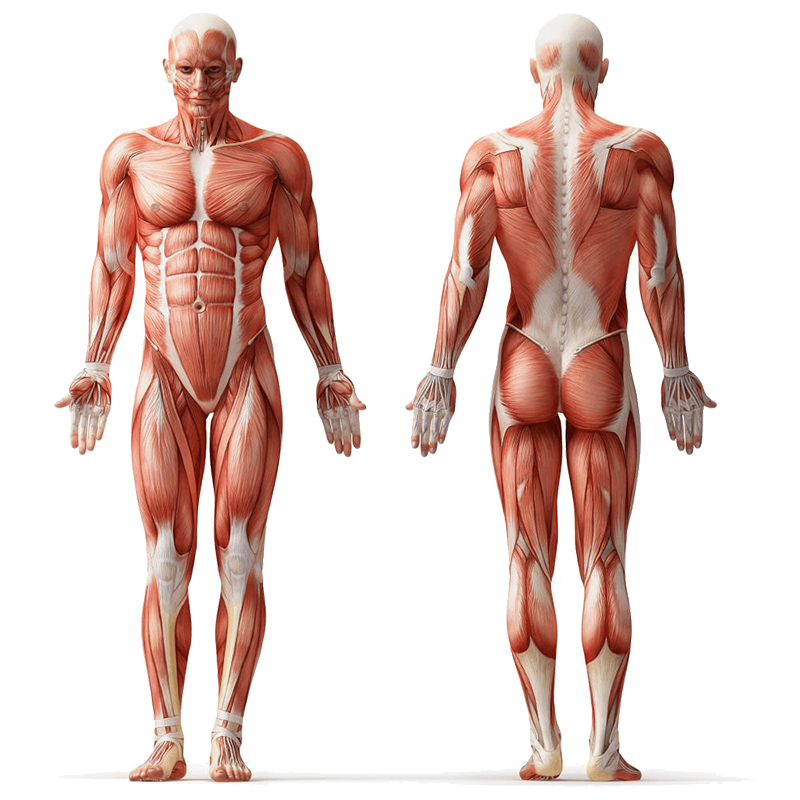
The Barbell Pin Press is a powerful strength exercise designed for intermediate to advanced lifters to overcome sticking points in pressing movements, such as the bench press or overhead press. This exercise primarily targets the triceps (triceps brachii) and involves compound mechanics, engaging secondary muscle groups including the shoulders (deltoids) and chest (pectoralis major). The Pin Press is performed by pressing the barbell from a dead stop on safety pins, set at a specific height, typically at or just below the lifter's sticking point. This movement can be performed on a flat, incline, or decline bench, making it a versatile addition to any strength training regimen. The required equipment includes a barbell and a power rack.
Barbell Pin Press Step-by-Step Instructions
- Set up a flat bench inside a power rack and adjust the safety pins to the desired height. For most, this will be at or just below the point where they typically struggle in their press.
- Lie back on the bench with your feet flat on the ground and your back arched slightly. Ensure your shoulder blades are retracted and your upper back is tight against the bench.
- Grasp the barbell with an overhand grip, slightly wider than shoulder-width apart.
- Unrack the bar and lower it to rest on the safety pins. Ensure the bar is resting securely before beginning your set.
- Take a deep breath, brace your core, and press the bar up explosively from the pins to full lockout.
- Pause briefly at the top, then lower the bar back down to the pins under control.
- Repeat for the desired number of repetitions, maintaining tightness and control throughout each rep.
Barbell Pin Press Tips for Proper Form
- Keep your elbows tucked in at about a 45-degree angle to reduce shoulder strain and maximize triceps engagement.
- Maintain a tight upper back and retracted shoulder blades to create a stable base for pressing.
- Start with a moderate weight to ensure proper form and gradually increase as you become more comfortable with the movement.
- Use a spotter or safety pins to ensure safety, especially when lifting heavier weights.
- Avoid bouncing the bar off the pins; instead, press from a dead stop to maximize the effectiveness of the exercise.
- Focus on explosive power during the press and control during the descent to enhance muscle activation and strength gains.
Barbell Pin Press Benefits
- Helps build power and strength at specific points in your press, particularly at the lockout.
- Targets the triceps, which are often a weak point in pressing movements.
- Reduces the reliance on momentum, ensuring that muscle strength is the primary driver of the lift.
- Improves overall bench press performance by addressing sticking points.
- Allows for focused training on the triceps and shoulders, enhancing upper body strength.
- Provides a safer alternative for pressing heavy weights, as the pins can catch the bar if needed.
Barbell Pin Press Common Mistakes to Avoid
- Failing to maintain tightness in the upper back and shoulder blades, leading to an unstable lift.
- Using too much weight too soon, which can compromise form and increase the risk of injury.
- Allowing the elbows to flare out excessively, which can strain the shoulders.
- Bouncing the bar off the pins instead of pressing from a dead stop.
- Neglecting to use a spotter or safety pins, especially when lifting heavy weights.
- Improper pin height setup, which can either limit the effectiveness of the exercise or increase the risk of injury.
Barbell Pin Press Summary
The Barbell Pin Press is a targeted exercise that enhances triceps strength and lockout power in pressing movements. By pressing from a dead stop, lifters can overcome sticking points and improve overall pressing performance. Proper form, tightness, and gradual weight progression are key to maximizing the benefits of this exercise while ensuring safety.
Barbell Pin Press FAQs
How often should I perform the Barbell Pin Press?
Incorporate it into your routine once a week as a supplemental exercise to your regular pressing workouts.
Can beginners perform the Barbell Pin Press?
Yes, but beginners should start with lighter weights and ensure proper form before progressing to heavier loads.
What are the main benefits of the Barbell Pin Press?
It helps improve triceps strength, addresses sticking points in pressing movements, and enhances overall bench press performance.
How high should the safety pins be set?
The pins should be set at or just below your sticking point in the press. Typically, this is a few inches above your chest.
Is it necessary to use a spotter?
While not mandatory, using a spotter is highly recommended, especially when lifting heavy weights, to ensure safety.
Can the Barbell Pin Press be used for other lifts besides the bench press?
Yes, it can also be adapted for overhead presses and other pressing movements to address specific sticking points.