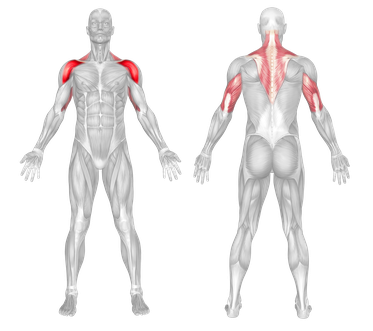
The Barbell Incline Shoulder Press primarily targets the shoulder muscles, emphasizing the deltoids (anterior and medial heads), with secondary engagement of the upper trapezius and triceps. It is distinct from the incline bench press, which focuses more on the upper chest. This shoulder press is typically performed seated on an incline bench that is set to a more upright position, closer to vertical. It is particularly beneficial for those looking to enhance shoulder strength and build the deltoid muscles. Suitable for intermediate to advanced fitness enthusiasts, this exercise requires careful attention to form to avoid common pitfalls and maximize effectiveness.
Barbell Incline Shoulder Press Step-by-Step Instructions
- Adjust the incline bench to an upright position, typically around 75 to 85 degrees.
- Sit on the bench with your back flat against the pad. Plant your feet firmly on the ground.
- Grasp the barbell with an overhand grip. Begin with the barbell at shoulder height.
- Press the barbell upward until your arms are extended overhead.
- Pause at the top of the movement, then lower the barbell back to the starting position in a controlled manner.
- Repeat for the desired number of repetitions, maintaining a focus on controlled movements and stable posture.
Barbell Incline Shoulder Press Tips for Proper Form
- Keep your back flat against the bench throughout the exercise to support your spine and reduce the risk of injury.
- Engage your core to stabilize your upper body and prevent excessive arching of your lower back.
- Focus on moving the weight with your shoulders rather than using momentum to lift the barbell.
- Adjust the grip width as needed to find a comfortable position that fully engages the deltoids without straining your wrists.
- Avoid locking your elbows at the top of the movement to keep tension on the shoulder muscles.
- Ensure that the weight is not too heavy, as this can lead to poor form and potential shoulder injuries.
Barbell Incline Shoulder Press Benefits
- Strengthens and defines the shoulder muscles, particularly the deltoids.
- Enhances the stability and mobility of the shoulder joint.
- Contributes to better posture by strengthening the supporting muscles of the upper body.
- Helpful for improving performance in sports and activities that require strong, stable shoulders.
- Supports muscle balance across the shoulder girdle by evenly targeting various shoulder muscle groups.
- Can be modified to accommodate different fitness levels and goals.
Barbell Incline Shoulder Press Common Mistakes to Avoid
- Using too heavy weights that compromise form and can lead to injuries.
- Rushing the movements, which can reduce muscle engagement and increase the risk of accidents.
- Excessive arching of the back, which shifts focus away from the shoulders and can cause lower back pain.
- Not aligning the barbell over the shoulders, which can place undue stress on the wrists and elbows.
- Flaring the elbows too wide, which can strain the shoulder joints.
- Holding the breath, which can increase blood pressure and reduce exercise effectiveness.
Barbell Incline Shoulder Press Summary
The Barbell Incline Shoulder Press is a powerful exercise for developing shoulder strength and enhancing upper body aesthetics. By targeting the deltoids and supporting muscle groups, this exercise offers comprehensive benefits for improving shoulder function and stability. Proper technique and regular practice are essential to reap the maximum benefits and avoid common pitfalls associated with this exercise.
Barbell Incline Shoulder Press FAQs
How often should I perform the Barbell Incline Shoulder Press?
Integrating this exercise 1-2 times per week into your shoulder workouts can be effective, depending on your overall fitness goals and recovery.
Is the Barbell Incline Shoulder Press suitable for beginners?
Beginners should start with light weights or even practice the motion without any weights to ensure proper form and safety.
What are the best alternatives to the Barbell Incline Shoulder Press if I don't have a barbell?
Dumbbell variations or machine shoulder presses can offer similar benefits and may be more accessible for some gym goers.
Can this exercise help improve my overhead strength for other lifts?
Yes, strengthening the shoulders and triceps with this exercise can enhance your performance in other overhead activities like the military press or snatch.
What other exercises complement the Barbell Incline Shoulder Press for a balanced workout?
Incorporating exercises like lateral raises, front raises, and rear delt flys can help develop well-rounded shoulder strength and mobility.
What adjustments can I make if I have shoulder pain during this exercise?
Lowering the weight, adjusting the bench angle, or switching to a different shoulder exercise that does not exacerbate pain are all viable options. Consulting with a fitness professional or physical therapist for personalized advice is also recommended.