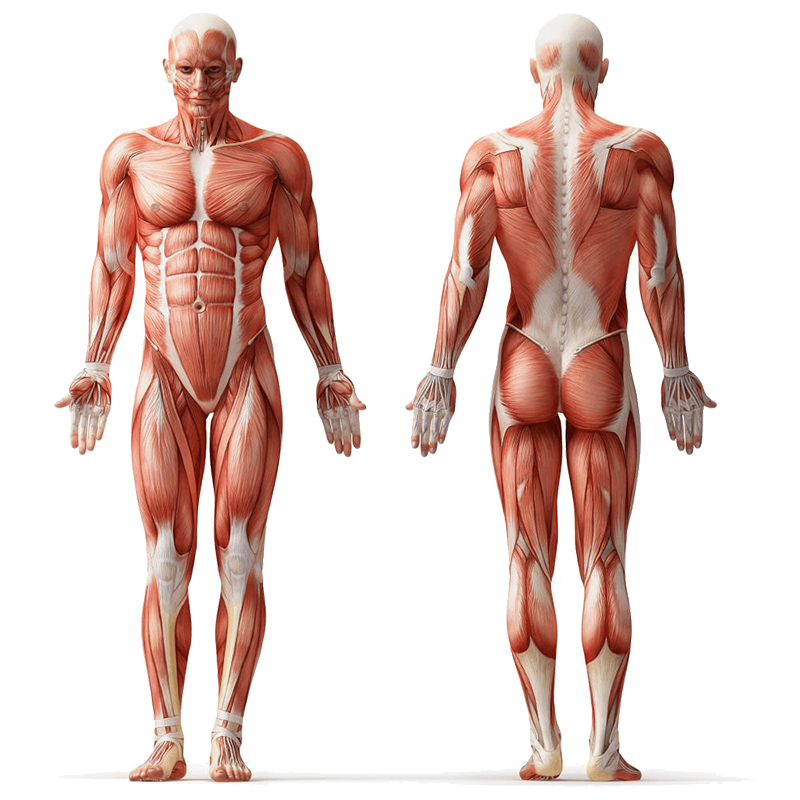
The Barbell Hip Thrust is a highly effective strength exercise that primarily targets the gluteus maximus (glutes), the largest muscle in the body, while also engaging the quadriceps (front thigh muscles), hamstrings (back thigh muscles), adductors (inner thigh muscles), and erector spinae (lower back muscles).
This compound movement involves extending the hips against resistance, making it a staple for those aiming to enhance lower body strength, improve athletic performance, and develop gluteal muscle hypertrophy. Suitable for individuals with an intermediate to advanced fitness level, the Barbell Hip Thrust requires a barbell and a stable bench or platform. Incorporating this exercise into your routine can lead to improved posture, increased power in movements like jumping and sprinting, and a reduced risk of lower back pain by strengthening the posterior chain.
Step-by-Step Instructions
- Setup: Sit on the floor with your upper back against a bench, knees bent, and feet flat on the ground. Position a loaded barbell over your hips, using a pad or towel for comfort.
- Positioning: Roll the barbell into the crease of your hips. Lean back so that your shoulder blades rest on the bench, and your body forms a 45-degree angle from the floor.
- Starting Position: Engage your core and glute muscles. Your feet should be shoulder-width apart, with toes pointing slightly outward. Ensure your shins are vertical at the top of the movement to maximize glute engagement.
- Execution: Drive through your heels and extend your hips upward by contracting your glutes. Lift the barbell until your thighs are parallel to the floor, and your body forms a straight line from shoulders to knees.
- Peak Contraction: Hold the top position for a moment, ensuring maximum glute contraction. Avoid overarching your lower back; maintain a neutral spine throughout.
- Descent: Slowly lower your hips back to the starting position, maintaining control and keeping tension in the glutes.
- Repetition: Repeat for the desired number of repetitions, typically 8-12 for muscle hypertrophy.
Tips for Proper Form
- Use Padding: Place a barbell pad or towel over your hips to prevent discomfort from the barbell.
- Foot Placement: Adjust your feet so that your shins are vertical at the top of the movement; this maximizes glute activation.
- Maintain a Neutral Spine: Avoid arching your lower back; keep your core engaged to support proper alignment.
- Control the Movement: Perform both the upward and downward phases deliberately to enhance muscle engagement and reduce injury risk.
- Breathing: Exhale as you lift your hips and inhale as you lower them to maintain stability and oxygen flow.
- Avoid Hyperextension: Do not overextend your hips at the top; stop when your body forms a straight line from shoulders to knees.
Common Mistakes to Avoid
- Incorrect Foot Placement: Placing feet too far forward or too close can reduce glute activation and strain the knees.
- Using Excessive Weight: Lifting too heavy can compromise form; prioritize technique over load.
- Hyperextending the Lower Back: Overarching at the top can lead to injury; maintain a neutral spine.
- Rapid Movements: Performing the exercise too quickly reduces effectiveness; focus on controlled motions.
- Neglecting Core Engagement: Failing to engage the core can lead to poor form and potential injury.
- Improper Bench Height: Using a bench that's too high or too low can affect the range of motion and muscle activation.
Barbell Hip Thrust Benefits
- Enhanced Glute Strength: Effectively targets and strengthens the gluteus maximus, leading to improved power and aesthetics.
- Improved Athletic Performance: Increases hip extension strength, benefiting activities like sprinting and jumping.
- Reduced Lower Back Pain: Strengthening the glutes can alleviate stress on the lower back, decreasing discomfort.
- Better Posture: Enhances posterior chain strength, contributing to improved posture and spinal alignment.
- Versatility: Can be modified with different equipment or performed unilaterally to address muscle imbalances.
- Increased Squat and Deadlift Performance: Stronger glutes contribute to improved performance in other compound lifts.
Summary
The Barbell Hip Thrust is an essential compound exercise for developing glute strength and enhancing lower body power. By targeting the gluteus maximus alongside the hamstrings, quadriceps, and lower back, it provides a comprehensive posterior chain workout. Perfect for intermediate to advanced fitness levels, it requires a barbell and bench. Proper form is key to maximizing benefits such as improved athletic performance, better posture, and reduced lower back pain. Including the Barbell Hip Thrust in your routine can significantly enhance your strength, stability, and overall physique.
FAQs
What fitness level is recommended for the Barbell Hip Thrust?
This exercise is best suited for individuals at an intermediate to advanced fitness level due to the strength and control required.
What equipment is necessary for the Barbell Hip Thrust?
You will need a barbell, weight plates, and a sturdy bench or platform to perform this exercise.
How many sets and reps should I perform?
A typical range is 3-4 sets of 8-12 reps, depending on your fitness goals and level of experience.
Can beginners perform the Barbell Hip Thrust?
Yes, beginners can start with bodyweight hip thrusts or a lighter barbell to build strength and master the technique before progressing.
What are the primary muscles targeted in this exercise?
The Barbell Hip Thrust primarily targets the gluteus maximus (glutes) and engages the hamstrings, quadriceps, and lower back as secondary muscles.
How can I avoid lower back pain during this exercise?
Maintain a neutral spine, engage your core, and avoid hyperextending your hips at the top of the movement.