
Barbell Floor Press
Video Demo, Instructions, Proper Form Tips, Common Mistakes, Benefits and FAQs
Video Demo, Instructions, Proper Form Tips, Common Mistakes, Benefits and FAQs
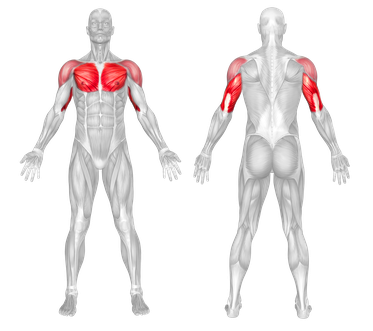
The Barbell Floor Press is a potent upper-body strength exercise that serves as an excellent alternative to the traditional bench press, especially for those with limited equipment or seeking to reduce shoulder strain. Known alternatively as the "Floor Bench Press," this exercise is a compound movement (involving multiple joints and muscle groups) that primarily targets the pectoralis major (chest) and the triceps, with secondary engagement of the anterior deltoids (front shoulders). It's particularly popular among intermediate to advanced lifters and requires a barbell to perform. The Barbell Floor Press enhances lockout strength, upper body mass, and overall pressing capabilities while being shoulder-friendly due to its limited range of motion.
The Barbell Floor Press is a highly effective exercise for strengthening the upper body, particularly for improving the lockout strength of the triceps, enhancing chest development, and reducing shoulder strain. It is a valuable addition to any strength training regimen, offering benefits in both muscle growth and joint health.
Integrating the Barbell Floor Press 1-2 times a week into your workout routine can effectively improve strength and muscle hypertrophy, depending on your overall fitness goals and other training commitments.
While the exercise is generally recommended for intermediate to advanced lifters due to the stability required, beginners can start with lighter weights under supervision to master the technique.
While it can't completely replace the bench press, especially for competitive powerlifters, it's an excellent supplementary exercise to develop strength in the upper portion of the pressing movement and to reduce shoulder strain.
Variations such as the Dumbbell Floor Press, Close-Grip Floor Press, or using resistance bands can provide new challenges and stimulate muscle growth from different angles. Each variation focuses slightly differently on muscle engagement and can be integrated based on specific strength and training goals.
Essentially, you need a barbell and sufficient weight plates. For safety, using a power rack to support the barbell is recommended, especially when lifting heavier weights or if there's no spotter available.
Yes, the Barbell Floor Press is often recommended for those with shoulder issues as it limits shoulder hyperextension and reduces strain. However, consult with a healthcare provider or a physical therapist to ensure it's appropriate for your specific condition.
Due to its restricted range of motion, the Barbell Floor Press allows for pressing without excessive shoulder rotation, which can help in maintaining shoulder health and preventing common injuries associated with full-range pressing movements like the bench press.
The primary muscles worked are the pectoralis major (chest) and triceps brachii. It also significantly engages the anterior deltoids (shoulders) and provides stabilization through the scapular muscles and the core.