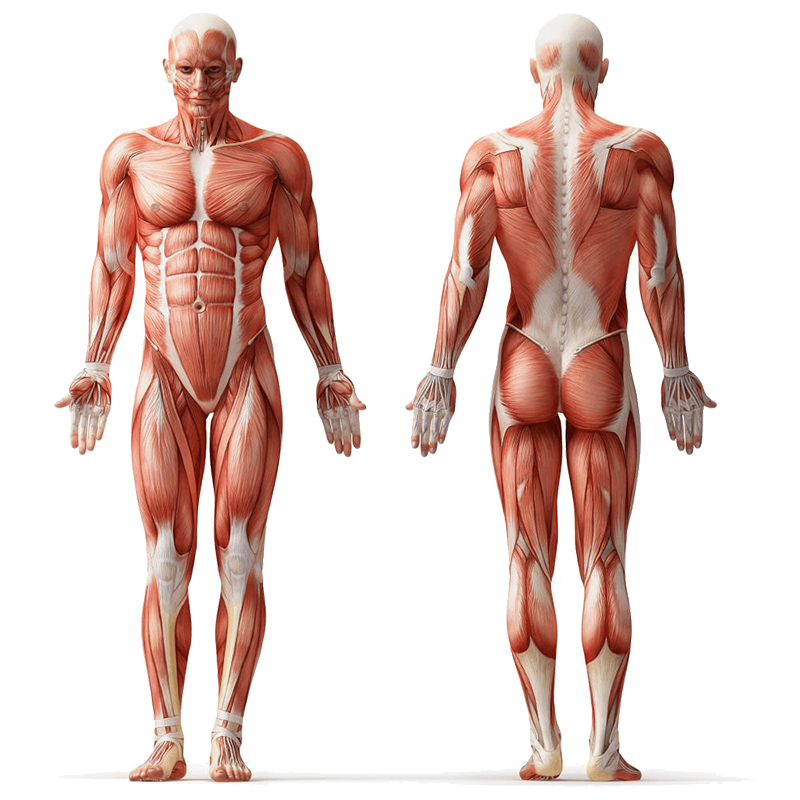
The Barbell Drag Curl is a distinctive strength training exercise that primarily targets the biceps brachii (the main muscle of the upper arm) and engages the forearm muscles. Unlike traditional bicep curls, this movement involves dragging the barbell up along the torso, which emphasizes the long head of the biceps, contributing to the development of the bicep peak. This exercise is suitable for individuals ranging from beginners to advanced fitness levels and is classified as an isolation movement, focusing specifically on the biceps with minimal involvement of other muscle groups. To perform the Barbell Drag Curl, a standard barbell is required.
Step-by-Step Instructions
- Stand upright with your feet shoulder-width apart, holding a barbell with an underhand (supinated) grip, hands also shoulder-width apart. Allow the barbell to rest against your thighs, with your arms fully extended.
- Inhale and begin the movement by flexing your elbows, pulling them backward as you drag the barbell up along the front of your body. Keep the barbell in close contact with your torso throughout the lift.
- Continue lifting until the barbell reaches the lower part of your chest or as high as your range of motion comfortably allows, ensuring that your elbows remain pointed backward rather than flaring out.
- At the top of the movement, pause briefly and contract your biceps fully.
- Exhale and slowly lower the barbell back down along the same path, maintaining control to resist gravity, until it returns to the starting position with arms fully extended.
- Repeat for the desired number of repetitions, typically 8–12 for muscle hypertrophy.
Tips for Proper Form
- Maintain a straight back and engaged core throughout the exercise to provide stability and prevent injury.
- Avoid using momentum; perform the movement in a slow and controlled manner to maximize muscle engagement.
- Keep your elbows close to your body and direct them backward during the lift to properly target the biceps.
- Focus on the mind-muscle connection by consciously contracting the biceps during each repetition.
- Start with a lighter weight to master the technique before progressing to heavier loads.
- Ensure full range of motion without locking out the elbows completely at the bottom to maintain continuous tension on the biceps.
Barbell Drag Curl Benefits
- Isolates the biceps, reducing the involvement of the shoulders and allowing for focused muscle development.
- Emphasizes the long head of the biceps, contributing to the development of the bicep peak.
- Enhances mind-muscle connection due to the controlled nature of the movement.
- Reduces the risk of cheating or using momentum, promoting better form and effectiveness.
- Can be easily incorporated into various training routines, suitable for different fitness levels.
- Requires minimal equipment, making it accessible for home workouts or crowded gym settings.
Common Mistakes to Avoid
- Allowing the elbows to flare out, which shifts focus away from the biceps.
- Using excessive weight, leading to compromised form and potential injury.
- Leaning backward or arching the back to lift the weight, placing undue stress on the spine.
- Performing the exercise too quickly, reducing time under tension and effectiveness.
- Neglecting the eccentric (lowering) phase, which is crucial for muscle development.
- Gripping the barbell too tightly, causing unnecessary strain on the forearms and wrists.
Summary
The Barbell Drag Curl is an effective isolation exercise that targets the biceps, particularly the long head, aiding in the development of the bicep peak. By maintaining proper form and avoiding common mistakes, individuals across various fitness levels can incorporate this movement into their routines to enhance arm strength and aesthetics. Its simplicity and minimal equipment requirements make it a versatile addition to both gym and home workouts.
FAQs
How often should I perform Barbell Drag Curls?
Incorporate them into your arm or upper body workouts 1–2 times per week, allowing adequate recovery between sessions.
Can I do Barbell Drag Curls with an EZ curl bar?
Yes, using an EZ curl bar can reduce wrist strain and provide a more comfortable grip.
What is the ideal rep range for muscle growth with this exercise?
Aim for 8–12 repetitions per set to promote hypertrophy.
Should I use lifting straps for better grip during Barbell Drag Curls?
Generally, lifting straps are not necessary; focus on developing grip strength alongside bicep training.
Can beginners perform Barbell Drag Curls?
Yes, start with light weights to learn proper form before progressing to heavier loads.
Do Barbell Drag Curls work the forearms as well?
While primarily targeting the biceps, they also engage the forearm muscles to a lesser
Barbell Drag Curl Benefits
- Enhances mind-muscle connection due to the controlled nature of the movement.
- Provides variety to traditional biceps training, reducing monotony and encouraging balanced arm development.
- Improves grip strength as the forearms are engaged throughout the lift.
- Supports better arm symmetry by isolating and targeting each arm evenly.
- Increases definition and tone in the biceps with consistent use.
Common Mistakes to Avoid
- Allowing the elbows to flare out, which reduces the focus on the biceps and can strain the shoulders.
- Using excessive weight, leading to improper form and risking injury.
- Rushing through the exercise, which diminishes muscle engagement and effectiveness.
- Failing to keep the barbell close to the torso, reducing the isolation of the biceps.
- Neglecting the controlled eccentric phase (lowering the barbell), which is critical for muscle growth.
- Locking out the elbows at the bottom, which reduces tension on the biceps and can strain the joints.
Summary
The Barbell Drag Curl is an effective isolation exercise for targeting the biceps brachii, emphasizing the long head for peak development. By keeping the barbell close to the torso and focusing on controlled movements, this exercise maximizes muscle engagement while minimizing shoulder involvement. Suitable for all fitness levels, the drag curl is an excellent addition to any arm workout routine to enhance strength, symmetry, and definition.
FAQs
How often should I perform the Barbell Drag Curl?
Perform this exercise 1-2 times per week as part of your arm training routine, allowing adequate rest for muscle recovery.
Can beginners perform the Barbell Drag Curl?
Yes, this exercise is beginner-friendly as long as proper form is maintained and an appropriate weight is used.
What equipment do I need for the Barbell Drag Curl?
A standard barbell and weight plates are required to perform this exercise.
What muscles does the Barbell Drag Curl target?
The primary target is the biceps brachii (biceps), with secondary engagement of the forearms.
How does the Barbell Drag Curl differ from traditional bicep curls?
The drag curl emphasizes the long head of the biceps by dragging the barbell along the torso, minimizing shoulder involvement.
What is the best rep range for the Barbell Drag Curl?
A rep range of 8-12 is ideal for hypertrophy, but this can be adjusted based on individual fitness goals.