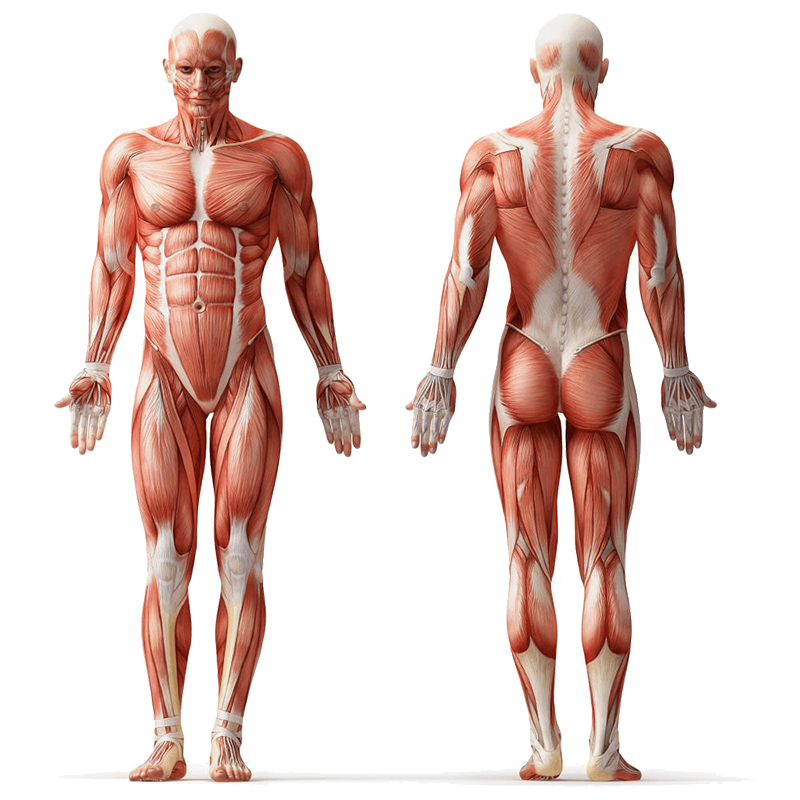
The Barbell Deadlift is a foundational strength training exercise that engages multiple muscle groups, making it a cornerstone in many fitness routines. This compound movement involves lifting a barbell from the ground to hip level, primarily targeting the gluteus maximus (buttocks), hamstrings (back thighs), quadriceps (front thighs), and erector spinae (lower back muscles). Additionally, it recruits the trapezius (upper back) and forearm muscles, contributing to overall body strength and functional fitness. Suitable for individuals ranging from beginners to advanced lifters, the Barbell Deadlift is essential for developing posterior chain strength, enhancing athletic performance, and improving posture.
Step-by-Step Instructions
- Setup: Stand with your feet hip-width apart, positioning the barbell over the midfoot. Approach the bar so that your shins are close, but not touching it.
- Grip the Bar: Bend at the hips and knees, maintaining a neutral spine, and grasp the bar with a double overhand grip or a mixed grip, hands slightly wider than shoulder-width.
- Engage Your Core: Tighten your abdominal muscles and retract your shoulder blades to stabilize your torso.
- Lift the Bar: Push through your heels, extending your hips and knees simultaneously to lift the barbell. Keep the bar close to your body, maintaining a straight back throughout the movement.
- Lockout Position: Stand fully upright with your chest up, shoulders back, and hips fully extended. Avoid leaning back or overextending.
- Lower the Bar: Hinge at the hips first, then bend your knees to lower the barbell back to the ground in a controlled manner, maintaining proper form.
- Repeat: Perform the desired number of repetitions, ensuring consistent form throughout each lift.
Tips for Proper Form
- Maintain a Neutral Spine: Keep your back straight and avoid rounding to prevent injury.
- Engage Your Lats: Tighten your latissimus dorsi muscles to keep the bar close to your body during the lift.
- Use Proper Footwear: Wear flat-soled shoes to ensure stability and proper weight distribution.
- Avoid Hyperextension: Do not lean back at the top of the lift; stand upright with a neutral spine.
- Warm Up Thoroughly: Prepare your muscles with dynamic stretches and lighter sets before lifting heavier weights.
- Start with Manageable Weights: Begin with lighter weights to master the technique before progressing to heavier loads.
Barbell Deadlift Benefits
- Builds Total Body Strength: Engages multiple muscle groups, leading to overall strength development.
- Enhances Posture: Strengthens the posterior chain, promoting better posture and reducing back pain.
- Increases Core Stability: Requires core engagement, improving overall stability and balance.
- Boosts Metabolic Rate: High muscle recruitment elevates calorie burn, aiding in fat loss.
- Improves Athletic Performance: Develops power and strength beneficial for various sports and physical activities.
- Promotes Functional Fitness: Mimics real-life lifting movements, enhancing daily functional strength.
Common Mistakes to Avoid
- Rounding the Back: Increases the risk of spinal injuries; maintain a neutral spine throughout the lift.
- Incorrect Bar Path: Allowing the bar to drift away from the body reduces efficiency; keep it close to your legs.
- Overextending at the Top: Leaning back at the lockout can strain the lower back; stand upright instead.
- Starting with Hips Too High or Too Low: Improper hip positioning can lead to inefficient lifting mechanics; ensure hips are at the correct height.
- Neglecting to Engage the Core: A loose core can compromise stability; tighten abdominal muscles before lifting.
- Using Excessive Weight: Lifting beyond your capacity can lead to form breakdown and injury; progress gradually.
Summary
The Barbell Deadlift is a fundamental exercise that builds total body strength, enhances posture, and promotes functional fitness. By engaging multiple muscle groups, it serves as an effective addition to any strength training regimen. Proper technique and gradual progression are essential to maximize benefits and minimize injury risk.
FAQs
Is the Barbell Deadlift suitable for beginners?
Yes, with proper instruction and light weights, beginners can perform this exercise to develop foundational strength and technique.
How often should I include Deadlifts in my workout routine?
Incorporate them 1-2 times per week, allowing adequate recovery between sessions to prevent overtraining.
What are common alternatives to the Barbell Deadlift?
Alternatives include the Trap Bar Deadlift, Romanian Deadlift, and Dumbbell Deadlift.
Can Deadlifts help with weight loss?
Yes, due to high muscle engagement, they can aid in calorie burning and fat loss when combined with proper nutrition.
What is the difference between Conventional and Sumo Deadlifts?
Conventional Deadlifts involve a narrower stance and more hip flexion, while Sumo Deadlifts use a wider stance, reducing the range of motion and placing more emphasis on the quadriceps.
Do I need special equipment to perform Deadlifts?
While a barbell and weight plates are essential, accessories like lifting belts and chalk can enhance performance and safety.