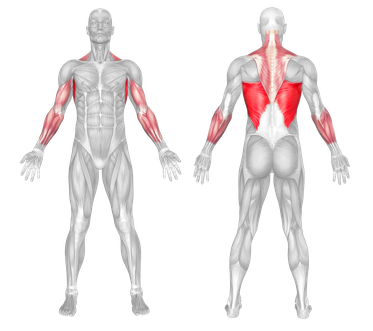
Assisted Pull-Ups are an effective way to build upper body strength, particularly for those who are not yet able to perform unassisted pull-ups. Also known as Assisted Chin-Ups, this exercise primarily targets the latissimus dorsi (lats) and biceps brachii (biceps), while also engaging the rhomboids, trapezius (traps), and forearms. Assisted Pull-Ups are a compound movement, meaning they work multiple joints and muscle groups simultaneously, making them an excellent choice for overall upper body development.
They require equipment such as resistance bands or a machine that provides assistance through counterbalancing your body weight. This exercise is suitable for beginners to advanced levels, as the amount of assistance can be adjusted to match the individual's strength level. By gradually reducing the assistance over time, users can progress towards performing full pull-ups independently.
Step-by-Step Instructions
- Start by attaching a resistance band to the pull-up bar or setting the weight on the assisted pull-up machine to provide the needed support.
- Stand on the footrests or place your knees in the support pad, gripping the pull-up bar with an overhand grip, hands slightly wider than shoulder-width apart.
- Engage your core and keep your body straight as you start to pull yourself up towards the bar, focusing on using your back and arm muscles.
- Continue to pull until your chin is above the bar, squeezing your shoulder blades together at the top of the movement.
- Slowly lower yourself back to the starting position with controlled motion, ensuring you don't simply drop down.
- Repeat for the desired number of repetitions, maintaining proper form throughout.
Tips for Proper Form
- Keep your core engaged to maintain a straight line from head to knees or feet throughout the movement.
- Avoid swinging or using momentum to pull yourself up; focus on controlled, deliberate movements.
- Use a full range of motion, fully extending your arms at the bottom and bringing your chin above the bar at the top.
- Adjust the assistance level to ensure you can perform the exercise with proper form but still challenging enough to build strength.
- Breathe out as you pull yourself up and breathe in as you lower yourself back down.
- Gradually reduce the assistance over time as your strength improves.
Benefits
- Builds upper body strength, particularly in the lats, biceps, and traps.
- Improves grip strength and forearm endurance.
- Enhances muscle coordination and overall body control.
- Provides a scalable way to progress towards unassisted pull-ups.
- Engages core muscles, contributing to improved stability and balance.
- Helps in improving posture by strengthening the back muscles.
Common Mistakes to Avoid
- Using too much assistance, making the exercise too easy and less effective.
- Allowing the body to swing or use momentum instead of muscle strength.
- Not extending the arms fully at the bottom of the movement, reducing the range of motion.
- Failing to engage the core, leading to a loss of form and potential back strain.
- Rushing through the exercise, which can lead to improper form and increased risk of injury.
- Neglecting to breathe properly, which can affect performance and endurance.
Summary
Assisted Pull-Ups are a valuable exercise for developing upper body strength, particularly in the lats and biceps, while also engaging the core. This scalable exercise is ideal for beginners progressing towards unassisted pull-ups, providing numerous benefits including improved muscle coordination, posture, and overall body control. Maintaining proper form and gradually reducing assistance are key to maximizing the effectiveness of Assisted Pull-Ups.
FAQs
How often should I perform Assisted Pull-Ups?
It is recommended to perform Assisted Pull-Ups 2-3 times per week, allowing at least one day of rest between sessions to promote muscle recovery and growth.
What is the best grip to use for Assisted Pull-Ups?
A shoulder-width overhand grip is commonly used, but varying your grip (narrower or wider, underhand) can target different muscles and add variety to your workouts.
Can Assisted Pull-Ups help me achieve unassisted pull-ups?
Yes, by progressively reducing the assistance over time, you can build the necessary strength to perform unassisted pull-ups.
What equipment do I need for Assisted Pull-Ups?
You will need a pull-up bar and either resistance bands or an assisted pull-up machine to provide the necessary assistance.
Are Assisted Pull-Ups suitable for all fitness levels?
Yes, they are suitable for all fitness levels as the amount of assistance can be adjusted to match the individual's strength and progression.
How can I ensure proper form during Assisted Pull-Ups?
Engage your core, use controlled movements, avoid swinging, and focus on using your back and arm muscles to pull yourself up. Proper breathing and a full range of motion are also crucial.