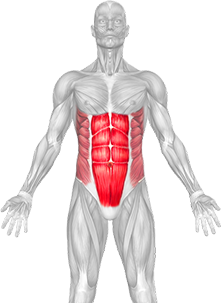
Abdominal Crunches are a fundamental exercise perfect for beginners seeking to strengthen their core. This exercise falls under the strength category and primarily targets the rectus abdominis (the primary muscle group) while also engaging the obliques (secondary muscle group). Abdominal crunches are a body-weight exercise, requiring no additional equipment, making them easily accessible for anyone looking to enhance their fitness routine.
Abdominal Crunches Step-by-Step Instructions
- Lie flat on your back on a mat with your knees bent and feet flat on the floor. Place your hands lightly behind your head, without interlocking your fingers.
- Engage your core muscles by drawing your belly button towards your spine. This is your starting position.
- Exhale and slowly lift your upper back off the mat, elevating your shoulders a few inches while keeping your lower back pressed to the floor.
- Pause at the top of the movement, ensuring that your neck remains relaxed and your chin is not tucked into your chest.
- Inhale as you slowly lower yourself back to the starting position.
- Repeat this motion for the desired number of repetitions, maintaining controlled and smooth movements throughout.
Abdominal Crunches, Tips for Proper Form
- Keep your movements slow and controlled; avoid using momentum to lift your upper body.
- Ensure your neck and shoulders remain relaxed to prevent strain. Imagine holding an orange under your chin to maintain a gap.
- Focus on engaging your core muscles throughout the exercise, rather than pulling with your hands or arms.
- Breathe out as you lift and inhale as you return to the starting position, maintaining a consistent breathing pattern.
- Keep your lower back pressed to the floor to avoid any strain on your spine.
- Avoid lifting your lower back off the mat; the movement should be isolated to your upper back and shoulders.
Abdominal Crunches Benefits
- Strengthens the core muscles, particularly the rectus abdominis and obliques, enhancing overall stability and balance.
- Improves posture by strengthening the core, which can reduce lower back pain and improve alignment.
- Enhances functional strength, aiding in everyday activities and other physical exercises.
- Can lead to improved performance in sports that require core strength and stability.
- Helps to tone and flatten the abdomen, contributing to a stronger, more defined midsection.
- Promotes better breathing control and diaphragmatic strength due to the focus on breathing techniques during the exercise.
- Offers mental benefits such as improved concentration and stress relief through focused, meditative movements.
Abdominal Crunches Common Mistakes to Avoid
- Pulling the neck or head with hands: This can lead to neck strain. Hands should only lightly support the head.
- Using momentum instead of muscle strength: Rapid, jerky movements reduce the effectiveness of the exercise and increase injury risk.
- Not engaging the core: Failing to actively engage the abdominal muscles can diminish the exercise's effectiveness and lead to lower back strain.
- Arching the lower back: This can put unnecessary pressure on the spine. Keep the lower back pressed to the floor throughout.
- Holding the breath: Proper breathing is essential for effectiveness and safety. Breathe out on the lift and in on the return.
- Performing too quickly: Slow, controlled movements ensure the target muscles are effectively engaged.
Abdominal Crunches Summary
Abdominal crunches are a beginner-level strength exercise focused on the rectus abdominis and obliques. As a body-weight exercise, they are accessible and beneficial for improving core strength, posture, and functional fitness. Correct form, including controlled movements and proper breathing, is essential for maximizing effectiveness and minimizing the risk of injury. Regular practice can lead to a stronger, more toned midsection and contribute to overall physical and mental well-being. Remember, avoiding common mistakes is key to reaping the full benefits of this core-strengthening exercise.
Abdominal Crunches FAQs
How often should I perform abdominal crunches?
It is recommended to perform abdominal crunches 2-3 times per week, allowing for rest days in between to ensure muscle recovery.
Can abdominal crunches help me achieve a six-pack?
While abdominal crunches strengthen and tone the rectus abdominis, achieving a six-pack also requires a balanced diet and overall body fat reduction.
Are there any variations of the abdominal crunch?
Yes, variations include bicycle crunches, reverse crunches, and oblique crunches, each targeting different aspects of the abdominal muscles.
Is it safe to do abdominal crunches if I have lower back pain?
If you have lower back pain, it's best to consult with a healthcare provider before performing abdominal crunches. Modifications or alternative exercises might be recommended.
Can I do abdominal crunches every day?
While it's possible to do abdominal crunches daily, it's important to allow time for muscle recovery. Overworking the muscles can lead to fatigue and potential injury.
What's the difference between a crunch and a sit-up?
A crunch is a partial movement that targets the abdominal muscles, while a sit-up is a full-body movement involving the hip flexors and lower back muscles in addition to the abs.