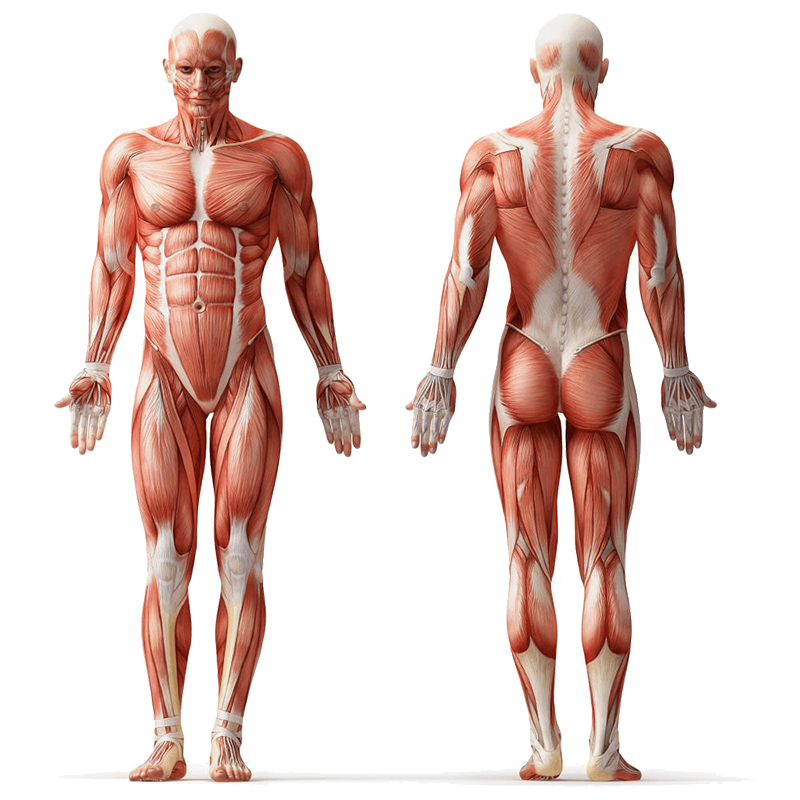
The Ab Wheel Rollout, also known as the ab roller rollout or simply ab rollout, is a challenging strength and stability move that blends a moving plank with a forward reach. It is a compound core exercise that asks your Abdominals, Obliques, and deeper Core muscles to resist extension while your shoulders and Back guide the wheel.
With a simple tool (an ab wheel or ab roller), this drill teaches full-body tension from the Knees or Feet to the Hands. It is best suited for intermediate to advanced exercisers, though beginners can start with regressions like partial range kneeling rollouts or stability ball rollouts.
What sets the rollout apart is how intensely it trains anti-extension strength while also lighting up the Lats, Chest, and Triceps to keep the torso stable as you glide forward and back. When performed correctly, it can improve trunk stiffness, posture, and performance in lifting and sport.
During each repetition, the Rectus Abdominis works hard to prevent the low back from sagging, assisted by the Transverse Abdominis and Obliques for 360-degree bracing. The Erector Spinae contributes to controlled spinal position, while the Lats, Deltoids, Pectorals, Biceps, and Triceps help steer and stabilize the wheel. Research comparing rollout devices has found high activation in the Rectus Abdominis during rollout variations, underscoring why this drill is often considered a top-tier core move.
Safety Considerations
Before you roll, set the stage for success with good preparation and smart limits.
- Warm up with 5 to 8 minutes of light cardio and dynamic core prep such as dead bugs, front planks, and glute bridges.
- Use a padded mat under the Knees for kneeling versions to reduce pressure and help you lock in a solid base.
- Keep the ribs tucked and hips slightly posteriorly tilted to avoid overextending the low back as you reach.
- Move only as far as you can maintain a neutral spine without the lower back dipping toward the floor.
- If you have shoulder, wrist, or lumbar issues, start with short ranges or regressions like stability ball rollouts or walkouts and progress gradually.
- Control the return. Do not let the wheel snap back toward your Knees or Feet.
Note: Consult a fitness professional or healthcare provider if you have pre-existing conditions or experience discomfort during the exercise.
Step-by-Step Instructions
Follow these cues to dial in the starting position, the reach, and the controlled return.
- Set up on a mat. Kneel with your Knees hip width apart. Grip the ab wheel handles so your hands are under your shoulders. Lock your elbows straight, press the floor away, and engage the Lats by lightly pulling the handles toward your body without moving the wheel.
- Brace first. Take a breath in through your nose. Exhale to set the rib cage down, squeeze the Glutes, and slightly tuck the pelvis. Think zippering your Abdominals in for a firm brace.
- Begin the rollout. Inhale as you slowly roll the wheel forward. Let your shoulders travel ahead of your hips while your body forms a long line from the Knees to the hands. Keep elbows straight and Lats engaged to guide the wheel.
- Find your end range. Stop the forward glide the instant your low back tries to sag or your ribs lift. Your Core should feel loaded and steady. Hold a brief pause while maintaining your brace.
- Return with control. Exhale through pursed lips and drag the wheel back toward your Knees by pulling with your Lats and bracing your Abdominals. Keep the spine neutral and elbows straight until you are back over the shoulders.
- Reset and repeat. Re-breathe, re-brace, and perform the next repetition. Aim for clean sets of 5 to 10 controlled reps, stopping 1 to 2 reps before form breaks down.
Tips for Proper Form
These small adjustments make a big difference in comfort and effectiveness.
- Keep your elbows straight to prevent dumping the load into the shoulders and to keep tension in the Core and Lats.
- Think anti-extension. Keep the ribs down and the pelvis slightly tucked so the low back does not arch as you reach.
- Start small. Use a short rollout distance and increase only when you can keep the same braced posture for every rep.
- Spread the floor with your Knees to create hip tension, which helps the Core fire more effectively.
- Grip the handles and imagine screwing the hands inward to activate the Lats and Pecs for added trunk stiffness.
- Use a slow tempo. A 2 to 3 second rollout and a 2 to 3 second return builds control and reduces strain on the shoulders and wrists.
- Breathe with purpose. Inhale as you glide out to fill the trunk, then exhale steadily on the way back to reinforce the brace.
Common Mistakes to Avoid
Skip these pitfalls to protect your back and get more from each rep.
- Letting the low back sag at end range. This shifts stress to the lumbar spine and defeats the anti-extension goal. Stop earlier or choose an easier variation.
- Bending the elbows to pull the wheel back. Keep arms long and use your Core and Lats to reverse the motion.
- Rushing the return and bouncing off the end range. Control the reversal to avoid shoulder and wrist irritation.
- Starting with a standing rollout too soon. Build capacity with kneeling and partial ranges first.
- Flaring the ribs and losing the brace. Keep a light exhale to keep ribs stacked over the pelvis.
- Rolling beyond your active range. Quality reps in a shorter range beat sloppy, painful long reps every time.
Primary Benefits
The rollout delivers a mix of strength, stability, and carryover to everyday life and sport.
- High activation of the Rectus Abdominis for strong anti-extension capacity and visible core development when paired with proper nutrition.
- Improved trunk stiffness that supports lifting mechanics and protects the spine during loaded movements.
- Upper body co-contraction of Lats, Pectorals, Deltoids, Biceps, and Triceps for integrated shoulder stability.
- Better posture awareness through rib and pelvis alignment that carries over to planks, pushups, and overhead work.
- Scalable challenge from kneeling partials to advanced standing rollouts without changing equipment.
- Enhanced proprioception and control through slow eccentrics and deliberate breathing.
Regressions
Build skill and strength with these easier entry points.
- Short-range kneeling rollouts stopping a few inches forward, then gradually increasing reach.
- Incline rollouts with hands on a low box or ramp so the torso travels on a slight uphill.
- Stability ball rollouts on forearms to practice bracing while the ball moves.
- Ab wheel with band assistance by anchoring a light band to a post and looping it around the wheel axle to help you on the way back.
- Rollouts to a wall or yoga block stop to limit distance and protect the low back.
- Plank walkouts from Knees or Feet to learn the forward reach while staying braced.
Progressions
Ready to level up the challenge while keeping pristine form.
- Full range kneeling rollouts to a consistent end range with a smooth 2 to 3 second return.
- Paused kneeling rollouts with a 1 to 2 second hold at end range without losing your brace.
- Standing rollouts from a wall stop to shorten the lever before going full standing.
- Full standing rollouts if you can keep the spine neutral for every inch of the rep.
- Single-arm wheel rollouts using a two-hand start, then lifting one hand slightly to bias anti-rotation.
- Barbell rollouts with a bar and round plates for a different hand position and glide feel. Some lifters find the barbell slightly more stable than a narrow wheel.
Summary
The Ab Wheel Rollout is a powerful compound core drill that teaches anti-extension while recruiting support from the Lats, Chest, and Deltoids. Start with a strong brace, move only as far as you can keep the spine neutral, and use slow, controlled reps. Scale the distance, surface, or stance to match your current ability, then progress to full kneeling and standing versions. When practiced with smart technique, the rollout can boost trunk strength, posture, and performance in a wide range of lifts and sports.
FAQs
Quick answers to help you train with confidence.
What muscles does the Ab Wheel Rollout work?
Primarily the Rectus Abdominis, with help from the Transverse Abdominis, Obliques, and Erector Spinae. The Lats, Deltoids, Pectorals, Biceps, and Triceps also contribute to control and steering.
Is the rollout safe for beginners?
Yes, when scaled correctly. Begin with stability ball rollouts, short-range kneeling rollouts, or walkouts. Increase range only while you can keep the ribs down and the low back neutral.
How far should I roll out?
Only as far as you can maintain a neutral spine. Stop immediately if the low back begins to arch or the ribs flare. Over time, increase distance as control improves.
How often can I train rollouts?
Two to three sessions per week works well for most people, leaving at least one day between sessions for recovery.
Why do my shoulders or wrists feel strained?
Common causes include bending the elbows, rolling too far, or moving too fast. Keep arms long, slow the tempo, reduce range, and consider a thicker mat or neutral-grip wheel to reduce wrist stress.
Which is harder: ab wheel or barbell rollout?
Many lifters find the ab wheel less stable and therefore more challenging, while the barbell can feel more predictable due to its wider base. Choose the tool that lets you keep best form.