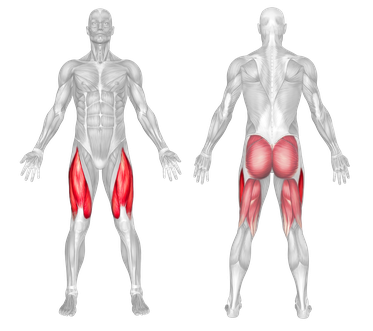
The 45-Degree Leg Press is a popular variation of the traditional leg press, primarily targeting the quadriceps (front thighs), but also engaging the hamstrings (back thighs) and gluteus maximus (buttocks). This exercise is well-suited for individuals at all fitness levels, from beginners to advanced lifters. The 45-degree leg press machine allows the user to sit at an angle, pressing the weight upward at a 45-degree angle, which can help reduce strain on the back compared to some other leg press variations.
This compound movement involves multiple joints and muscle groups, making it an efficient exercise for building lower body strength and muscle mass. The required equipment for this exercise is a 45-degree leg press machine, commonly found in most gyms. Incorporating the 45-degree leg press into your workout routine can enhance overall lower body strength, stability, and muscle endurance.
45-Degree Leg Press Step-by-Step Instructions
- Sit on the 45-degree leg press machine and place your feet shoulder-width apart on the platform. Ensure your heels are flat, and toes are pointed slightly outward.
- Adjust the seat and backrest so that your knees form a 90-degree angle at the starting position.
- Grip the handles for support and brace your core, keeping your back and head firmly against the backrest.
- Push the platform away from you by extending your legs, making sure to distribute the weight evenly across your feet.
- Stop pressing just before your knees fully extend to avoid locking them out, which maintains tension on the muscles.
- Slowly lower the platform back towards you, controlling the movement and keeping your feet flat on the platform.
- Repeat the movement for the desired number of repetitions, maintaining a controlled and steady pace throughout.
45-Degree Leg Press, Tips for Proper Form
- Ensure your back remains in contact with the backrest at all times to avoid lower back strain.
- Do not allow your knees to collapse inward; keep them aligned with your toes to protect your joints.
- Vary your foot placement to target different muscle groups; placing feet higher on the platform emphasizes the glutes and hamstrings, while a lower position focuses on the quadriceps.
- Maintain a controlled pace; avoid bouncing or using momentum, which reduces muscle engagement and increases injury risk.
- Inhale as you lower the platform and exhale as you press it away, ensuring proper breathing technique to stabilize your core.
- Regularly check and adjust the machine settings for a comfortable and effective range of motion tailored to your body size.
45-Degree Leg Press Benefits
- Builds significant lower body strength, primarily targeting the quadriceps, but also engaging the hamstrings and glutes.
- Provides a controlled environment, reducing the risk of injury compared to free weight exercises like squats.
- Enhances muscle endurance, especially when performed with higher repetitions.
- Improves overall lower body stability, beneficial for sports and daily activities.
- Supports muscle hypertrophy through progressive overload, crucial for muscle growth.
- Reduces strain on the lower back, making it a safer option for individuals with back issues.
45-Degree Leg Press Common Mistakes to Avoid
- Allowing the knees to collapse inward, which can lead to knee injuries.
- Using too much weight, compromising form and increasing the risk of injury.
- Locking out the knees at the top of the movement, placing undue stress on the joints.
- Lifting the lower back off the seat, which can strain the lower back.
- Failing to adjust the seat and backrest properly, resulting in an uncomfortable and unsafe position.
- Performing the exercise too quickly, reducing muscle engagement and increasing injury risk.
45-Degree Leg Press Summary
The 45-degree leg press is a powerful exercise for building lower body strength, targeting the quadriceps, hamstrings, and glutes. It offers a controlled and safe environment, reducing the risk of injury compared to free weight exercises. Proper form is crucial to maximize benefits and avoid injuries. Adjusting foot placement and maintaining a controlled pace can enhance muscle engagement and overall effectiveness.
45-Degree Leg Press FAQs
How often should I perform the 45-degree leg press?
For most people, 2-3 times a week is sufficient, allowing rest days in between for muscle recovery.
Can beginners do the 45-degree leg press?
Yes, beginners can perform the 45-degree leg press as it offers stability and support, making it a safe choice.
What variations of the leg press are there?
Variations include the seated leg press, horizontal leg press, and vertical leg press, each slightly altering muscle engagement.
How can I increase the intensity of my leg press workout?
Increase the weight gradually, try single-leg presses, or reduce rest times between sets to boost intensity.
What should I do if I experience knee pain during the leg press?
Check your form and reduce the weight. If pain persists, consult a healthcare professional before continuing.
Is the 45-degree leg press better than squats?
Both exercises have their benefits. The 45-degree leg press is safer for those with back or knee issues, while squats engage more muscles and improve balance.