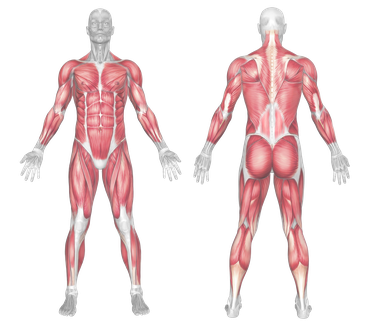
Mountain climbers, also known as running planks, are a dynamic bodyweight exercise that provide a full-body workout. This exercise targets multiple muscle groups and is particularly effective for building cardio endurance, core strength, and agility. Mountain climbers primarily engage the rectus abdominis (ab muscles), obliques (side abs), and hip flexors.
Secondary muscles involved include the deltoids (shoulders), glutes (buttocks), quadriceps (front thighs), hamstrings (back thighs), and calves. As a compound exercise, mountain climbers involve multiple joints and muscle groups, enhancing overall functional fitness. This exercise requires no equipment, making it a versatile addition to any workout routine.
Step-by-Step Instructions
- Begin in a high plank position with your hands directly under your shoulders, your arms extended, and your body forming a straight line from head to heels.
- Engage your core by pulling your belly button toward your spine and keep your hips level.
- Lift your right foot off the floor and drive your right knee toward your chest, keeping your toes pointed downwards.
- Quickly switch legs, bringing your right leg back to the starting position while simultaneously driving your left knee toward your chest.
- Continue to alternate legs in a running motion, maintaining a steady rhythm and keeping your core engaged throughout the movement.
- Focus on controlled breathing, inhaling as you bring one knee toward your chest and exhaling as you switch legs.
Tips for Proper Form
- Maintain a flat back and avoid letting your hips sag or rise too high.
- Keep your head in a neutral position, gazing slightly ahead of you to avoid straining your neck.
- Ensure your hands are shoulder-width apart and your shoulders are directly above your wrists.
- Engage your core throughout the exercise to stabilize your body and protect your lower back.
- Avoid bouncing on your toes; focus on a smooth, controlled motion to maximize muscle engagement.
- Start at a slower pace if you're a beginner and gradually increase speed as you become more comfortable with the movement.
Benefits
- Improves cardiovascular endurance by elevating your heart rate.
- Strengthens core muscles, enhancing stability and balance.
- Engages upper body muscles, including shoulders, chest, and triceps.
- Targets lower body muscles, such as quads, glutes, and hamstrings.
- Enhances flexibility and hip mobility.
- Boosts calorie burn and aids in fat loss due to its high-intensity nature.
Common Mistakes to Avoid
- Bouncing on your toes instead of maintaining a smooth, controlled motion.
- Allowing your hips to sag or rise too high, which can strain your lower back.
- Failing to keep your core engaged, leading to a loss of stability.
- Not bringing your knees all the way to your chest, reducing the exercise's effectiveness.
- Moving too quickly without proper form, increasing the risk of injury.
- Neglecting to breathe properly, which can lead to fatigue and poor performance.
Summary
Mountain climbers are an excellent full-body exercise that enhances cardiovascular endurance, core strength, and agility. By maintaining proper form and incorporating variations, you can maximize the benefits and avoid common mistakes. This versatile, no-equipment-needed exercise is suitable for all fitness levels and can be easily integrated into any workout routine.
FAQs
How often should I perform mountain climbers?
Incorporate mountain climbers into your workout routine 2-3 times a week for optimal results.
Are mountain climbers suitable for beginners?
Yes, mountain climbers are suitable for all fitness levels. Beginners can start with a slower pace and gradually increase intensity.
Can I do mountain climbers if I have lower back pain?
Consult with a healthcare professional or fitness expert before attempting mountain climbers if you have lower back pain, as improper form can exacerbate the issue.
What other exercises can I combine with mountain climbers for a full-body workout?
Combine mountain climbers with exercises like push-ups, squats, lunges, and burpees for a comprehensive full-body workout.
How long should I perform mountain climbers for?
Start with 30-second intervals and gradually increase duration as your fitness level improves.
Can I modify mountain climbers to make them easier or harder?
Yes, you can modify mountain climbers by adjusting the speed, adding a push-up, or using equipment like sliders to vary the intensity.