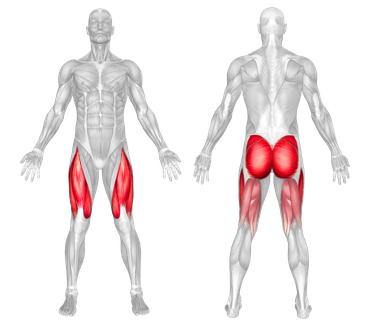
The Bulgarian Split Squat, also known as the Rear-Foot-Elevated Split Squat, is a unilateral leg exercise that primarily targets the quadriceps (quads) and gluteus maximus (glutes), while also engaging the hamstrings, adductors (inner thigh muscles), and core muscles. This compound movement is highly effective for building lower body strength, enhancing balance, and improving coordination. It requires minimal equipment, typically a bench or a similar elevated surface, and can be performed with body weight or added resistance such as dumbbells or a barbell. The Bulgarian Split Squat is suitable for intermediate to advanced fitness levels due to its balance and strength demands.
Step-by-Step Instructions
- Stand a few feet in front of a bench or sturdy elevated surface with your back facing it.
- Place the top of your non-working foot on the bench behind you, ensuring your front foot is positioned firmly on the ground.
- Keep your torso upright and your core engaged. Begin to lower your body by bending your front knee and pushing your hips back slightly.
- Descend until your front thigh is approximately parallel to the ground and your back knee is just above the floor.
- Push through the heel of your front foot to return to the starting position. Ensure your movements are controlled and deliberate.
- Repeat for the desired number of repetitions before switching legs.
Tips for Proper Form
- Maintain an upright torso throughout the movement to avoid leaning too far forward or backward.
- Ensure your front knee tracks over your toes but does not extend past them to prevent undue stress on the knee joint.
- Keep your weight distributed evenly across your front foot, pressing firmly through the heel during the ascent.
- Adjust your stance to find a comfortable position where you can achieve full range of motion without compromising balance.
- Start with body weight before progressing to added resistance to master the movement and ensure proper form.
- Use a stable object or a wall for balance assistance if necessary, especially when learning the exercise.
Benefits
- Builds unilateral leg strength, helping to correct muscle imbalances between legs.
- Enhances balance and coordination due to the single-leg nature of the exercise.
- Improves hip mobility and flexibility, contributing to better overall lower body function.
- Targets the glutes and quads effectively, promoting muscle growth and strength.
- Reduces spinal load compared to traditional squats, making it a good alternative for those with back issues.
- Versatile and can be adapted with various equipment or modifications to suit different fitness levels.
Common Mistakes to Avoid
- Allowing the front knee to collapse inward or extend too far forward over the toes.
- Leaning too far forward or backward, which can compromise balance and reduce effectiveness.
- Placing the back leg directly behind the front leg, which makes balancing difficult.
- Using too much weight before mastering proper form and balance.
- Failing to maintain a neutral spine, leading to potential lower back strain.
- Not engaging the core, which is crucial for maintaining stability and balance.
Summary
The Bulgarian Split Squat is an effective unilateral exercise for building lower body strength, improving balance, and enhancing coordination. Targeting primarily the quads and glutes, this compound movement can be performed with body weight or added resistance. Proper form and gradual progression are key to maximizing the benefits and preventing injury. Incorporating this exercise into your routine can lead to significant improvements in overall lower body function and strength.
FAQs
How often should I perform Bulgarian Split Squats?
Incorporating Bulgarian Split Squats 2-3 times per week into your lower body workout routine can yield excellent results without overtraining.
Can beginners do Bulgarian Split Squats?
While generally suited for intermediate to advanced levels, beginners can start with body weight and gradually progress as they build balance and strength.
What muscles do Bulgarian Split Squats target?
They primarily target the quadriceps and gluteus maximus, while also engaging the hamstrings, adductors, and core muscles.
Is it necessary to use weights for Bulgarian Split Squats?
No, they can be performed with body weight alone. Adding weights is beneficial for increased resistance and strength gains.
How can I improve my balance for this exercise?
Practicing the movement regularly, using a stable object for support, and strengthening your core can help improve balance.
What are some variations of Bulgarian Split Squats?
Variations include using a barbell, dumbbells, resistance bands, or performing the exercise with an elevated front foot for increased range of motion.