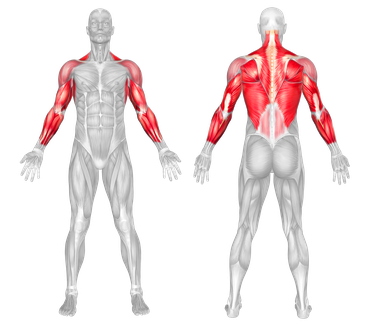
Pull-ups are a staple bodyweight exercise essential for building upper body strength. Also known as "chin-ups" when performed with an underhand grip, this exercise primarily targets the latissimus dorsi (lats) and engages several other muscles including the biceps, infraspinatus, lower trapezius, pectoralis major, erector spinae, and external obliques. It’s a compound movement requiring no more equipment than a sturdy bar, making it accessible and versatile. Ideal for various fitness levels, pull-ups can be modified with bands or machines for beginners and intensified for advanced practitioners by adding weight.
Step-by-Step Instructions
- Establish Your Grip: Hang from a bar with a pronated (overhand) grip, hands slightly wider than shoulder-width apart. Allow your body to hang freely with fully extended arms and engaged shoulders.
- Engage the Scapula: Retract your shoulder blades to stabilize your upper back and open your chest slightly.
- Initiate the Pull: Drive your elbows down towards the floor and pull your chest towards the bar. Focus on engaging your back muscles throughout the movement.
- Chin Over Bar: Continue pulling until your chin is above the bar, ensuring a full range of motion.
- Controlled Descent: Lower yourself back to the starting position in a controlled manner, extending your arms fully while maintaining engagement in your shoulders and back.
- Repeat: Perform the desired number of repetitions, maintaining proper form throughout.
Tips for Proper Form
- Use a full range of motion by fully extending your arms at the bottom and bringing your chin over the bar at the top.
- Avoid using momentum; perform each repetition with controlled movements to maximize muscle engagement.
- Keep your shoulders pulled down and away from your ears to prevent shoulder strain.
- Engage your core by keeping your body in a hollow position, avoiding excessive arching of your lower back.
- Adjust your grip width to what feels comfortable and natural for your shoulder joints.
- Incorporate variations like negative pull-ups or assisted pull-ups if you are struggling to complete a full pull-up.
Benefits
- Upper Body Strength: Significant improvements in the strength of the back, shoulders, and arms.
- Grip Strength: Enhanced grip strength, beneficial for various other exercises and daily tasks.
- Muscle Engagement: Effective engagement of multiple upper body muscle groups simultaneously.
- Core Stability: Strengthens the core muscles due to the need for stabilization during the movement.
- Functional Fitness: Improves overall functional strength, aiding in daily physical activities.
- Versatility: Can be performed anywhere with minimal equipment, making it a highly accessible exercise.
Common Mistakes to Avoid
- Using an incomplete range of motion, which limits muscle engagement and strength gains.
- Shrugging shoulders, which shifts the work from the lats and rhomboids to the upper traps.
- Arching the lower back excessively, which can lead to reduced effectiveness and potential back pain.
- Using momentum or "kipping," which reduces muscle tension and increases injury risk.
- Failing to retract and depress the shoulders, compromising stability and increasing the risk of shoulder injuries.
- Not maintaining a controlled descent, which can lead to poor form and potential injury.
Summary
Pull-ups are a fundamental upper body exercise that significantly enhances strength and muscle mass, primarily targeting the lats while engaging the biceps, shoulders, and core. Proper form and technique are crucial to maximize benefits and prevent injury. Including pull-ups in your workout routine can lead to impressive gains in functional strength and overall fitness.
Pull-Ups FAQs
How often should I perform pull-ups?
Pull-ups can be performed multiple times a week, depending on your overall training program and recovery capacity. Aim for 2-3 times per week to start.
What if I can't do a single pull-up?
Begin with assisted pull-ups, negative pull-ups, or using resistance bands to build the necessary strength gradually.
Are pull-ups better than chin-ups?
Both exercises are effective but target muscles slightly differently. Pull-ups focus more on the lats, while chin-ups emphasize the biceps.
Can pull-ups help with weight loss?
Yes, as part of a comprehensive fitness program, pull-ups can help build muscle and boost metabolism, aiding in weight loss.
What is the best grip for pull-ups?
A pronated grip (palms facing away) is standard for pull-ups, but varying your grip can target different muscles and prevent overuse injuries.
How can I improve my pull-up count?
Incorporate exercises like lat pulldowns, inverted rows, and core strengthening movements into your routine to build the necessary strength and endurance.