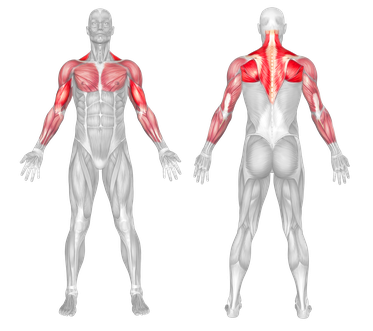
Chin-ups are a fundamental bodyweight exercise, widely recognized for their ability to build upper body strength and muscle mass. Also known as underhand pull-ups, they primarily target the biceps (biceps brachii) and latissimus dorsi (lats), with secondary engagement of the brachialis, brachioradialis, pectoralis major (chest), and the trapezius (traps) muscles. As a compound exercise, chin-ups engage multiple joints and muscle groups simultaneously, making them an excellent choice for those seeking to improve overall upper body strength and endurance.
This exercise can be performed using a simple pull-up bar, making it accessible for most fitness enthusiasts. Historically, chin-ups have been a staple in military training and athletic conditioning programs due to their effectiveness and simplicity.
Chin-Ups Step-by-Step Instructions
- Grip the bar with your palms facing toward your body (underhand grip), hands shoulder-width apart.
- Hang from the bar with your arms fully extended and feet off the ground. Engage your core and maintain a neutral spine.
- Initiate the pull by driving your elbows down and back, focusing on engaging your lats and biceps.
- Continue pulling until your chin is above the bar, squeezing your shoulder blades together at the top.
- Pause briefly at the top, then slowly lower yourself back to the starting position, maintaining control throughout the descent.
- Repeat for the desired number of repetitions.
Chin-Ups, Tips for Proper Form
- Engage your core to prevent swinging and maintain a stable body position.
- Keep your shoulder blades retracted (pulled back) throughout the movement to maximize muscle engagement and protect your shoulders.
- Avoid using momentum to complete the reps; focus on controlled, deliberate movements.
- Ensure a full range of motion by fully extending your arms at the bottom of the movement and pulling your chin above the bar at the top.
- Maintain a neutral head position, avoiding excessive extension or flexion of the neck.
- If you struggle to complete a full chin-up, use a resistance band for assistance or perform negative chin-ups to build strength.
Chin-Ups Benefits
- Increases upper body strength, particularly in the biceps and lats.
- Enhances grip strength, which is beneficial for other lifts and daily activities.
- Improves overall muscle definition and hypertrophy in the upper body.
- Engages core muscles, contributing to improved core stability and strength.
- Promotes functional fitness, aiding in movements that involve pulling and lifting.
- Helps correct muscular imbalances and can improve posture by strengthening the upper back.
Chin-Ups Common Mistakes to Avoid
- Using a grip that is too wide, which can increase the risk of shoulder and elbow injuries.
- Failing to extend the arms fully at the bottom of the movement, resulting in a shortened range of motion.
- Allowing the body to swing or using momentum to complete the movement.
- Not engaging the shoulder blades, which can lead to shoulder strain and reduced muscle activation.
- Hyper-extending or flexing the neck excessively during the exercise.
- Performing the movement too quickly, which reduces time under tension and the effectiveness of the exercise.
Chin-Ups Summary
Chin-ups are a highly effective upper body exercise that targets multiple muscle groups, including the biceps, lats, and core. By maintaining proper form and avoiding common mistakes, individuals can maximize the benefits of chin-ups, which include increased strength, muscle definition, and functional fitness. This compound exercise is suitable for various fitness levels and can be modified or progressed to suit individual needs.
Chin-Ups FAQs
How often should I perform chin-ups?
Incorporate chin-ups into your workout routine 2-3 times per week, allowing for adequate recovery between sessions.
Are chin-ups better than pull-ups?
Both exercises are effective, but chin-ups emphasize the biceps more, while pull-ups target the upper back muscles to a greater extent. Including both in your routine can provide balanced upper body development.
What if I can't do a single chin-up?
Start with assisted variations using resistance bands or perform negative chin-ups to build the necessary strength.
Can chin-ups help improve my posture?
Yes, by strengthening the upper back and shoulder muscles, chin-ups can help correct postural imbalances.
Should I use additional weight for chin-ups?
Once you can perform multiple chin-ups with proper form, you can add weight using a dip belt to continue progressing.
What are some variations of chin-ups?
Try variations like weighted chin-ups, tempo chin-ups, or isometric holds to add variety and challenge to your workouts.