
Squats

Video Demo, Instructions, Proper Form Tips, Common Mistakes, Benefits and FAQs
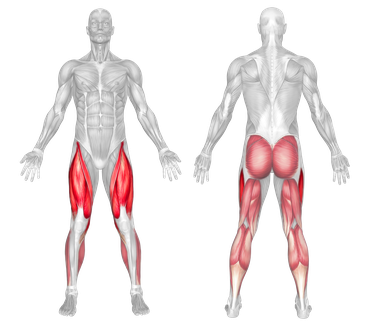
Exercise Profile

Target Muscles:

Quads

Secondary Muscles:

Hamstrings, Glutes, Calves

Exercise Type:

Strength

Equipment:

Bodyweight

Difficulty:

Beginner to Advanced

Mechanics:

Compound
Target Muscle Group

Squats, also known as bodyweight squats or air squats, are fundamental exercises in strength training. They target the quadriceps (thigh muscles), hamstrings, gluteus maximus (buttocks), and the erector spinae (lower back muscles). Squats are classified as a compound exercise, engaging multiple muscle groups across different joints. This makes them essential for overall muscle building and functional fitness.

Squats can be performed with no equipment, making them a versatile addition to any workout routine. Variations include using barbells, dumbbells, or kettlebells to increase resistance. Squats are crucial for developing lower body strength, improving athletic performance, and enhancing balance and coordination.

Step-by-Step Instructions

  1. Stand with your feet shoulder-width apart, and point your toes slightly outward.
  2. Engage your core muscles and maintain a straight back.
  3. Lower your body by bending your knees and hips, as if you are sitting in a chair.
  4. Keep your chest up and your back straight throughout the movement.
  5. Continue lowering until your thighs are parallel to the ground or slightly lower.
  6. Push through your heels to return to the starting position.

Tips for Proper Form

  • Maintain a straight back and keep your chest up.
  • Ensure your knees track over your toes, not beyond them.
  • Distribute your weight evenly across your feet, leaning slightly towards your heels.
  • Squeeze your glutes at the top of the movement to ensure full hip extension.
  • Inhale on the way down, exhale as you rise to maintain core stability.
  • Pause briefly at the bottom of the squat to avoid using momentum.

Benefits

  • Increase lower body strength by targeting major muscle groups.
  • Improve core strength and stability.
  • Enhance balance and coordination.
  • Boost athletic performance by improving power and speed.
  • Help in maintaining bone density, reducing the risk of osteoporosis.
  • Reduce the risk of injuries by strengthening joints and muscles.

Common Mistakes to Avoid

  • Allowing knees to cave inwards during the movement.
  • Lifting heels off the ground, which shifts weight forward.
  • Rounding the lower back, leading to potential injury.
  • Not squatting deep enough, preventing full muscle engagement.
  • Pushing hips too far back, making the exercise less effective.
  • Holding your breath throughout the movement, which can cause dizziness.

Summary

Squats are a versatile and essential exercise for building lower body strength, improving athletic performance, and enhancing balance and coordination. Proper form is crucial to maximize benefits and avoid injuries. Incorporate squats into your routine for a comprehensive workout targeting multiple muscle groups.

FAQs

How often should I perform squats?

It depends on your fitness goals, but generally, 2-3 times a week is recommended for most people.

Can I do squats every day?

It's possible, but it's important to listen to your body and avoid over-training. Ensure you have proper form and allow time for recovery.

What variations of squats can I try?

You can try goblet squats, barbell squats, front squats, and jump squats for different benefits and challenges.

Are squats bad for my knees?

When performed correctly, squats are not bad for your knees. Proper form is essential to avoid strain on the joints.

Should I use weights when squatting?

Using weights can increase the intensity of the exercise. Start with bodyweight squats and progress to using dumbbells or a barbell as you build strength.

How can I improve my squat depth?

Improving flexibility and mobility in your hips, ankles, and thoracic spine can help you achieve better squat depth.

Disclaimer: It’s important to keep in mind that not all exercises are suitable for everyone. Before trying out a new exercise, it’s crucial to consider factors such as your flexibility, strength, and overall health to determine whether or not the exercise is appropriate for you. Like any exercise, there is inherent danger associated with it and it can potentially cause personal injury. It’s solely the responsibility of the exerciser to bear any injury sustained from the proper or improper use of this exercise. World Fitness.Online and its partners cannot be held liable for any injury that occurs as a result of using this exercise and it’s strongly advised that you seek guidance from a professional healthcare provider before attempting any exercise or exercise program.
Facebook
Twitter
LinkedIn
Scroll to Top