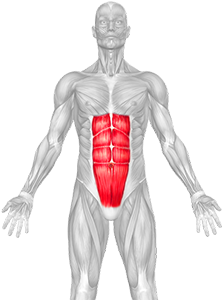
The Dragon Flag is a highly advanced bodyweight exercise that targets the core, credited to martial arts legend Bruce Lee. It is an exceptional exercise for building core strength, stability, and overall body control. Known for its difficulty, the Dragon Flag requires significant upper body strength and proper form to execute correctly.
This exercise mainly engages the rectus abdominis (the primary abdominal muscle), along with secondary muscle groups including the obliques, hip flexors, glutes (gluteal muscles), and erector spinae (lower back muscles). As a compound movement, it integrates multiple joints and muscle groups, making it a comprehensive core workout. Equipment needed for this exercise typically includes a bench or any sturdy, fixed object to grip.
Dragon Flag Step-by-Step Instructions
- Start by lying on a bench or the floor, ensuring you have a sturdy object to hold onto behind your head. This could be the edge of a bench, a barbell, or a fixed piece of furniture.
- Grip the object firmly, ensuring your arms are locked in place. Engage your core muscles and lift your legs towards the ceiling, maintaining a straight line from shoulders to toes.
- Keeping your body rigid, slowly lower your legs without letting your back arch or your hips sag. Your upper back and shoulders should be the only parts of your body touching the bench or floor.
- Continue lowering your legs until they hover just above the bench or floor, maintaining tension in your core and glutes throughout the movement.
- Pause briefly at the lowest point, then use your core to lift your legs back to the starting position, keeping your body straight and controlled.
- Repeat for the desired number of repetitions, ensuring you maintain proper form throughout.
Dragon Flag, Tips for Proper Form
- Engage your core: Keep your abdominal muscles tight to stabilize your spine and maintain the correct posture.
- Control your movements: Perform the exercise slowly and deliberately to maximize muscle engagement and prevent injury.
- Keep a neutral spine: Avoid arching your lower back to reduce the risk of strain or injury.
- Warm up thoroughly: Ensure your muscles are adequately warmed up before attempting the Dragon Flag to avoid injuries.
- Use a spotter if needed: Especially when starting, having a spotter can help you maintain form and provide safety.
- Progress gradually: If you can’t perform a full Dragon Flag, start with easier variations like the bent-knee version and gradually progress to the full movement.
Dragon Flag Benefits
- Core Strength: This exercise significantly strengthens all major core muscles, including the rectus abdominis and obliques.
- Improved Stability: Enhances overall body stability and balance, benefiting other physical activities.
- Enhanced Body Control: Develops superior body control and coordination.
- Full-Body Engagement: Works multiple muscle groups simultaneously, improving overall strength.
- Lower Back Health: Promotes a healthy lower back by reinforcing proper alignment and avoiding lumbar arching.
- Mental Discipline: Requires focus and determination, enhancing mental fortitude.
Dragon Flag Common Mistakes to Avoid
- Arching the back: This reduces core engagement and increases the risk of lower back strain.
- Moving too quickly: Fast movements can lead to improper form and potential injury.
- Bending at the hips: Maintaining a straight line from shoulders to toes is crucial for the exercise’s effectiveness.
- Insufficient warm-up: Not warming up properly can lead to muscle strains.
- Inadequate rest: Ensure complete rest between sets to maintain form and performance.
- Overtraining: Avoid pushing beyond your limits, as this can lead to injury.
Dragon Flag Summary
The Dragon Flag is an advanced, highly effective core exercise that engages multiple muscle groups, improving strength, stability, and overall body control. Proper form and gradual progression are essential to avoid injury and maximize benefits.
Dragon Flag FAQs
Is the Dragon Flag suitable for beginners?
No, the Dragon Flag is an advanced exercise requiring significant core strength and stability. Beginners should start with simpler core exercises and gradually progress.
How often should I perform the Dragon Flag?
Incorporate the Dragon Flag into your routine 2-3 times per week, ensuring adequate rest between sessions.
Can I modify the Dragon Flag?
Yes, beginners can start with bent-knee variations and gradually progress to the full movement.
What muscles does the Dragon Flag work?
Primarily the rectus abdominis, obliques, hip flexors, glutes, and lower back muscles.
How long does it take to master the Dragon Flag?
It varies; with consistent training, it can take several months to a year, depending on your fitness level.
What should I do if I experience lower back pain during the exercise?
Stop immediately and reassess your form. Ensure you are not arching your back and consider consulting a fitness professional.