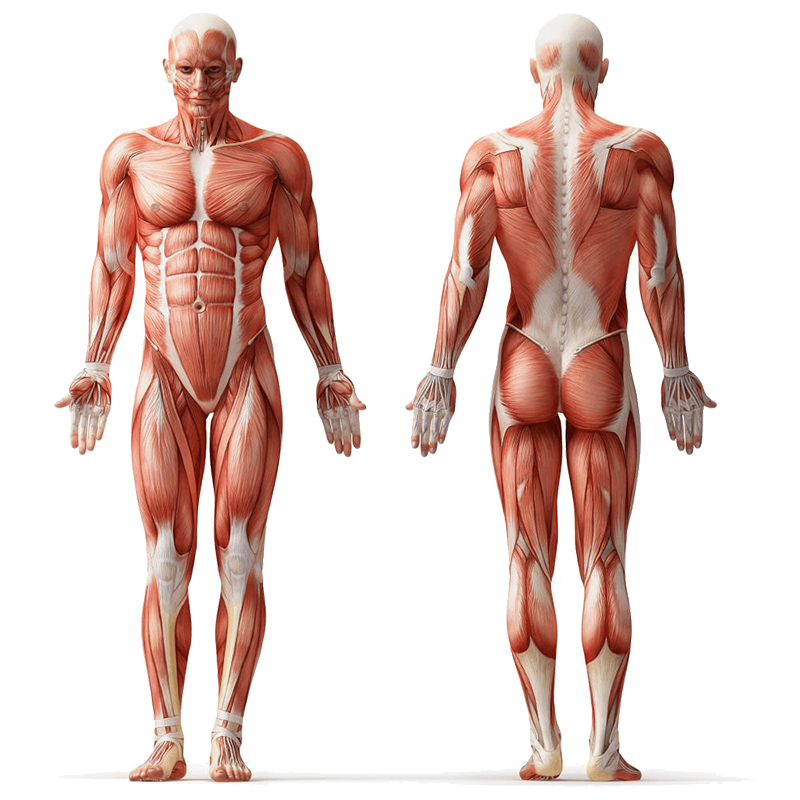
The Bodyweight Wood Chop, (also known as Twisting Wood Chopper, Standing Diagonal Chop or Standing Cable Woodchop, when performed with Cable Machine) is a powerful functional training move that develops your rotational core strength using nothing more than your own bodyweight. This compound exercise activates the abdominals (rectus abdominis), obliques, shoulders (deltoids), back (latissimus dorsi and trapezius), and hips (glutes and hip flexors) all at once. It’s a dynamic movement that mimics the real-life action of chopping wood, combining upper-body control with lower-body stability. Because no equipment is required, it’s ideal for beginners to intermediate exercisers who want to improve core strength, posture, balance, and coordination.
Unlike static ab exercises, the Bodyweight Wood Chop moves through multiple planes of motion, training your body to generate power from your core while maintaining a stable spine. It’s excellent for athletes in rotational sports such as tennis, golf, or baseball, as well as anyone who wants to strengthen their midsection in a functional way.
In this guide, you’ll learn how to perform the Bodyweight Wood Chop correctly, including safety considerations, step-by-step instructions based on the demo video, form tips, common mistakes, benefits, regressions, progressions, and more.
Safety Considerations
Before you begin the Bodyweight Wood Chop, make sure you’re working in an open area free of obstacles. Perform a light warm-up that includes torso rotations, arm swings, and hip circles to loosen the joints and muscles involved in twisting movements. Keep your spine neutral throughout the motion to protect your lower back. Avoid arching, rounding, or twisting excessively. Engage your core muscles before starting each rep to stabilize your torso.
If you have any back, shoulder, or hip injuries, reduce the range of motion or try one of the easier regressions listed later in this guide. Focus on smooth, controlled movement rather than speed. Wear shoes with good traction, and keep your knees slightly bent to absorb movement safely. Note: Consult a fitness professional or healthcare provider if you have pre-existing conditions or experience discomfort during the exercise.
Step-by-Step Instructions
Follow these precise instructions for performing the Bodyweight Wood Chop as demonstrated in the video.
- Stand tall with feet a little wider than shoulder width. Clasp your hands together and reach both arms overhead, directly above your chest. This is the start position.
- Brace your core, lower your ribs slightly, and keep your neck long. Eyes forward.
- Shift your weight toward your left leg and begin rotating your torso to the left.
- Sweep your hands on a diagonal from high above your right shoulder down across your body toward the outside of your left hip or knee.
- As the arms travel down, hinge your hips slightly and bend both knees. Let the rear heel lift and allow a small pivot through the feet to follow the rotation.
- Finish the chop with your hands outside the left thigh, torso angled, core tight, and spine neutral. Exhale here.
- Reverse the path. Drive from the hips and trunk to bring your hands back up along the same diagonal to the overhead start position with control.
- Repeat the same chop on the opposite side. Rotate to the right, sweep hands down toward the outside of the right hip or knee, then return to the overhead start.
- Keep arms long but not locked, knees tracking over mid-foot, and shoulders relaxed away from ears as you alternate sides.
- Perform the desired number of repetitions, moving fluidly from one side to the other while maintaining a steady breath and a braced core.
Tips for Proper Form
To ensure you’re executing the Bodyweight Wood Chop safely and effectively, keep these key tips in mind:
- Engage your core before every rep to keep your spine stable and supported.
- Let your hips rotate naturally with your torso to avoid twisting only from the spine.
- Keep your movements smooth and controlled instead of jerky or rushed.
- Pivot on your toes to help your hips follow the motion and prevent knee strain.
- Maintain a tall posture with your ribs down and shoulders relaxed throughout the motion.
- Breathe rhythmically: exhale as you chop downward, inhale as you return to the overhead position.
- Distribute weight evenly through both feet and avoid leaning too far forward or backward.
- Focus on using your torso and hips to power the chop rather than pulling with your arms.
Common Mistakes to Avoid
Even simple movements can go wrong without attention to form. Avoid these common Bodyweight Wood Chop mistakes:
- Twisting the upper body only and keeping hips frozen, which strains the lower back. Let the hips move with the rotation.
- Using your arms instead of your core and hips to generate movement. The power should come from the trunk.
- Over-arching the lower back during the upward phase. Maintain a neutral spine and braced core.
- Going too fast and losing control of your form. Focus on smooth transitions and core engagement.
- Locking out your knees or elbows. Keep a soft bend for better joint protection.
- Holding your breath throughout the set. Maintain steady breathing to stabilize the core and support endurance.
- Not performing equal reps on both sides, which can lead to imbalances.
Primary Benefits
The Bodyweight Wood Chop is more than just a core exercise. It provides several full-body benefits:
- Develops strong, stable obliques and abdominals for improved rotational strength and control.
- Improves coordination between the upper and lower body through integrated movement patterns.
- Enhances athletic performance for sports that rely on twisting, such as golf, tennis, and baseball.
- Boosts posture and spinal alignment by strengthening the muscles that support your midsection.
- Improves mobility and flexibility in the hips, shoulders, and thoracic spine.
- Enhances balance and body awareness through diagonal, full-body engagement.
- Provides a functional workout that can easily be done anywhere, without the need for any equipment.
- Increases calorie burn by engaging multiple large muscle groups simultaneously.
Regressions
If you’re new to the Bodyweight Wood Chop or need an easier version, try one of these regressions:
- Reduce the range of motion by performing a smaller diagonal movement.
- Perform the chop from a seated position to minimize balance challenges.
- Stand with feet closer together and avoid pivoting to simplify the motion.
- Use slower tempos to focus on control and muscle engagement.
- Perform the chop to one side only until you build stability and coordination.
- Hold onto a stable surface like a chair for balance while moving your torso and arms through the motion.
Progressions
Once you’ve mastered the bodyweight version, you can increase intensity with these progressions:
- Hold a light dumbbell, medicine ball, or weighted plate while performing the chop.
- Use a resistance band anchored high to add resistance and challenge your core stability.
- Perform the chop explosively, moving faster while maintaining control for a power-focused variation.
- Combine the wood chop with a squat for a total-body conditioning move.
- Try a single-leg wood chop to test balance and engage stabilizing muscles.
- Perform continuous alternating chops to raise your heart rate and add a cardio element.
Summary
The Bodyweight Wood Chop is a dynamic, equipment-free core exercise that develops strength, coordination, and balance through controlled rotational movement. It activates the obliques, abdominals, shoulders, and hips in one fluid motion. By focusing on form, maintaining a neutral spine, and using your torso and hips to power each chop, you’ll build a stronger, more functional core. With simple progressions, you can adapt it for all fitness levels, making it an ideal move for home workouts, travel, or gym sessions alike.
FAQs
How often should I perform the Bodyweight Wood Chop?
Two to three sessions per week are ideal for most people. This allows your core muscles to recover while still developing strength.
Can I do the Bodyweight Wood Chop every day?
Yes, but alternate intensity levels. On consecutive days, reduce sets or use it as part of a mobility warm-up rather than a full workout.
Is this exercise good for beginners?
Yes. The bodyweight version is beginner-friendly and easy to modify with shorter ranges or slower tempos.
Should my knees move during the chop?
Yes, allow a slight bend and natural pivot of the knees and feet to follow your hips, protecting the lower back.
How many reps should I perform?
Start with 2 to 3 sets of 10 to 12 reps per side. Focus on smooth, controlled form before adding volume or intensity.
Will this exercise tone my waist?
It strengthens and defines the obliques, but visible muscle tone also depends on overall fat loss achieved through balanced nutrition and full-body exercise.
Can I do the Bodyweight Wood Chop without shoes?
Yes, if you have good balance and a non-slip surface. Barefoot training can even help improve stability, but ensure your footing is safe.