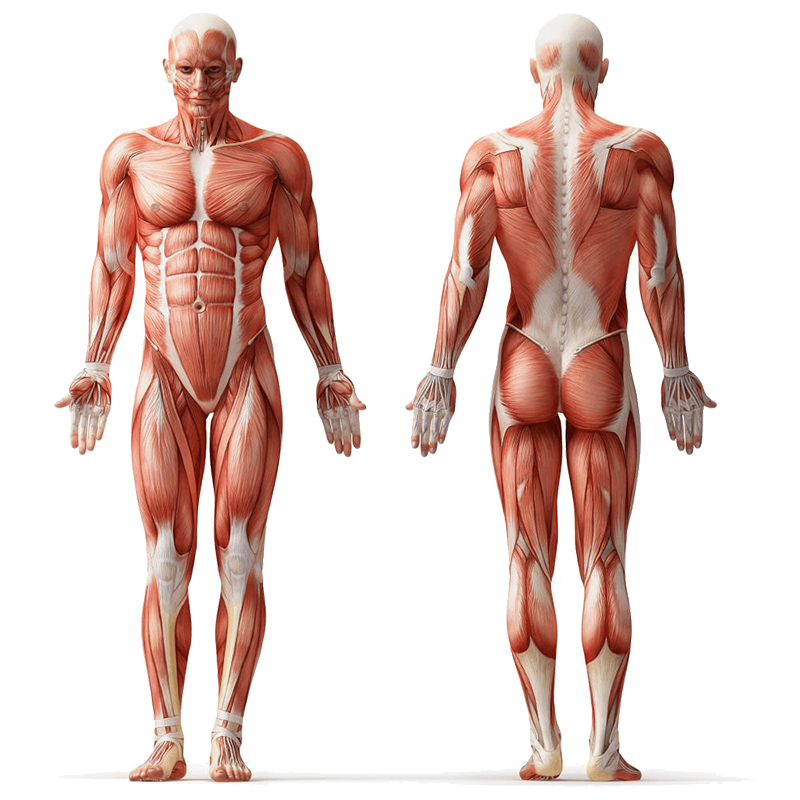
The Smith Front Squat is a strength training exercise that primarily targets the quadriceps (front thigh muscles) and engages the gluteus maximus (buttocks) and hamstrings (back thigh muscles) as secondary muscle groups. This compound movement involves multiple joints and muscle groups, making it effective for building lower body strength. Utilizing the Smith machine offers added stability, which can be beneficial for individuals focusing on form or those new to front squats.
Step-by-Step Instructions
- Adjust the Smith machine bar to a position just below shoulder height.
- Stand with your feet shoulder-width apart, positioning yourself under the bar so it rests across the front of your shoulders, near the collarbone.
- Choose a grip: either cross your arms over the bar, placing each hand on the opposite shoulder, or use a clean grip with fingertips under the bar and elbows pointing forward.
- Engage your core, keep your chest up, and maintain an upright torso throughout the movement.
- Unrack the bar by rotating it off the safety hooks.
- Initiate the squat by bending your knees and hips simultaneously, lowering your body until your thighs are parallel to the floor or as low as your flexibility allows.
- Ensure your knees track over your toes and avoid letting them cave inward.
- Press through your entire foot to return to the starting position, fully extending your hips and knees.
- Repeat for the desired number of repetitions.
Tips for Proper Form
- Maintain an upright torso to emphasize quadriceps engagement.
- Keep your elbows elevated to prevent the bar from rolling forward.
- Distribute your weight evenly across your feet, avoiding excessive pressure on the toes or heels.
- Avoid locking your knees at the top of the movement to maintain muscle tension.
- Use a grip that feels comfortable and allows you to maintain control of the bar.
- Start with a lighter weight to master the technique before progressing to heavier loads.
Smith Front Squat Benefits
- Enhances quadriceps strength and development.
- Engages gluteal muscles, contributing to overall lower body strength.
- Provides a safer alternative for individuals with lower back concerns due to the upright torso position.
- Offers added stability, allowing for focused muscle engagement without the need for balance.
- Assists in improving squat depth and flexibility over time.
- Can be a useful variation for those aiming to isolate the quadriceps more effectively.
Common Mistakes to Avoid
- Allowing the knees to cave inward during the squat, which can lead to injury.
- Leaning too far forward, reducing quadriceps activation and increasing lower back strain.
- Using excessive weight before mastering proper form, increasing the risk of injury.
- Neglecting to engage the core, leading to instability and poor posture.
- Placing feet too far forward or backward, which can affect balance and muscle engagement.
- Failing to maintain a consistent tempo, such as descending too quickly and ascending too slowly.
Summary
The Smith Front Squat is an effective exercise for targeting the quadriceps, with additional benefits for the glutes and hamstrings. Its design offers stability, making it suitable for individuals focusing on form or those new to front squats. Proper technique is crucial to maximize benefits and minimize injury risk.
FAQs
How often should I perform Smith Front Squats?
Incorporate them into your lower body workouts 1-2 times per week, allowing adequate recovery between sessions.
Can beginners perform this exercise?
Yes, the added stability of the Smith machine makes it accessible for beginners.
Is the Smith Front Squat better than the traditional barbell front squat?
It depends on individual goals; the Smith machine offers stability, while the barbell version requires more balance and engages stabilizer muscles.
What grip should I use for this exercise?
Choose between the cross-arm grip or clean grip based on comfort and flexibility.
Can I perform this exercise if I have knee issues?
Consult with a healthcare professional; modifications may be necessary to accommodate knee concerns.
How deep should I squat during this exercise?
Aim to lower until your thighs are parallel to the floor, adjusting based on flexibility and comfort.