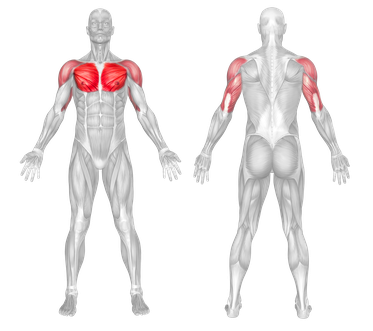
The Kettlebell Bench Press, also known as the Kettlebell Chest Press, is a strength training exercise designed to enhance upper body muscle development and stability. This exercise is particularly popular among those seeking an alternative to the traditional barbell bench press due to its unique benefits in terms of engaging stabilizing muscles. It primarily targets the pectoralis major (chest muscles) and involves secondary muscle groups such as the triceps brachii (back of the upper arms) and deltoids (shoulders).
The mechanics of the kettlebell bench press are compound, involving multiple joints and muscle groups. This exercise requires kettlebells as the primary equipment, making it accessible for home workouts as well as gym routines. It is suitable for individuals ranging from intermediate to advanced experience levels, owing to the balance and coordination required to handle the kettlebells effectively.
Kettlebell Bench Press Step-by-Step Instructions
- Lie flat on a bench with your feet firmly planted on the ground for stability.
- Hold a kettlebell in each hand with your palms facing forward and your elbows bent at a 90-degree angle.
- Engage your core and press the kettlebells upward by extending your arms, bringing them directly above your chest.
- Pause briefly at the top of the movement, ensuring the kettlebells are stable and your arms are fully extended.
- Slowly lower the kettlebells back down to the starting position by bending your elbows, keeping the movement controlled and steady.
- Repeat the pressing motion for the desired number of repetitions, maintaining proper form throughout the exercise.
Kettlebell Bench Press, Tips for Proper Form
- Maintain a neutral spine throughout the exercise to avoid lower back strain.
- Ensure your feet are firmly planted on the ground to provide a stable base.
- Focus on a controlled tempo, both during the pressing and lowering phases, to maximize muscle engagement.
- Keep your wrists straight and aligned with your forearms to prevent wrist strain.
- Engage your core muscles to enhance stability and support your lower back.
- Avoid locking your elbows at the top of the movement to keep tension on the muscles.
Kettlebell Bench Press Benefits
- Enhances upper body strength, particularly in the chest, shoulders, and triceps.
- Improves shoulder stability due to the independent movement of kettlebells.
- Engages stabilizing muscles, contributing to overall functional strength.
- Offers a versatile alternative to traditional barbell presses, reducing strain on joints.
- Can be performed at home with minimal equipment, making it convenient for varied workout environments.
- Increases muscle endurance and coordination through controlled, unilateral movements.
Kettlebell Bench Press Common Mistakes to Avoid
- Using excessive weight, which can compromise form and increase injury risk.
- Allowing the lower back to arch excessively, leading to potential back strain.
- Failing to maintain a controlled movement, resulting in momentum-driven lifts.
- Not keeping the wrists in a neutral position, causing wrist discomfort.
- Neglecting to engage the core, reducing overall stability and effectiveness.
- Locking the elbows at the top, which can reduce muscle tension and effectiveness.
Kettlebell Bench Press Summary
The Kettlebell Bench Press is an effective compound exercise targeting the chest, shoulders, and triceps, suitable for intermediate to advanced fitness levels. It requires kettlebells and engages stabilizing muscles, offering benefits such as enhanced upper body strength, shoulder stability, and functional fitness. Proper form is crucial to maximize benefits and prevent injuries.
Kettlebell Bench Press FAQs
How often should I perform the Kettlebell Bench Press?
It's recommended to include the kettlebell bench press in your routine 2-3 times per week, allowing for rest days in between to ensure muscle recovery.
Can beginners perform the Kettlebell Bench Press?
While this exercise is more suited to intermediate and advanced lifters, beginners can start with lighter kettlebells and focus on mastering the form before progressing.
What weight kettlebells should I use for the Kettlebell Bench Press?
Start with a weight that allows you to perform the exercise with proper form for 8-12 repetitions. Gradually increase the weight as your strength improves.
Is the Kettlebell Bench Press better than the Barbell Bench Press?
Both exercises have unique benefits. The kettlebell bench press improves stabilizer muscle engagement and shoulder stability, while the barbell bench press allows for lifting heavier weights.
What are some variations of the Kettlebell Bench Press?
You can perform the kettlebell floor press, single-arm kettlebell bench press, or alternating kettlebell bench press for variety and additional challenge.
Can the Kettlebell Bench Press help with shoulder pain?
If performed correctly, it can improve shoulder stability and strength, potentially reducing shoulder pain. However, if you have existing shoulder issues, consult a healthcare professional before performing this exercise.