
Barbell Floor Press

Video Demo, Instructions, Proper Form Tips, Common Mistakes, Benefits and FAQs
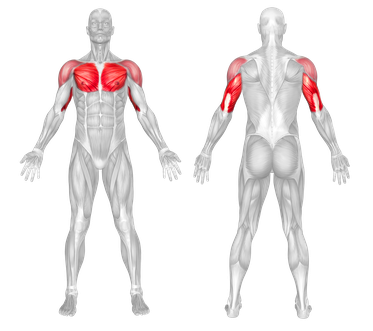
Exercise Profile

Target Muscles:

Chest, Triceps

Secondary Muscles:

shoulders, Scapular Stabilizers

Exercise Type:

Strength

Equipment:

Barbell

Difficulty:

Intermediate to Advanced

Mechanics:

Compound
Chest And Triceps Primary Target Muscles

The Barbell Floor Press is a potent upper-body strength exercise that serves as an excellent alternative to the traditional bench press, especially for those with limited equipment or seeking to reduce shoulder strain. Known alternatively as the "Floor Bench Press," this exercise is a compound movement (involving multiple joints and muscle groups) that primarily targets the pectoralis major (chest) and the triceps, with secondary engagement of the anterior deltoids (front shoulders). It's particularly popular among intermediate to advanced lifters and requires a barbell to perform. The Barbell Floor Press enhances lockout strength, upper body mass, and overall pressing capabilities while being shoulder-friendly due to its limited range of motion.

Barbell Floor Press Step-by-Step Instructions

  1. Begin by lying on the floor under a racked barbell with your knees bent and feet flat on the floor. Ensure your eyes are directly beneath the bar.
  2. Grip the barbell slightly wider than shoulder-width apart and unrack it by straightening your arms.
  3. Lower the barbell slowly towards your lower chest until the upper arms gently touch the floor, creating a natural pause.
  4. Press the barbell upwards until your elbows are fully extended, then repeat the motion for the desired number of repetitions.

Barbell Floor Press, Tips for Proper Form

  • Maintain a controlled movement throughout to avoid momentum aiding the lift.
  • Keep your feet flat and knees bent to stabilize your body and support your lower back.
  • Engage your core and ensure your lower back remains in a neutral position during the press.
  • Avoid locking your elbows harshly at the top to keep tension on the muscles and protect the joints.
  • Focus on a full contraction at the top of the lift without lifting your upper body off the ground.
  • If lifting heavy, have a spotter assist with the barbell setup and in case of failure during the press.

Barbell Floor Press Benefits

  • Enhances triceps strength and hypertrophy due to the focus on the lockout phase.
  • Improves overall upper body strength, particularly in the chest and shoulders.
  • Reduces risk of shoulder injuries by limiting the range of motion.
  • Helps develop better pressing mechanics and stabilizer muscle strength.
  • Offers a safe alternative for those with existing shoulder pain.
  • Allows for heavier lifting by focusing on the upper range of the pressing movement.

Barbell Floor Press Common Mistakes to Avoid

  • Avoid overextending or protracting your shoulders at the top of the press.
  • Do not let the elbows flare out; keep them tucked at about a 45-degree angle to your body.
  • Ensure the bar does not bounce off the floor; control the descent completely.
  • Avoid lifting your hips off the floor, which can put unnecessary strain on the lower back.
  • Do not use a grip that's too wide, as this can increase the strain on the shoulders.
  • Ensure the bar is positioned correctly over the chest, not the face or the stomach.

Barbell Floor Press Summary

The Barbell Floor Press is a highly effective exercise for strengthening the upper body, particularly for improving the lockout strength of the triceps, enhancing chest development, and reducing shoulder strain. It is a valuable addition to any strength training regimen, offering benefits in both muscle growth and joint health.

Barbell Floor Press FAQs

How often should I perform the Barbell Floor Press?

Integrating the Barbell Floor Press 1-2 times a week into your workout routine can effectively improve strength and muscle hypertrophy, depending on your overall fitness goals and other training commitments.

Is the Barbell Floor Press suitable for beginners?

While the exercise is generally recommended for intermediate to advanced lifters due to the stability required, beginners can start with lighter weights under supervision to master the technique.

Can the Barbell Floor Press replace the bench press?

While it can't completely replace the bench press, especially for competitive powerlifters, it's an excellent supplementary exercise to develop strength in the upper portion of the pressing movement and to reduce shoulder strain.

What variations can I try if I'm proficient with the Barbell Floor Press?

Variations such as the Dumbbell Floor Press, Close-Grip Floor Press, or using resistance bands can provide new challenges and stimulate muscle growth from different angles. Each variation focuses slightly differently on muscle engagement and can be integrated based on specific strength and training goals.

What equipment do I need for the Barbell Floor Press?

Essentially, you need a barbell and sufficient weight plates. For safety, using a power rack to support the barbell is recommended, especially when lifting heavier weights or if there's no spotter available.

Can I perform the Barbell Floor Press if I have a shoulder injury?

Yes, the Barbell Floor Press is often recommended for those with shoulder issues as it limits shoulder hyperextension and reduces strain. However, consult with a healthcare provider or a physical therapist to ensure it's appropriate for your specific condition.

How does the Barbell Floor Press impact shoulder health?

Due to its restricted range of motion, the Barbell Floor Press allows for pressing without excessive shoulder rotation, which can help in maintaining shoulder health and preventing common injuries associated with full-range pressing movements like the bench press.

What are the primary muscles targeted by the Barbell Floor Press?

The primary muscles worked are the pectoralis major (chest) and triceps brachii. It also significantly engages the anterior deltoids (shoulders) and provides stabilization through the scapular muscles and the core.

Disclaimer: It’s important to keep in mind that not all exercises are suitable for everyone. Before trying out a new exercise, it’s crucial to consider factors such as your flexibility, strength, and overall health to determine whether or not the exercise is appropriate for you. Like any exercise, there is inherent danger associated with it and it can potentially cause personal injury. It’s solely the responsibility of the exerciser to bear any injury sustained from the proper or improper use of this exercise. World Fitness.Online and its partners cannot be held liable for any injury that occurs as a result of using this exercise and it’s strongly advised that you seek guidance from a professional healthcare provider before attempting any exercise or exercise program.
Facebook
Twitter
LinkedIn
Scroll to Top