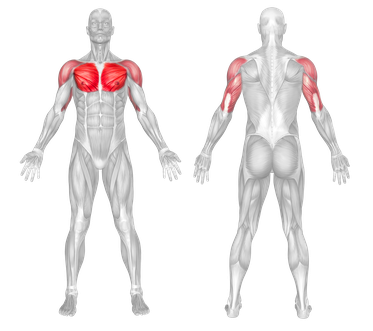
The Barbell Decline Bench Press is a powerful strength-building exercise primarily targeting the lower part of the pectoralis major (chest muscles), with a significant contribution from the triceps brachii (triceps) and the deltoids (shoulders). This exercise is often performed by individuals looking to enhance muscle definition and strength specifically in the lower chest area. Classified as an Intermediate to Advanced level exercise, it falls under the Strength category due to its intense muscle-building capabilities.
The Decline Bench Press is a Compound movement, engaging multiple muscle groups simultaneously, making it highly effective for strength training. To perform this exercise, you will need a barbell and a decline bench, specifically designed to maximize the engagement of the target muscle groups while reducing strain on the back and shoulders.
Barbell Decline Bench Press Step-by-Step Instructions
- Start by securing your legs at the end of the decline bench and lying down with your eyes under the barbell.
- Grasp the bar with a medium grip (slightly wider than shoulder-width), and un-rack the barbell by straightening your arms.
- Slowly lower the barbell to your lower chest by bending your elbows while keeping your forearms vertical.
- Pause briefly when the bar touches your chest, then push the bar back to the starting position by extending your arms fully, exhaling as you perform this movement.
- Ensure that your feet remain secured and your lower back is slightly arched throughout the exercise to maintain stability and prevent injury.
- Repeat the movement for the desired number of repetitions.
Barbell Decline Bench Press, Tips for Proper Form
- Ensure that the grip width is not too wide as a narrower grip focuses more on the triceps and reduces shoulder strain.
- Keep your elbows slightly tucked in towards your torso to further protect the shoulder joints and increase pectoral muscle activation.
- Avoid bouncing the bar off your chest, which can lead to injury. Control the barbell throughout the entire movement.
- Do not let your hips lift off the bench, as this can put unnecessary stress on your lower back.
- Engage your core throughout the exercise to stabilize your upper body and enhance the effectiveness of the press.
- Maintain a controlled breathing pattern by inhaling on the way down and exhaling forcefully as you press the bar upwards.
Barbell Decline Bench Press Benefits
- Enhances muscle mass and definition in the lower chest.
- Strengthens secondary muscle groups such as the triceps and deltoids.
- Improves overall upper body strength, beneficial for various athletic and daily activities.
- Engages the core, which helps in improving balance and posture.
- Can help improve muscle imbalances between the upper and lower portions of the chest.
- Provides a safer alternative for individuals who experience discomfort in the shoulders during flat or incline bench presses.
Barbell Decline Bench Press Common Mistakes to Avoid
- Using excessive weight that compromises form, leading to potential injury.
- Not setting the safety pins at an appropriate height, which is crucial to avoid getting trapped under the barbell.
- Excessive arching of the back, which can strain the lumbar region.
- Flaring the elbows out wide, which shifts the focus away from the pectorals to the shoulders, increasing injury risk.
- Failing to secure the feet, which can lead to slipping and reduces exercise effectiveness.
- Ignoring pain or discomfort in the shoulders or chest, which should be addressed by adjusting the technique or consulting with a professional.
Barbell Decline Bench Press Summary
The Barbell Decline Bench Press is an effective exercise for targeting the lower chest and enhancing overall upper body strength. It is crucial to maintain proper form and technique to maximize the benefits and minimize the risk of injury. This exercise should be incorporated into your strength training regimen with consideration for safety and proper execution.
Barbell Decline Bench Press FAQs
How often should I perform the Barbell Decline Bench Press?
This exercise can be included in your chest routine 1-2 times a week depending on your overall fitness goals and the intensity of your workouts. Ensure adequate rest between sessions to allow for muscle recovery.
Is the Barbell Decline Bench Press suitable for beginners?
While primarily recommended for intermediate to advanced individuals, beginners can practice this exercise with lighter weights and under supervision to ensure proper form and safety.
Can I substitute the barbell with dumbbells in the Decline Bench Press?
Yes, using dumbbells is a great alternative that can also help improve muscle imbalances and increase the range of motion. Dumbbells require more stabilization, thus engaging additional muscle fibers.
What are the risks associated with the Barbell Decline Bench Press?
The main risks include shoulder and back injuries if performed with improper form or excessive weight. Always prioritize technique over the weight lifted.
How can I increase the difficulty of the Barbell Decline Bench Press?
To increase the difficulty, you can add more weight, slow down the movement to increase time under tension, or incorporate pauses at the bottom of the lift.
What should I do if I experience pain during the Barbell Decline Bench Press?
If you experience pain, it is crucial to stop the exercise immediately and consult with a fitness professional or healthcare provider to address the issue and adjust your technique as needed.