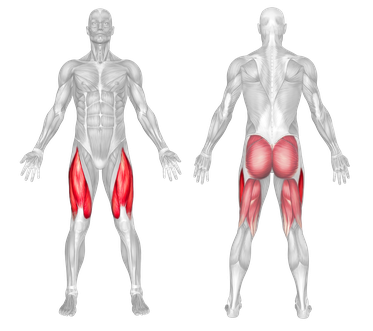
The seated leg press, also known simply as the leg press, is a popular exercise performed on a leg press machine that primarily targets the quadriceps (thigh muscles). This exercise also engages the gluteus maximus (buttocks), hamstrings (back of the thighs), and calves (lower legs). As a compound exercise, the seated leg press involves multiple joints and muscle groups, making it highly effective for building lower body strength.
The seated leg press machine supports the torso and guides the movement along a fixed path, reducing the risk of improper form compared to free-weight exercises like squats. This exercise is suitable for individuals at various fitness levels, from beginners to advanced athletes, and requires a leg press machine to perform.
Seated Leg Press Step-by-Step Instructions
- Sit down on the leg press machine and adjust the seat so that your knees form a 90-degree angle when your feet are on the platform.
- Place your feet shoulder-width apart on the footplate, ensuring your heels are flat and aligned with your knees.
- Grasp the handles on either side of the seat to stabilize your upper body.
- Disengage the safety levers and press the platform away from you by extending your legs, making sure not to lock your knees at the top of the movement.
- Pause briefly at the top, then slowly lower the platform back to the starting position by bending your knees while keeping your feet flat on the platform.
- Repeat for the desired number of repetitions, ensuring controlled movements throughout the exercise.
Seated Leg Press, Tips for Proper Form
- Keep your back and head against the seat pad at all times to maintain proper alignment and avoid injury.
- Ensure your heels remain flat on the footplate; pushing with your toes can strain your knees.
- Adjust the seat to prevent your knees from bowing inward or outward during the movement.
- Use a weight that allows you to perform the exercise with proper form; avoid using too much weight, which can lead to improper technique.
- Breathe out as you press the platform away and inhale as you return to the starting position to maintain a steady breathing pattern.
- Focus on slow and controlled movements, especially during the lowering phase, to maximize muscle engagement and reduce the risk of injury.
Seated Leg Press Benefits
- Effectively targets and strengthens the quadriceps, promoting muscle growth and endurance.
- Engages the glutes, hamstrings, and calves, making it a comprehensive lower body exercise.
- Provides a safe alternative to squats for those with back or knee issues, as it supports the torso and guides the movement.
- Improves overall leg strength, which is essential for daily activities and other athletic movements.
- Helps to correct muscle imbalances in the lower body by allowing for unilateral training (single-leg presses).
- Can be modified with different foot positions to target specific muscle groups more intensely.
Seated Leg Press Common Mistakes to Avoid
- Avoid locking your knees at the top of the movement, as this can place excessive stress on the joints.
- Do not raise your buttocks off the seat, which can compromise your form and lead to lower back strain.
- Keep your head against the seat pad; lifting your head can indicate improper weight selection or form.
- Ensure your feet remain flat on the platform throughout the exercise to avoid unnecessary stress on your knees.
- Do not place your hands on your knees; use the handles provided to stabilize your upper body.
- Avoid short-range motions; ensure you achieve a full range of motion to engage all target muscles effectively.
Seated Leg Press Summary
The seated leg press is a highly effective lower body exercise that targets the quadriceps, glutes, hamstrings, and calves. As a compound movement, it involves multiple joints and muscle groups, making it ideal for building overall leg strength. Proper form and controlled movements are crucial to maximizing the benefits and reducing the risk of injury. Adjustments in foot placement can help target specific muscles, offering versatility in your workout routine.
Seated Leg Press FAQs
How often should I perform the seated leg press?
It is recommended to include the seated leg press in your workout routine 2-3 times per week, allowing for adequate recovery between sessions.
Can beginners perform the seated leg press?
Yes, the seated leg press is suitable for beginners, as the machine supports the torso and guides the movement, reducing the risk of improper form.
What muscles does the seated leg press target?
The seated leg press primarily targets the quadriceps but also engages the glutes, hamstrings, and calves.
How can I modify the seated leg press to target different muscles?
Adjusting your foot placement can emphasize different muscles. A higher foot placement targets the glutes and hamstrings, while a lower placement focuses more on the quadriceps.
Is the seated leg press safe for individuals with back issues?
The seated leg press is generally safe for individuals with back issues, as it supports the torso and reduces the strain on the lower back compared to free-weight squats.
Can I perform the seated leg press with one leg?
Yes, performing the seated leg press with one leg at a time can help address muscle imbalances and increase the challenge of the exercise.