
Forward Lunges
Video Demo, Instructions, Proper Form Tips, Common Mistakes, Benefits and FAQs
Video Demo, Instructions, Proper Form Tips, Common Mistakes, Benefits and FAQs
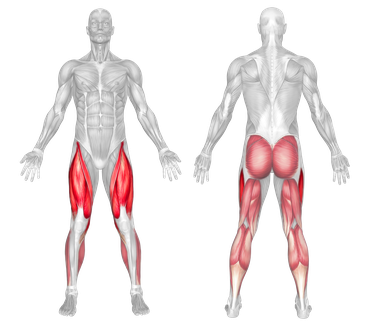
Forward lunges, also known simply as lunges, are a fundamental exercise frequently incorporated into various fitness routines. This exercise primarily targets the quadriceps (front thigh muscles) but also engages the gluteus maximus (buttocks), hamstrings (back of the thighs), and calves (gastrocnemius and soleus). As a compound movement, forward lunges involve multiple joints and muscle groups, making them highly effective for building lower body strength and improving balance and coordination.
Suitable for all fitness levels, this exercise can be performed with body weight, dumbbells, barbells, or other weights to increase resistance. Additionally, forward lunges are beneficial for enhancing functional movement patterns, which are essential for everyday activities and athletic performance.
Forward lunges are a versatile and effective exercise that targets multiple lower body muscle groups, including the quadriceps, hamstrings, glutes, and calves. This compound movement enhances strength, balance, and coordination, making it a valuable addition to any fitness routine. Proper form is crucial to avoid common mistakes and maximize the benefits of this exercise. Incorporate forward lunges into your workouts to improve functional movement patterns, increase flexibility, and boost overall lower body strength.
It is recommended to include forward lunges in your workout routine 2-3 times per week, allowing at least one day of rest between sessions for muscle recovery.
Yes, forward lunges are suitable for beginners. Start with body weight and gradually add resistance as your strength and balance improve.
There are several variations, including reverse lunges, walking lunges, and jumping lunges. Each variation targets the muscles differently and can add variety to your workouts.
Individuals with knee issues should consult with a healthcare provider or physical therapist before performing forward lunges. Modifying the range of motion or using support may help reduce strain on the knees.
Yes, forward lunges can be included in HIIT routines to increase intensity and provide a cardiovascular challenge. Perform them at a faster pace with shorter rest intervals for best results.
Add weights such as dumbbells or a barbell, increase the number of repetitions, or try advanced variations like jumping lunges to increase the difficulty.